First year
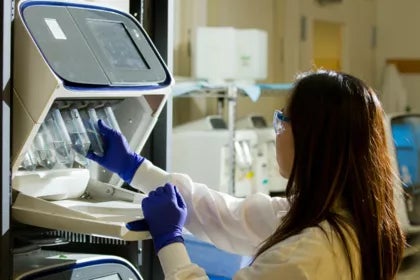
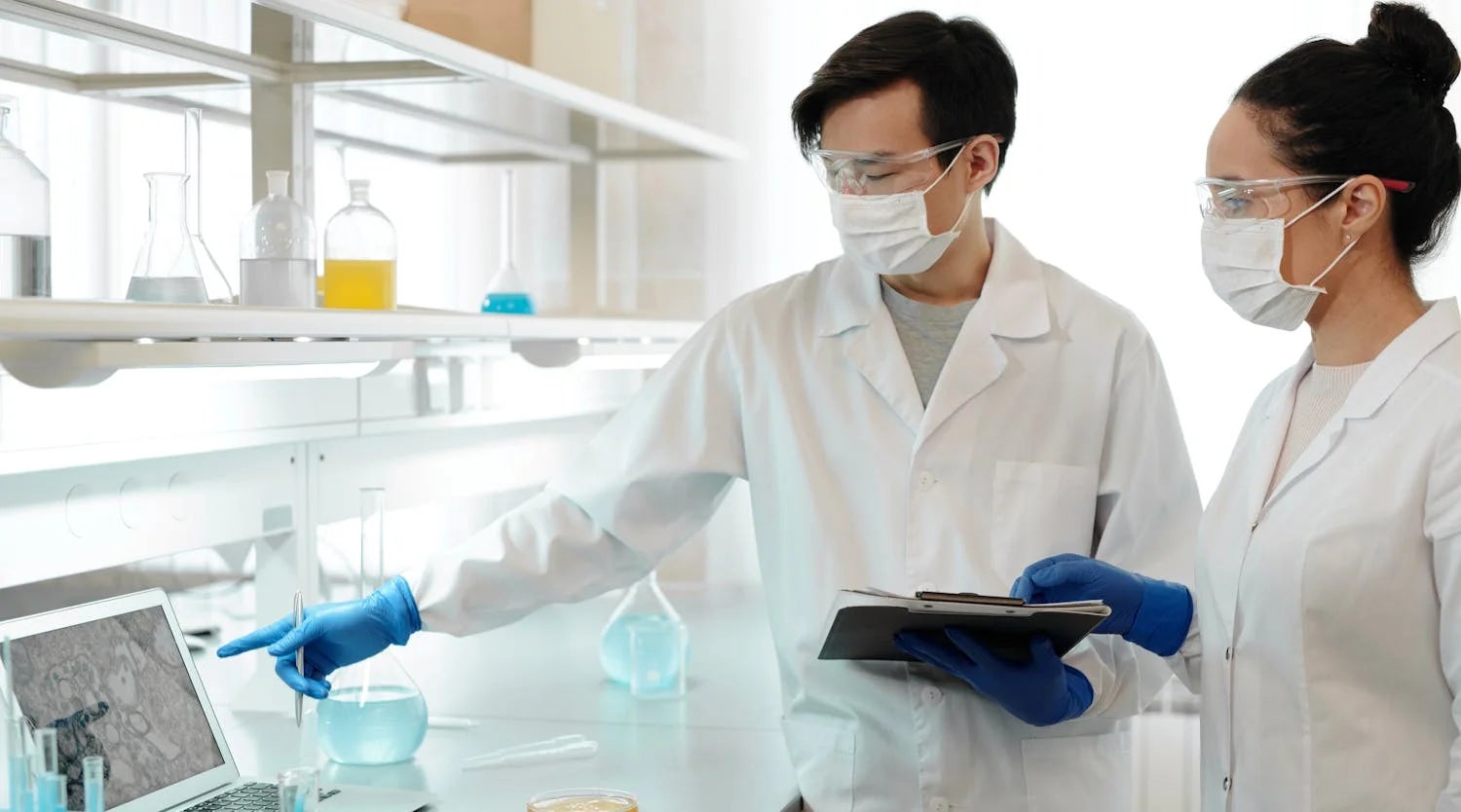
The first year is designed to build a solid scientific foundation on which to base the rest of the degree programme. Throughout these 60 credits, you will study the disciplines that form the backbone of biotechnology: chemistry, cell biology, genetics, mathematics and introductory laboratory techniques.
Biophysics
It applies the principles of physics — thermodynamics, electricity and fluid mechanics — to explain how biological systems function at a molecular level. You will gain an understanding of phenomena such as ion transport across membranes, as well as the nature of waves and radiation, and radioactivity and its implications for humans. This module will lay the foundations for understanding the behaviour of living matter from a physical perspective.
Structural Biochemistry
It immerses you in the molecules that make life possible: proteins, lipids, carbohydrates and nucleic acids. Through laboratory practicals, you will learn to use structural databases and specialised software to visualise and understand the complex structure-function relationships of macromolecules. You will identify conserved motifs and domains in proteins and interpret the structure and function of biological membranes, including their transport mechanisms at the molecular level.
Introduction to Cellular Biology
Introduction to Cellular Biology (taught in English) introduces you to the cell as the basic unit of life, from its internal organisation to its essential processes: the cell cycle, communication and programmed cell death. You will work with microscopy and learn to distinguish between different cell types and their functions. In addition, you will study the fundamental concepts of the structure and organisation of DNA, as well as its processes of replication, transcription and translation, amongst other topics. This module helps you become comfortable using scientific English from the very first year, a skill you will need throughout your degree and in the workplace.
Applied Mathematics
This course provides you with the quantitative tools needed to model biological processes, analyse data and design experiments. The syllabus includes an in-depth review of differential calculus, integral calculus and differential equations. You will also cover linear algebra , including matrices, determinants, systems of linear equations and methods of solution such as Gauss and Cramer.
General Chemistry
This covers the composition of matter, the periodic table, inorganic nomenclature and the types of chemical bonding (ionic, covalent, metallic). You will study the states of matter, their changes and intermolecular forces, as well as solutions, concentration and colligative properties. The course delves into the stoichiometry of chemical reactions (acid-base, precipitation, redox) and chemical and acid-base equilibria (pH, buffers). Finally, the principles of electrochemistry are explored, serving as an essential foundation for understanding molecular interactions and reactions in biotechnology.
Immunology
Immunology (taught in English) introduces you to the immune system: from its components to the complexities of innate and adaptive immunity. You will explore immunopathology, studying defects in the immune system, hypersensitivity, autoimmunity and the immune response to tumours. Finally, the course will cover immunological techniques and biotechnology, such as artificial immunisation and the modulation of the immune system for transplants.
Instrumental Techniques I
Instrumental Techniques I is your first intensive laboratory module. You will learn to use a wide range of fundamental instrumental techniques in biotechnology. This includes a general introduction and focuses on optical techniques, enzymatic assays, radioactive labelling of biomolecules, electrochemistry, sensors and biosensors, and centrifugation techniques, including ultracentrifugation. Precision in the laboratory cannot be improvised; it is practised from the very first year.
Biostatistics
Biostatistics provides you with the tools to design experiments rigorously and analyse their results using scientific criteria. You will learn to use statistical software packages, analyse data descriptively, calculate confidence intervals for means and proportions, as well as determine the appropriate sample size and relate confidence intervals to hypothesis testing. This is a cross-disciplinary module that runs throughout the degree programme. In the future, it will also enable you to read scientific literature with a critical eye.
Genetics
This covers the principles of Mendelian inheritance, the structure and expression of DNA, and the mechanisms of gene regulation. The module teaches the use of mutants in genetic analysis, the calculation of gametes, the construction of genetic maps and the understanding of chromosomal mutations. It addresses the molecular basis of mutation and repair, the inheritance of additive genes, and the implications of the double-helix model of DNA.
Organic Chemistry
This module studies carbon compounds and their transformations, forming a crucial foundation for the chemistry of living organisms. It provides knowledge of the nomenclature, structure and reactivity of organic compounds and biomolecules, including concepts such as chirality and molecular conformation. Students develop skills in writing formulas, assessing reactivity, applying stereochemistry and relating organic reaction mechanisms to biological processes.
Second year
With the foundations in place, in the second year—covering 60 ECTS credits—you take a significant qualitative leap forward. You move from studying isolated molecules to understanding how they interact within complex biological systems and to mastering the techniques used on a daily basis in research laboratories and industry. This is the year in which biotechnology begins to take real shape.
Developmental and Tissue Biology
This module explains how a single fertilised cell gives rise to a complete organism comprising hundreds of different cell types. You will study the processes of differentiation and organogenesis, as well as the molecular mechanisms that regulate them. You will also gain an understanding of the mechanisms of tissue regeneration, and the characteristics and functions of animal and plant tissues. You will also learn to identify them under the microscope, including the recognition of embryonic structures and stem cell therapies. It is one of the most fascinating modules on the degree programme because it links molecular biology with the development of life in all its complexity.
Molecular Biology and Molecular Techniques
This module integrates theoretical knowledge of DNA with the experimental tools most commonly used in research: recombinant protein production, molecular cloning and gene-editing technologies. You will learn to design and carry out protocols for the handling and analysis of nucleic acids, and you will acquire the ability to express recombinant proteins in different systems. It is a highly practical module that will provide you with the foundation to work in any biotechnology laboratory worldwide.
Instrumental Techniques II
Instrumental Techniques II will enable you to learn and understand the basic principles of advanced instrumental techniques and acquire the ability to operate various instruments, adjust their settings and obtain reliable information from experimental data. The aim is to increase your independence in the laboratory so that you can confidently tackle more complex protocols. This module is directly linked to what you will be doing during your fourth-year external placements.
Metabolic Biochemistry
Metabolic Biochemistry will teach you the fundamentals of enzyme regulation and action, as well as the thermodynamic principles of metabolic processes. You will learn about the main catabolic and anabolic pathways, and how to carry out the basic experimental techniques used in a biochemistry laboratory.
Cellular Biology
The course aims to identify the different phases of the cell cycle and to understand the mechanisms of cell division, differentiation, proliferation and cell death. You will also acquire an understanding of the fundamentals of autophagy and cellular senescence, the basic concepts of stem cell proliferation and function, the overall aspects of cell signalling, and the key aspects of ageing and cancer-related pathologies.
Biosafety
This module trains you in legislation and the classification of biological agents. You will learn to identify, analyse and assess biological and occupational safety risks in the laboratory. The course will cover types of containment, the handling of biological material and best practice for preventing releases. You will learn to distinguish between levels of biocontainment and acquire the tools needed to design safe facilities. Finally, you will strengthen your knowledge of waste management, decontamination and emergency plans.
Cell cultures
This is one of the most practical and sought-after modules on the degree programme. You will learn to describe the design and equipment of a cell culture laboratory, and gain an understanding of the types of cell culture and their biotechnological applications. You will learn the fundamentals and applications of cell therapy and tissue engineering, as well as the culture, isolation and manipulation of stem cells. You will understand the concept, generation and applications of induced pluripotent stem cells (iPSCs), and you will be able to describe cell transplantation techniques and evaluate their efficiency.
Genetic Engineering
For many students, genetic engineering is the subject that defines the degree programme. It covers general preparative and analytical procedures for nucleic acids, basic techniques for the fragmentation and manipulation of nucleic acids, and their hybridisation, including microarrays. You will study gene libraries, in vitro transcription, cloning and the expression of recombinant DNA in different cell types, along with their biotechnological applications. The course will also cover the expression of recombinant DNA in bacteria, DNA mutagenesis, microRNA, non-coding RNA and the CRISPR system.
Immunotechnology
Immunotechnology aims to provide an understanding of the fundamentals of immunological techniques, including antibody generation systems and new vaccines (genetic material, recombinants) to improve immunogenicity. The course examines improvements in vaccine administration and efficacy testing, as well as antibody conjugation and humanisation systems. The module covers the analysis of immune function in vitro and the fundamentals and applications of different types of immunotherapy. This includes the use of TILs, CAR-T cells, scAb molecules and applications of synthetic and biological nanoparticles.
Microbiology and Virology
It aims to train you as a professional equipped to meet the demands of biotechnology companies and postgraduate studies, as well as in the applications of biotechnology for sustainability and bioremediation. It provides training and skills in biotechnology research (cutting-edge technologies and strategies), covering aspects of legislation, management and commercialisation, and fosters an entrepreneurial spirit. It will introduce you to methods and techniques in R&D&I management, and promote safe laboratory practice and an understanding of the ethical and bioethical aspects of the field.
Third year
The third year is when the programme truly focuses on biotechnology. The modules are directly related to the sector’s main areas of application: biomedicine, agriculture, industry and the environment. This year, which comprises 60 ECTS credits including one elective module of your choice, requires you to integrate everything you have learnt over the previous two years and apply it to real-world, complex problems.
Bioinformatics and Bioprocess Simulation
In Bioinformatics and Bioprocess Simulation, you will learn to manage databases and tools, interpreting the information from a biological perspective. You will become familiar with resources on portals such as NCBI and EBI, and will be able to extract information quickly and effectively from DNA, RNA and protein sequences. The module will equip you with intermediate-level skills in using the statistical software R, including libraries for the analysis of biological data. Finally, you will gain an understanding of omics technologies and their application in extracting as much information as possible.
Plant Physiology
Explore how cells and plants function, as well as their response to various environmental factors. You will study fundamental processes such as nutrition, metabolism, growth, development, reproduction and senescence in plants. You will understand the mechanisms by which plants obtain substrates and energy, the formation of basic organic compounds, and plant development from the cellular to the organismal level. Furthermore, you will learn experimental techniques, apply the scientific method and utilise specific sources of information within this discipline.
Human Physiology and Pathophysiology
This module will enable you to identify the normal structure and function of the human body. You will learn to distinguish the mechanisms of adaptation and regulation of these functions, and to recognise the flow of information that makes them possible. You will list and recognise the causative agents and risk factors that determine states of health and the development of diseases, as well as the mechanisms involved. Finally, you will apply practical tools to carry out bioassays and functional tests relevant to the biomedical field.
Protein Engineering
Protein engineering (taught in English) aims to integrate knowledge of protein engineering into biotechnology. You will become familiar with the most common strategies and methods, gain an understanding of their practical applications, and learn to represent biomolecular structures and use software for their analysis. You will learn to recognise and identify the factors affecting protein folding, and develop skills in handling biochemical laboratory materials. You will also learn to use the main bibliographic sources.
Thermodynamics and Chemical Kinetics
This module will provide you with a basic understanding of physicochemical phenomena as they apply to the biological world. You will study thermal and kinetic processes in nature, enabling you to explain and describe the natural processes on which life is based. The theoretical content, complemented by seminars and practical laboratory sessions, will equip you with the essential knowledge required to understand other modules on the Biotechnology degree programme.
Biotechnology and Animal Experimentation
This module covers and identifies the main existing techniques for the genetic modification of animals and their practical applications. You will study and distinguish between different approaches to animal phenotyping, and understand the importance of using genetically modified animal models to address biomedical and biotechnological problems. Furthermore, you will learn how to handle and work with the main animals used in experimentation, always within an ethical and regulatory framework.
Plant Biotechnology
You will apply your knowledge of plant cell immobilisation procedures and techniques for genetic transformation in plants. You will be able to apply these to improve plant productivity, both at the cellular level and at the level of the whole organism. You will learn about the practical applications of morphogenesis and embryogenesis processes, as well as ‘in vitro’ culture techniques, and will be able to apply them. You will also gain an understanding of the environmental and legal aspects associated with the production of transgenic plants.
Bioreactors
Study and carry out a complete protocol for the production of biotechnological products in a bioreactor. You will be able to make informed choices regarding the best options for producing a biotechnological product, at both laboratory and industrial scales. Furthermore, you will acquire the skills to operate laboratory-scale bioreactors.
Omic Sciences
Omic Sciences (taught in English) will train you in the analysis and annotation of genomes and proteomes, and their functionality. You will learn to use bioinformatics tools and high-throughput technologies to study the human genome and genetic variation. You will be able to interpret data from omics databases and predict post-translational modifications. You will design experiments using proteomics and metabolomics tools to solve problems. Finally, you will integrate omics knowledge to apply it across various biotechnology sectors.
Fourth year
The final year brings your studies to a close with highly specialised modules and, most importantly, your first real-world experience in the sector. The 60 ECTS credits for this year include an external work placement, the Final-Year Project and an optional module, making this year the definitive bridge between university and the job market.
Legal, Ethical and Social Aspects of Biotechnology
This module will equip you to understand and apply the legal, ethical and social foundations of biotechnology. You will analyse its applications, international regulations (quality, patents, biosafety) and the legal framework. You will develop the ability to interpret new legislation and ethical principles relating to genetic manipulation and animal experimentation. You will apply regulatory techniques in quality control, regulation and the protection of biotechnology data. All of this will prepare you for research, innovation and professional practice in the sector.
Agri-food Biotechnology
Apply biotechnological tools to crop improvement, the production of functional foods, microbiological quality control and the development of probiotics and fermented products. You will study varietal selection processes, the production of enzymes for the food industry and the role of microorganisms in fermentation. This area has a huge impact on global food security and the sustainability of production systems. It is one of the fastest-growing sectors for biotechnology graduates in Spain.
Environmental Biotechnology
Study the use of microorganisms to tackle pollution problems in water, soil and air, involving both traditional and emerging pollutants. You will learn to apply strategies for bioremediation, the degradation of oil and xenobiotics, and the recovery of metals and radioisotopes. You will also work in the laboratory, focusing on safety, waste management and presenting scientific seminars. This is a subject with enormous potential, given the growing interest from businesses and institutions in biotechnological solutions to the climate crisis.
Biotechnology applied to human and animal health
Biotechnology applied to human and animal health (taught in English) covers the entire development process of biotechnological drugs —from discovery through to clinical trials—and includes state-of-the-art biopharmaceuticals such as monoclonal antibodies, cancer immunotherapies and pluripotent stem cells. It also addresses precision medicine, new therapeutic targets and veterinary applications in equines, cattle and animal production. It is an integrative module that requires a solid grasp of the content covered in the previous three years and is one of the modules that most directly prepares students for a career in the pharmaceutical industry or biomedical research.
Fundamentals of Biotechnology Enterprises and Project Development
It equips you with the skills to navigate the sector’s business environment with confidence: drawing up business plans, managing intellectual property, assessing the economic viability of biotechnological processes, and managing R&D projects. You will learn how a biotech start-up operates and what is required to work for a major pharmaceutical company – two very different but equally demanding realities. This module is particularly valuable if you have an entrepreneurial spirit or are interested in business development within the sector. Today, biotechnologists with a business acumen are among the most sought-after professionals by companies
Nanobiotechnology
Nanobiotechnology (taught in English) explores the frontier between nanotechnology and biology, with applications in controlled-release drug delivery systems, highly sensitive biosensors and biocompatible materials. You will study nanoparticles, carbon nanotubes and artificial DNA structures, and learn how to characterise them using advanced techniques. It is one of the most disruptive areas of biotechnology, with direct applications in cancer diagnosis and treatment. This module introduces you to one of the most active lines of research today.
External work placements
External placements (12 ECTS) are your real bridge to the job market. UAX students undertake their placements at leading institutions such as the CNIC, the CNIO, the CSIC, Pfizer, MSD, GSK, Pharmamar and the Jiménez Díaz Foundation, amongst many others. Over the course of several months, you will become part of a real professional team, apply your knowledge to active projects and develop skills that cannot be learnt in a classroom. It is the experience most highly valued by employers when reviewing a recent graduate’s CV.
Final-Year Project
The Final-Year Project (TFG, 6 ECTS) is the project in which you demonstrate your maturity as a scientist. Under the supervision of an expert researcher, you will design, carry out and defend an original piece of work, which may take the form of an experimental research project, a systematic review or a proposal for biotechnological innovation.
Elective modules
In the third and fourth years, you can choose optional modules to tailor your studies to your interests. The catalogue includes subjects such as Big Data Analysis and Systems Biology, Biomaterials, Reproductive Biotechnology, Quality Control, Radiobiology, Nutrigenomics and Nutrigenetics, Advances in Biotechnology and New Biotechnological Applications, and Introduction to Research Methodology, each worth 3 ECTS credits.
Depending on your choices, you can strengthen your profile in areas such as data analysis, industry, basic research or emerging fields like nutrigenomics or biomaterials. This is an opportunity to stand out and build a CV that is better aligned with the type of company or institution where you wish to work.
Summary
The curriculum for the Bachelor’s Degree in Biotechnology at UAX follows a very well-structured, progressive approach. The first two years consolidate the scientific foundation: chemistry, cell biology, genetics, laboratory techniques and immunology. The third year builds on this foundation to lead into specialised study: genetic engineering, bioreactors, omics and biotechnology applied to plants and animals. The fourth year culminates in modules with significant industrial and clinical relevance, external placements at leading institutions and the Final-Year Project. The result is a well-rounded, versatile biotechnology graduate, equipped to tackle the major challenges facing science and industry in the 21st century.
Sources
Curriculum for the Bachelor’s Degree in Biotechnology at UAX