
















Table of Contents
What do the Physical Fitness practical sessions involve?
Where do the Physical Fitness practical sessions take place?
What you will learn during the Physical Fitness placement
What duties does a student on work experience carry out?
What types of centres and professional roles will you encounter?
Frequently asked questions about the Physical Fitness work placement
Physical Fitness work placements are one of the key elements of the training programme, as they allow you to apply everything you have learnt during your training in a real-world setting. If you are considering this advanced vocational qualification, it is natural to wonder where the work placements take place, what sort of tasks are carried out and what skills you will acquire. In this article, you’ll find a comprehensive overview of how the Workplace Training Phase (FEE) works in this field, with specific examples of centres, roles and real-world learning in day-to-day professional practice.
Physical Fitness Work Placements: summary
Level: Higher-Level Vocational Training
Duration of the work placements: a period integrated into the second academic year.
Where they take place: sports centres, gyms, aquatic facilities and health and wellbeing centres.
Objective: to apply technical knowledge in a real professional environment.
Focus: development of practical skills in training, group exercise and customer care.
What do the Physical Fitness work placements involve?
What is the work placement within the course?
Work placements are a compulsory part of the Higher-Level Physical Fitness Technician (TSAF) course and represent students’ first real-world experience of the workplace. During this period, students are placed in a sports or health centre to take part in professional activities under supervision. Unlike theoretical classes, here students work with real clients, manage practical situations and develop skills that can only be acquired through direct contact with the professional environment.
When they take place and how they are integrated into the course
Generally, the Workplace Training Phase takes place in the final stage of the course, once students have acquired the technical knowledge required to work safely and with professional judgement. This ensures that the work placement is not merely a basic introduction, but a stage where skills such as the following are consolidated:
- Planning training sessions.
- Supervising exercises.
- Providing personalised care to clients.
What are the professional objectives?
The main objective is to prepare students for entry into the labour market. In this regard, the work placement enables students to:
- Gain an understanding of how a sports centre actually operates.
- Adapt to different client profiles.
- Develop professional autonomy.
Where do the Physical Fitness work placements take place?
One of the most significant aspects of this course is the variety of settings in which work placements can be carried out, which broadens career prospects.
Gyms and training centres
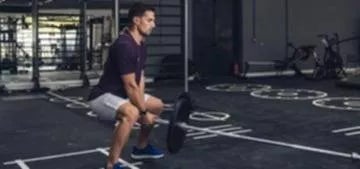
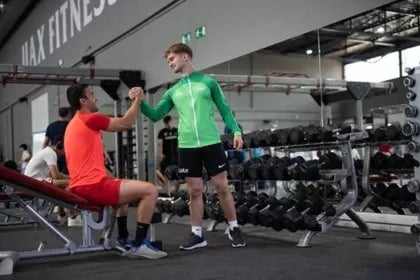
This is one of the most common placements. In this setting, students help supervise exercises, advise clients and assist with planning training programmes. For example, they may support a client in their fitness journey by correcting their posture or adapting exercises to suit their ability level.
Sports centres and multi-purpose facilities
These include multi-sports centres, local authority facilities and sports clubs where a variety of activities take place. Here, students work with groups, organise group sessions and take part in sports programmes.
Aquatic facilities and water-based activities
In swimming pools and aquatic centres, students can assist with activities such as aquagym or aquatic training, learning how to adapt exercises to this specific environment.
Wellness centres, hotels and spas
These venues combine physical activity with wellbeing. Work placements in such centres provide the opportunity to work on programmes focused on health, relaxation and improving general physical fitness.
Care homes, community centres and work with specific groups
It is also possible to undertake placements in settings where exercise takes a more therapeutic or adapted approach, such as with older people or groups with specific needs.
What you will learn during the Physical Fitness work placement
During this period, learning is predominantly practical and focused on real-life situations.
Initial assessment of physical fitness
You will learn to analyse a person’s physical condition before starting any training programme, taking into account factors such as mobility, endurance or any potential limitations.
Design and supervision of training sessions
You will take part in planning routines tailored to different objectives, ranging from strength improvement to weight loss or fitness maintenance.
Leading group activities with and without musical accompaniment
In many centres, you’ll take part in group classes, learning how to energise groups, set the pace and keep participants motivated.
Adapting exercises to different user profiles
Not all participants have the same needs. During your work placement, you will develop the ability to adapt exercises to different ages, fitness levels and goals.
Risk prevention and basic first aid
You will also learn how to respond to risky situations, such as minor injuries or incidents during physical activity.
What does a student on work placement do?
During the work placement, the student does not merely observe, but actively participates in the running of the centre.
Support in planning routines and sessions
You will work alongside professionals to develop training programmes, gaining an understanding of how they are structured around specific objectives.
Monitoring clients and checking exercise technique
One of the most common tasks is to ensure that exercises are performed correctly, correcting posture and preventing injuries.
Leading group sessions and customer service
Dealing directly with users allows you to develop communication and motivational skills, which are key in this sector.
Organising equipment, spaces and activities
You will also be involved in logistical tasks, such as preparing equipment or managing spaces for activities.
What types of centres and professional roles you’ll encounter
The work placement gives you first-hand insight into various career paths within the sector.
Personal trainer
Specialising in one-to-one training, with programmes tailored to specific goals.
Gym instructor and group activities leader
A role commonly found in gyms, responsible for supervising and leading group activities.
Aquatic activities instructor
A specialist in aquatic training, using specific techniques adapted to this environment.
Fitness activities coordinator
A role with greater organisational responsibility, managing teams and planning activities at sports centres.
Frequently asked questions about Physical Fitness work placements
Are work placements compulsory on the TSAF course?
Yes, they form part of the official training programme and are required to obtain the qualification.
Can they be carried out in gyms?
Yes, gyms are one of the most common settings for carrying out the work placements.
Which skills are developed most?
Mainly practical skills related to training, customer service and adapting exercises.
Do they help you find a job afterwards?
In many cases, work placements facilitate entry into the job market, as they allow you to establish direct contact with the sector and demonstrate your skills in a real-world setting.
If you’re considering training in this field, the UAX Higher National Diploma in Physical Conditioning enables you to acquire these skills through a practical, work-oriented approach, integrating work-based learning into a flexible model tailored to current needs.
SOURCES
- SEPE – State Public Employment Service – Information on professional profiles and employability in the field of sport and physical activities.
- INE – National Institute of Statistics – Data on physical activity, employment and sectors linked to sport in Spain.
- BOE - State Agency for the Official State Gazette - Current regulations on Vocational Training and the structure of vocational training programmes within the Spanish education system.
.png.webp)