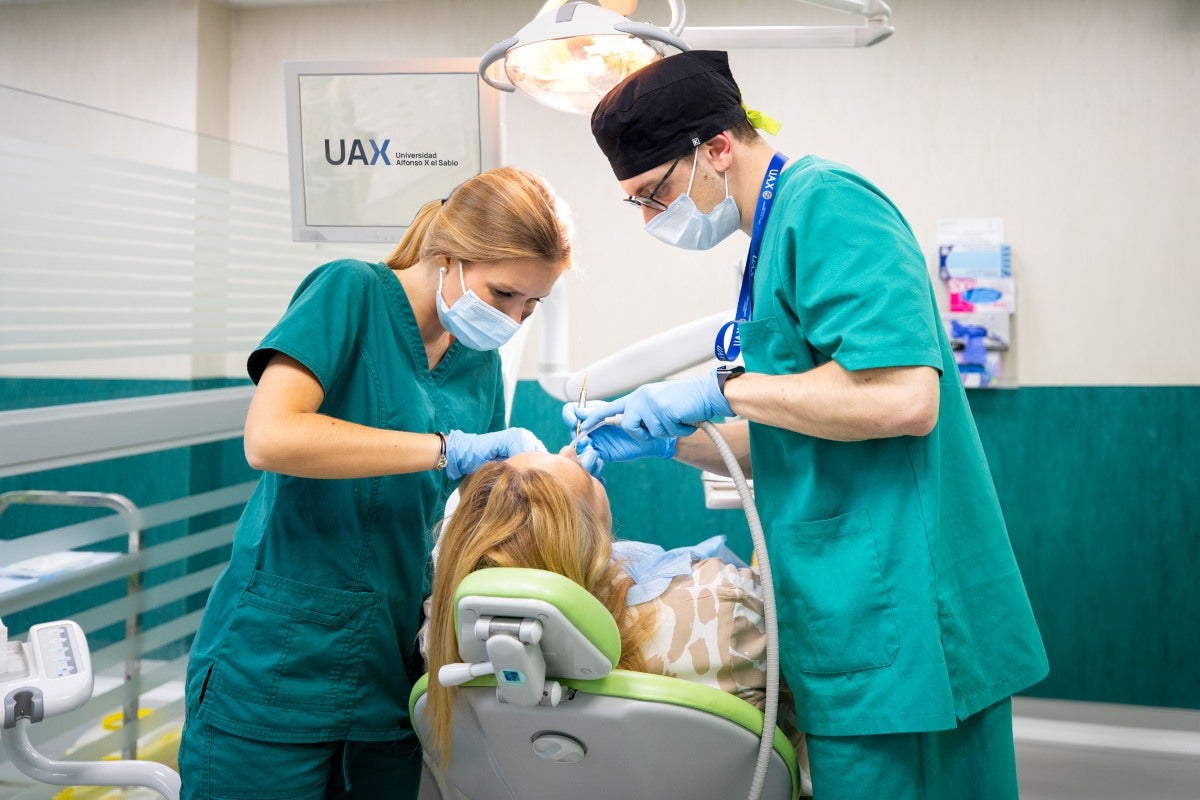
A dental hygienist is much more than just an assistant. They are a highly qualified professional who plays a vital role in the prevention and treatment of oral diseases. Let’s find out together everything you need to know about this fascinating profession.
Table of contents
What qualities should a dental hygienist have?
What can a dental hygienist NOT do? (limitations and responsibilities)
Differences between a dental hygienist and a dental assistant
Employment prospects and salary: what can a dental hygienist expect in Spain in 2025?
What is a dental hygienist?
A dental hygienist is a healthcare professional with training as a Higher-Level Vocational Training in Oral Hygiene (Advanced Vocational Training), whose main role is prevention, the promotion of oral health and the performance of prophylactic and clinical procedures under the guidance and supervision of a dentist.
The official qualification and its minimum curriculum requirements are regulated in Spain by Royal Decree 769/2014 of 12 September , which sets out the corresponding training programme.
What qualities should a dental hygienist possess?
A good dental hygienist combines technical knowledge with interpersonal skills.
- Empathy: Essential for reassuring anxious patients or those with dental phobia.
- Precision and attention to detail: Essential for ensuring safety and optimal results in every procedure.
- Communication skills: These enable them to explain treatments clearly and adapt their language to suit each patient’s profile.
- Continuing professional development: Essential for keeping up to date with the latest techniques and materials.
Duties of a dental hygienist
When we talk about the duties of a dental hygienist, we are referring to a range of clinical, preventative and educational activities. Among the most common are:
- Prophylaxis and professional dental cleanings: removal of tartar (supragingival prophylaxis) and stains, polishing and fluoridation where appropriate.
- Oral health education and promotion: instructing patients on brushing techniques, the use of dental floss and interdental hygiene, and encouraging self-care.
- Examination and assessment of oral health: carrying out basic examinations, taking records and assisting the dentist with diagnosis.
- Intraoral X-rays (within the limits of the regulations and with specific training): handling and exposure in accordance with safety protocols, as per legislation and the centre’s protocols.
- Taking impressions and basic model fabrication: in many centres, and always within the limits permitted by regulations and under supervision. (See the section on ‘what they cannot do’).
- Monitoring and follow-up of patients with periodontitis or gingivitis: non-surgical periodontal scaling and maintenance in collaboration with the dentist.
- Clinical management and patient care: reception, appointment management, preparation of materials and sterilisation.
These points reflect the competencies of the dental hygienist as set out in official training and in standard clinical practice.
What is a dental hygienist NOT allowed to do? (limitations and responsibilities)
It is essential to know what a dental hygienist cannot do in order to avoid legal and clinical risks. In general, they are not authorised to:
- Perform surgical procedures (extractions, surgery, local anaesthesia), which are the responsibility of the dentist/stomatologist.
- Make final diagnostic decisions or prescribe medication.
- Carry out invasive treatments that require a prior medical or dental diagnosis and the clinical responsibility of the dentist.
In practice, many of your procedures will be carried out under the direction and supervision of the practice’s dentist; regulations and professional bodies emphasise collaboration and a clear delineation of roles.
Differences between a dental hygienist and a dental assistant
A frequently asked question is: what are the differences between a dental hygienist and a dental assistant? Although both work in a dental setting, their roles are completely different.
Dental hygienist
- Holds a qualification as a Advanced Technician which enables them to carry out direct treatments in the patient’s mouth.
- They carry out therapeutic and preventive procedures directly on the patient.
- They can work with less direct supervision.
Dental assistant
- Is primarily responsible for administrative and logistical support tasks.
- They must always be under the supervision of other, more qualified professionals.
- Prepares materials, manages appointments and keeps the practice organised.
Employment prospects and salary: what can a dental hygienist expect in Spain in 2025?
The market varies depending on experience, autonomous community and type of practice (private vs. public).
In 2025, the salary range is typically between approximately €16,000 and €35,000 gross per annum, with average salaries of around €25,000–€30,000 according to specialist sources and websites such as Infobae.
If you’d like more information, don’t miss our article: How much does a dental hygienist earn in Spain ?
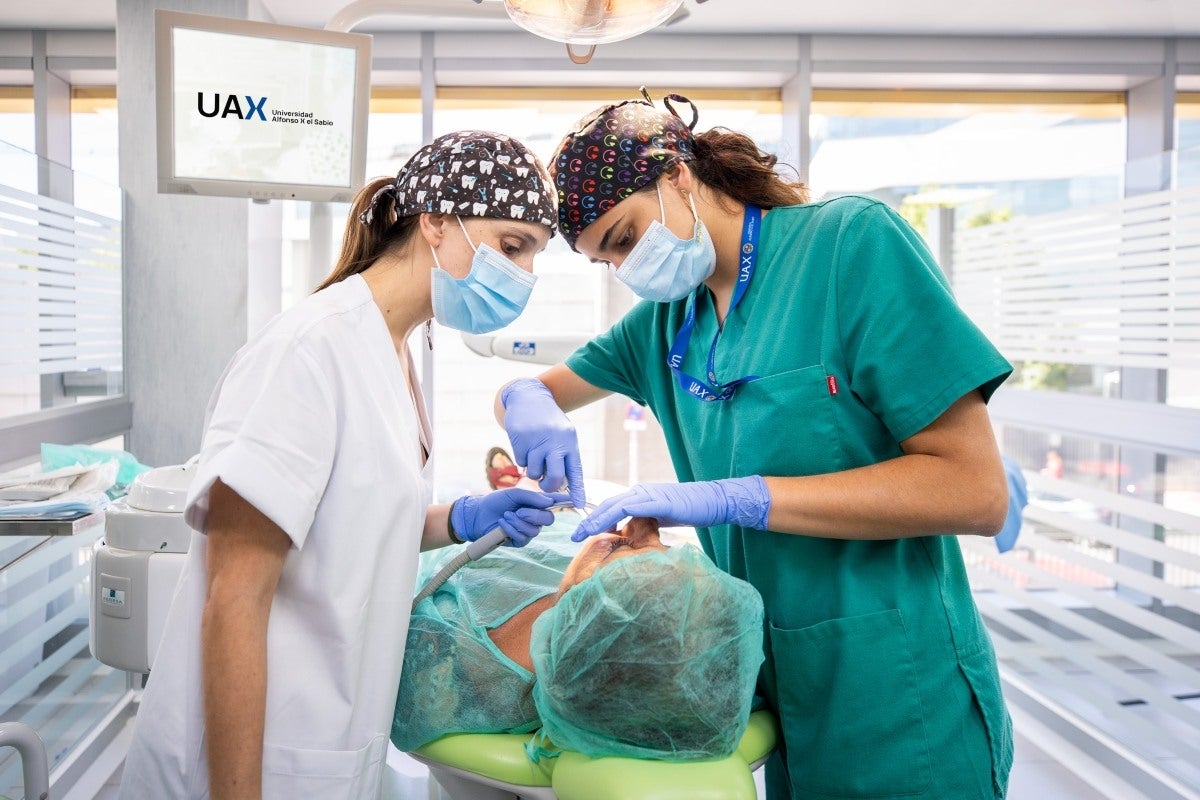
Where can you train to become a dental hygienist?
If you’re wondering where to train as a dental hygienist, there are plenty of options available. Public vocational training centres offer this qualification through face-to-face courses.
There are also private alternatives that offer greater flexibility in terms of timetables. Some educational institutions offer online courses, which are ideal for people who need to balance their studies with work or other commitments.
At Alfonso X El Sabio University (UAX FP), we offer the Online Higher National Diploma in Oral Hygiene , an option that allows you to study from anywhere with complete flexibility over your timetable. This programme includes guaranteed in-person work placements and access to state-of-the-art virtual laboratories.
Conclusion: Your future in dental hygiene
If you’re looking for a career with job security, good earning potential and the satisfaction of helping others, dental hygiene could be the perfect career choice for you. Growing awareness of oral health ensures a promising future for these professionals.
Are you ready to take the first step towards your professional future in the healthcare sector?
Do it at UAX!