













What is the Reggio Emilia approach?
In Reggio Emilia (Italy), there are schools that have served as an inspiration to many teachers around the world. In this post, we explain what this approach is based on and its influence on early years education today.
In the mid-1960s, a network of schools was established in Reggio Emilia under the pedagogical guidance of Professor Loris Malaguzzi; over time, these have become the most internationally recognised early years education system.
This has led to numerous teachers from all over the world travelling there to observe and receive training in a new way of understanding early years education. However, Reggio Emilia is not strictly speaking a methodology, but rather a way of understanding early years education that is constantly being reviewed and evolving.
Characteristics of the Reggio Emilia approach
To understand it better, we can highlight a number of characteristics of this approach:
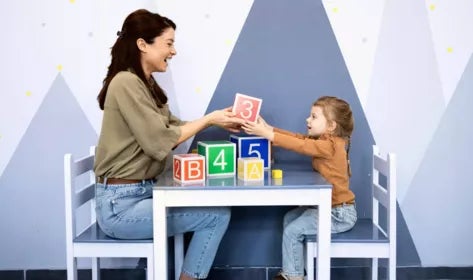
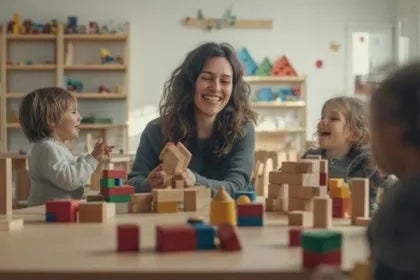
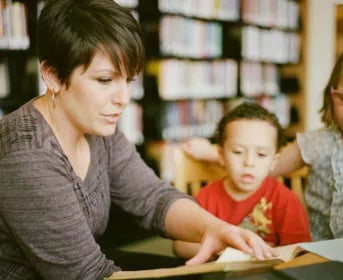
- The importance of play, understood as ‘learning through play’ using loosely structured materials, in which the child takes the lead in their own learning and the teacher learns alongside them.
- The educational and research partnership. In every classroom, there are always two educators who work and observe, constantly investigating the educational process and exploring it in greater depth. Work is carried out collaboratively throughout the school.
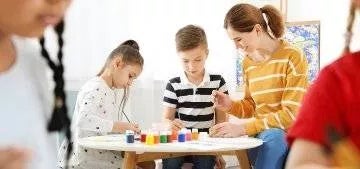
- The Atelier, a space where children can express themselves through painting, music and their ‘100 languages’ with the help of the atelierista, an art specialist who helps ensure the children’s creations have aesthetic meaning, transforming the schools into veritable art museums.
- Open classrooms where children move freely from one to another, seeking out the corner or activity in which they wish to participate and learn.
- No set curriculum and/or subjects. The pupils themselves and their families play a major role in designing educational experiences, participating both in decision-making and in many of the activities carried out in the classrooms.
- The school as an agent of social transformation, embracing the cultural values to which children are bound, but not merely as a reproducer of adult culture; rather, it listens to and responds to children’s culture.
Given all this, one might think that the Reggio approach can only exist in Reggio. The truth is that this approach is based, in addition to the points mentioned, on a network of schools coordinated and supported by the local council, with the active participation of families. This is something difficult to replicate anywhere else in the world. Nevertheless, this model can serve to inspire us and bring about change in our own schools. In fact, there are already several Reggio-inspired schools in Spain.
How can we apply the Reggio Emilia model in our classrooms?
Bearing in mind that the Reggio Emilia model is constantly evolving and developing, we can apply a series of principles in our classrooms that bring us closer to this way of understanding early years education:
- Working through projects and centres of interest. Project-based learning is one of the cornerstones of this approach.
- Providing hands-on materials in the classroom so that children can use them to explore different areas of learning.
- Learning based on setting challenges and problems that pupils must solve through research, experimentation and reflection.
- Working in cooperative groups so that, together, they can resolve the questions they themselves raise.
- Paying attention to the aesthetic quality of educational spaces, ensuring that the organisation and display of materials and work create an aesthetically pleasing environment.
- Promoting pupils’ creativity and autonomy by allowing them to express themselves freely through a variety of materials.
- Recognising that all spaces and times within the nursery school are, by definition, educational.
- Close coordination with colleagues and families so that, together, we can improve the education provided by our school.
In short, Reggio Emilia inspires us to view education not as something imposed on children, but as an opportunity for children, families and teachers to learn together.
At UAX, we are committed to the practice and teaching of innovative methodologies, such as the Reggio Emilia approach, adapted to changes and new ways of understanding teaching, across all our face-to-face and online degree programmes in the field of Education, including the Bachelor’s Degree in Early Years Education , the Master’s in Bilingual Education , the Online Higher National Diploma in Early Years Education , and the Bachelor’s in Primary Education