Jobs Threatened by Artificial Intelligence
Artificial intelligence is having a significant impact on various professions and sectors. Which jobs are at risk due to the rise of AI, why are they in this situation, and which sectors will be most affected?
Production and manufacturing jobs
Jobs involving repetitive and predictable tasks, such as assembly line work in factories, are highly susceptible to automation driven by AI and robotics. This includes roles in the automotive, textile and electronics industries.
Administrative assistants and office tasks
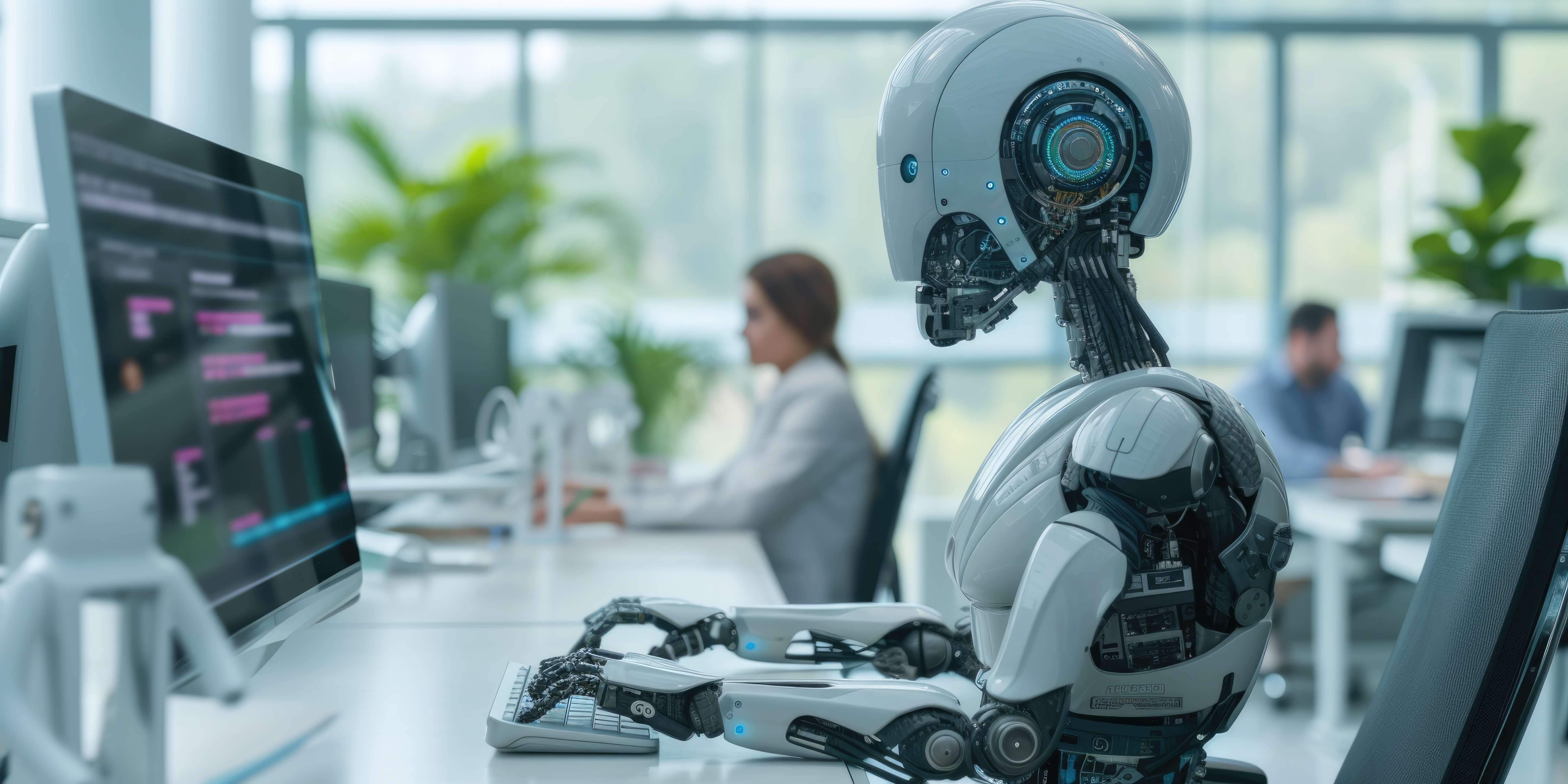
Given AI’s ability to automate data management processes, appointment scheduling and email responses, entry-level administrative roles are at risk of being replaced by intelligent systems.
Driving and transport
Artificial Intelligence is revolutionising transport with the development of autonomous vehicles. This threatens jobs related to driving, such as lorry, taxi and bus drivers.
Customer service and call centres
Chatbots and AI systems are gaining ground in customer service, which could reduce the need for call centre agents and customer service representatives.
Accounting and financial tasks
Routine accounting tasks, such as preparing standard financial reports and reconciling accounts, can be automated, which would affect accounting and finance roles.
Jobs that AI cannot do: Booming professions
In an increasingly automated world, Artificial Intelligence can perform many tasks, but there are some areas where human intervention remains irreplaceable. In this section, we will look in detail at the professions that are on the rise due to their human nature and the skills that cannot be replicated by AI.
Creativity and design
Jobs that require creativity and originality, such as artists, graphic designers and advertising creatives, are on the rise. The human ability to devise new solutions and express emotions through art remains unique and valuable.
Personalised customer service
Despite advances in chatbots and AI systems, human interactions in customer service remain irreplaceable. Roles involving empathy, understanding and problem-solving in an emotional context are on the rise.
Research and development
Scientists, researchers and developers are in demand because of their ability to ask questions, design experiments, analyse data and make innovative discoveries. These roles require creativity, critical thinking and the ability to solve complex problems.
Education and training
Teachers, trainers and educators play a vital role in passing on knowledge, skills and values to future generations. Human interaction in the educational process is essential for students’ all-round development.
Management and leadership
Leadership and management roles involve making strategic decisions, motivating teams, resolving conflicts and fostering collaboration. These skills require emotional intelligence, empathy and social skills that go beyond the capabilities of AI.
Adaptation and new opportunities
The advent of Artificial Intelligence has transformed the labour market, but it has also created new opportunities for those willing to adapt and evolve alongside it.
Developing complementary skills
AI is designed to perform specific tasks efficiently, but it still lacks the creativity, empathy and interpersonal skills that are inherent to human beings. It is therefore essential to develop skills that complement AI’s capabilities, such as creativity, complex problem-solving and ethical decision-making.
Keeping up to date
In a technology-driven workplace, constantly updating one’s skills and knowledge is essential. This may involve taking online training courses, attending conferences and seminars, or even obtaining certifications in emerging fields such as data science, programming and cybersecurity.
Fostering collaboration
Collaboration between humans and machines will be key in the age of AI. Learning to work effectively with AI systems and harnessing their potential to improve productivity and efficiency will be crucial. Furthermore, fostering collaboration amongst colleagues and across multidisciplinary teams can lead to the generation of innovative ideas and creative solutions.
Cultivating interpersonal skills
As AI takes on routine and repetitive tasks, interpersonal and emotional skills become even more valuable in the workplace. The ability to communicate effectively, resolve conflicts and work as part of a team will be essential to remaining relevant in the labour market.
Adaptability and flexibility
The ability to adapt quickly to change and to be flexible regarding roles and responsibilities will be crucial in a constantly evolving work environment. Being willing to learn new skills, take on new challenges and explore new career opportunities will be key to thriving in the age of AI.
Studying at UAX
At UAX, we offer a Bachelor’s Degree in Artificial Intelligence and Computing , available both as a face-to-face and an online programme.
We also offer an Online Master’s in Artificial Intelligence. Make the most of this opportunity to specialise in one of the fields with the highest demand in the job market and the brightest future prospects.
We provide you with the tools and support you need to achieve your career goals in the exciting world of Artificial Intelligence.
The future is here, and we’re waiting for you to build it with us!