



















Dual Vocational Training is an educational option that is becoming increasingly popular in Spain. If you’re interested in learning a trade whilst gaining work experience in real companies, this model could be ideal for you. Unlike traditional vocational training, Dual Vocational Training allows you to combine classroom-based learning with work placements in companies, which significantly improves your chances of finding employment.
This guide is designed to help you understand what Dual Vocational Training is, what it involves, what its advantages are, and what you need to enrol. We’ll also highlight the sectors with the highest demand for this programme and provide guidance to help you assess whether this training option is right for you.
Table of contents
What does Dual Vocational Training mean?
Differences between traditional vocational training and dual vocational training
What does Dual Vocational Training involve?
Distribution of hours between the educational centre and the company
The role of the tutor in the company and at the educational institution
Benefits of dual vocational training for students
Advantages of dual vocational training for entering the labour market
Professional sectors with the widest range of dual vocational training programmes in Spain
Dual vocational training requirements: Who is eligible for this training?
Academic requirements for dual vocational training
Selection and admission process for dual vocational training programmes
What does dual vocational training mean?
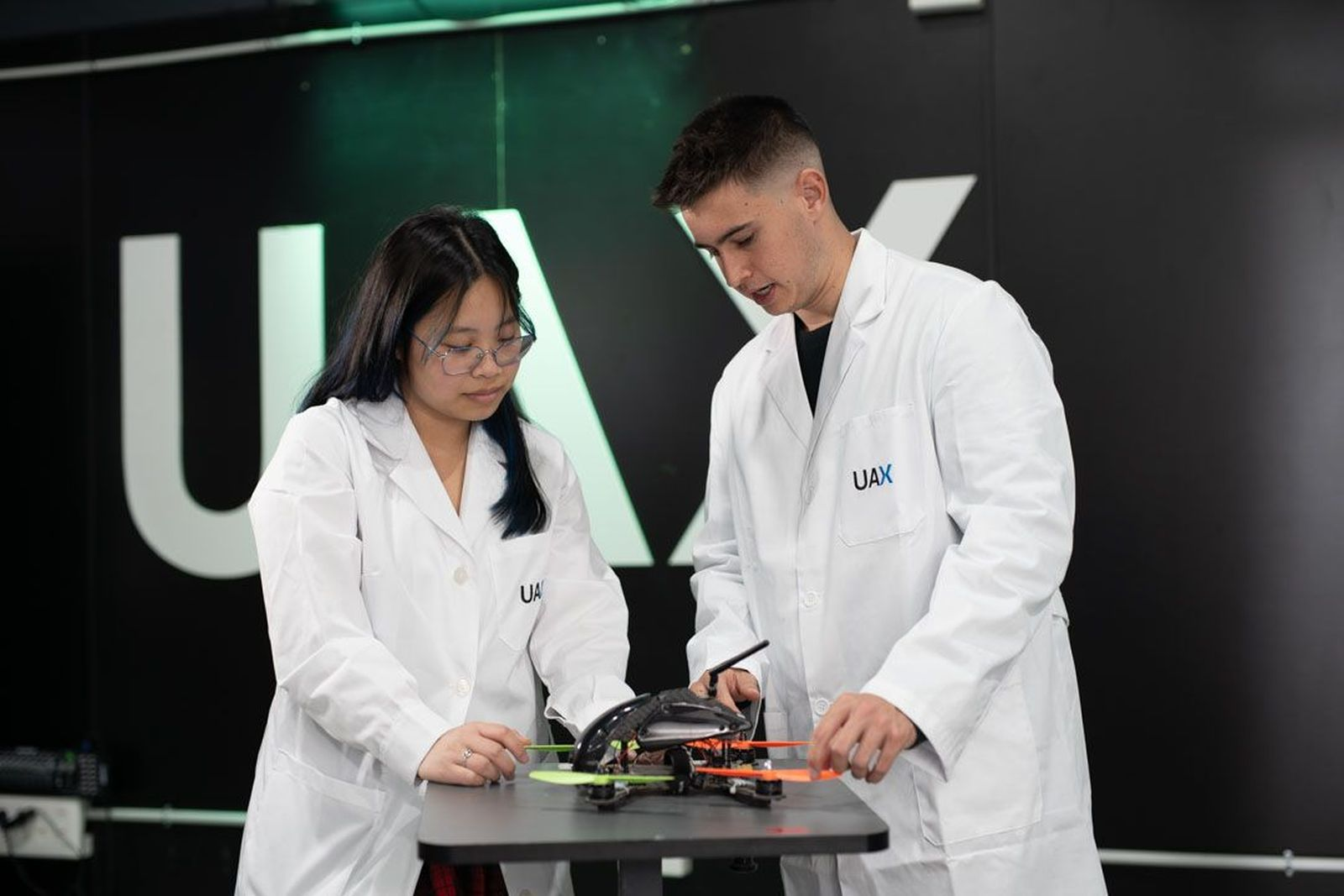
When we talk about Dual Vocational Training, we are referring to an educational model within Vocational Training that alternates between classroom learning and work experience in a company. In other words, you will not only study theoretical content, but you will also put your knowledge into practice in a real professional environment.
This system has its roots in successful European models, such as the German one, and has been adapted in Spain to meet the current needs of the labour market. Its main aim is to improve students’ employability by offering them work experience from the very start of their training.
Differences between traditional vocational training and dual vocational training
Although both formats belong to the same family of vocational training, there are key differences between traditional vocational training and dual vocational training:
- In traditional vocational training, most of the time is spent at the training centre, with a work placement phase scheduled at the end of the course.
- In dual vocational training, the training is divided from the outset between the educational institution and the company. Consequently, the duration of the placement with the company is much longer in dual vocational training.
- There is constant contact with the realities of the labour market.
In short, whilst traditional vocational training prepares you for employment, dual vocational training trains you on the job from the very start.
What does Dual Vocational Training involve?
Dual vocational training is based on a system shared between the educational institution (theory) and the company (practical training). Both institutions work closely together to design a training programme tailored to the needs of the student and the business sector.
Distribution of hours between the educational institution and the company
Generally, the first year focuses on academic training, whilst the second is divided between the classroom and the company. The proportion of hours spent at the company can be up to 50 per cent of the total course duration, depending on the autonomous community and the programme being studied.
The role of the tutor at the company and the educational centre
Each student has two tutors: one at the educational institution and another at the company. Their role is to support you throughout the training process, ensuring that your learning is consistent and effective. Both coordinate your progress, assess your development and act as points of contact should you have any queries or encounter any difficulties.
Benefits of dual vocational training for students
The benefits for you as a future student are clear:
- Better job prospects: many students end up being hired by the very company where they trained.
- Real-world professional experience: you’ll be better prepared to tackle interviews, recruitment processes or demanding work environments.
- Professional network: during your placement, you’ll meet industry professionals, which can open many doors for you.
- Motivation and practical application: applying what you’ve learnt in real-life situations reinforces your interest in and understanding of the subject matter covered in the classroom.
Benefits of dual vocational training for entering the labour market
One of the reasons why more and more students are choosing this option is that dual vocational training is highly employment-focused. In Spain, dual vocational training programmes have employment rates exceeding 75 per cent in many specialisms. Furthermore, according to a 2024 study carried out by El Economista, graduates of dual vocational training earn up to 12 per cent more than graduates of basic vocational training. In short, the company not only trains you, but often takes you on as a permanent member of staff. Furthermore, you acquire highly valued transferable skills: teamwork, adaptability to change, professional communication, etc.

Professional sectors with the highest number of dual vocational training places in Spain
The sectors offering the most places on dual vocational training programmes vary depending on the autonomous community and the local business landscape. However, some of the most established and in-demand sectors are:
- Administration and Management
- Healthcare
- IT and Communications
- Socio-cultural and Community Services
- Electrical and Electronic Engineering
- Transport and Logistics
- Mechanical Engineering
- Business and Marketing
You can view the dual-track vocational training qualifications available at UAX to find the option that best suits your profile and interests.
Dual Vocational Training Requirements: Who is eligible for this programme?
Enrolling on a dual vocational training programme is similar to enrolling on a traditional vocational training course, but with a few differences, which we’ll look at below.
Academic requirements for dual vocational training
To enrol on a dual vocational training programme, you must meet one of the following requirements:
- Hold an ESO qualification or equivalent (for Intermediate Level)
- Hold a Baccalaureate, Intermediate Level vocational qualification or equivalent (for Advanced Level)
- Have passed the relevant entrance exam
- Hold a university degree if you wish to change career
Selection and admission process for dual vocational training programmes
In addition to the academic requirements, bear in mind that some dual vocational training programmes require interviews or a selection process by the partner companies. In other words, simply enrolling is not always enough: there may be an additional selection process. It is therefore advisable to prepare your application thoroughly, demonstrate your interest and be clear about what motivates you to train in that specialism.
In short, dual vocational training represents a unique opportunity if you are looking for practical, up-to-date training that is closely linked to the world of work. Now that you know what dual vocational training is, how it works and what you need to gain entry, you can assess whether this is the training pathway that best suits your goals. Remember that at Alfonso X el Sabio University (UAX) you have access to vocational training programmes in this format, tailored to the real needs of the labour market.
To find out more, we recommend you also visit the UAX blog on the new vocational training system , where you’ll find the latest news, advice and analysis.
Sources consulted:




.png.webp)