What is Mechanical Engineering and why is it so essential?
Mechanical Mechanical Engineering is often referred to as the ‘mother’ of engineering due to its incredible breadth and its central role in virtually every industry. Essentially, it deals with everything that moves or uses energy. Its scope ranges from the smallest and most precise components, such as the sensors in a smartphone, to the most colossal structures, such as an oil rig or a spacecraft.
To achieve this, the discipline draws on several pillars of knowledge:
- Mechanics: the study of motion, force and energy. It includes statics (bodies at rest), dynamics (bodies in motion) and solid mechanics (how materials deform and resist forces).
- Thermodynamics: analyses how energy is converted and transferred in the form of heat and work. It is crucial for the design of engines, cooling systems and power stations.
- Materials Science: investigates the properties of materials (metals, plastics, composites) to select the most suitable one for each application, ensuring strength, durability and efficiency.
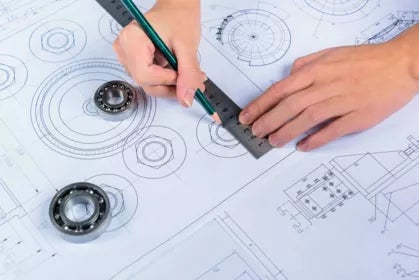
- Computer-Aided Design (CAD): uses specialised software to create 3D models and detailed drawings of any component or system prior to manufacture, enabling performance to be optimised and faults to be detected virtually.
Thanks to the combination of these areas, mechanical engineering is the driving force behind technological innovation, improving our quality of life and tackling the major challenges of modern society.
What are the main responsibilities of a mechanical engineer?
Versatility is the hallmark of a mechanical engineer. Their day-to-day work can vary enormously depending on the sector and the role they hold, but their duties usually revolve around the life cycle of a product or system. These are some of their most common tasks:
- Designing and developing solutions: using design software (CAD) and their knowledge of physical principles, they conceptualise and create new products, machines or systems to meet a specific need.
- Analysing and simulating behaviour: before building a physical prototype, they use simulation tools (CAE, Computer-Aided Engineering) to analyse how their design will behave under different conditions of stress, temperature or fluid flow. This saves time and money.
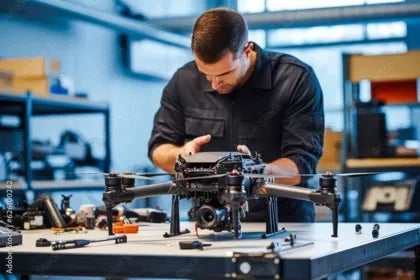
- Overseeing manufacturing and assembly: they work on the production floor to ensure that components are manufactured to design specifications and that the final assembly of the product is carried out correctly.
- Carrying out testing and validation: once a prototype or final product has been built, they design and conduct tests to verify that it meets performance, safety and quality requirements.
- Managing maintenance and operations: in many industries, mechanical engineers are responsible for planning the maintenance of heavy machinery or complex systems to ensure their optimal operation and prevent breakdowns.
- Research and development (R&D): in the field of research, they are constantly seeking new ways to improve energy efficiency, develop more advanced materials or create disruptive technologies.
What skills and aptitudes do you need to study Mechanical Engineering?
As well as a curiosity about how things work, there are certain skills that will help you succeed in this degree programme and in your future career.
Technical Skills (Hard Skills):
- A solid foundation in mathematics and physics: these are the fundamental tools for analysing and solving problems.
- Spatial visualisation skills: the ability to think about and visualise objects in three dimensions is key to design.
- Complex problem-solving: enjoying tackling a challenge, breaking it down into smaller parts and finding a logical solution.
- Proficiency in specialised software: over time, you’ll become proficient in CAD, CAE and programming software.
Soft Skills:
- Creativity and innovation: engineering is not just about applying formulas, but also about thinking originally to create new and better solutions.
- Teamwork: large-scale projects are carried out by multidisciplinary teams, so knowing how to collaborate and communicate is essential.
- Effective communication: you must be able to explain your technical ideas clearly to both fellow engineers and non-technical staff.
- Attention to detail: a small error in a calculation or a drawing can have major consequences. Accuracy is crucial.
Myths and realities: What does it really mean to be a mechanical engineer today?
Mechanical engineering is often surrounded by clichés that no longer reflect the reality of the profession, such as:
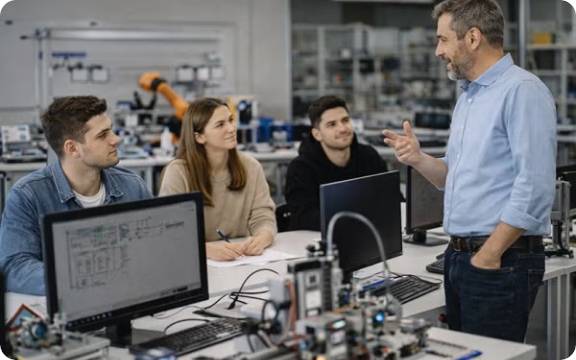
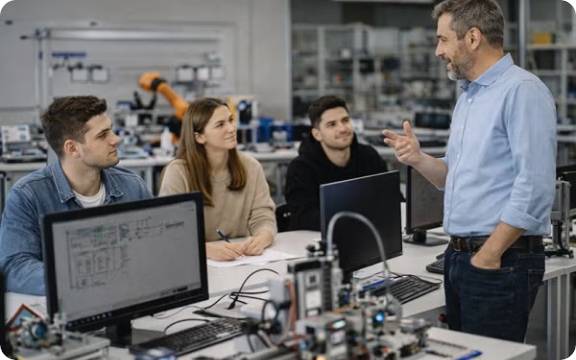
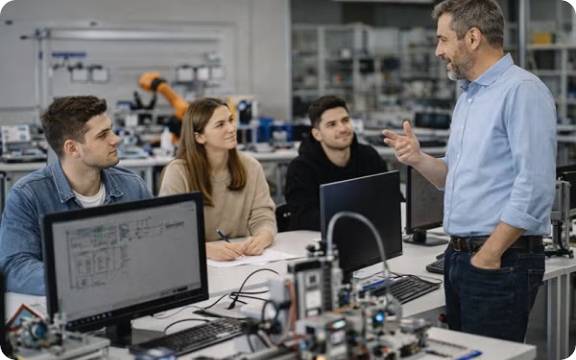
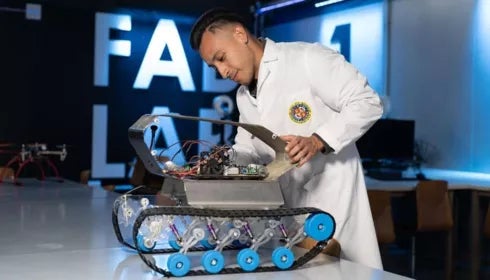
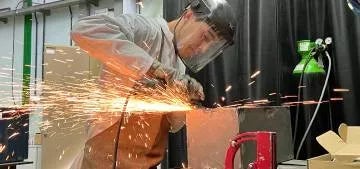
- Myth 1: “It’s a workshop-based profession, only for people who get their hands greasy.” Reality: whilst practical knowledge is essential (and you’ll love putting it into practice in UAX’s workshops), a large part of a modern mechanical engineer’s work is carried out at a computer. You’ll spend as much time – if not more – creating finite element simulations, analysing sensor data, programming control systems or managing projects digitally as you will in a traditional workshop.
- Myth 2: “If you’re not a maths genius, it’s not for you.” Reality: maths is an essential tool, but mechanical engineering is much more than that. Creativity, the ability to solve problems logically, spatial awareness and curiosity are just as important. At UAX, our teaching approach helps you understand the practical application of maths, turning it into an ally for creativity rather than an obstacle.
- Myth 3: “It’s a degree with little creativity; you just apply formulas.” Reality: Quite the opposite! Creativity is the driving force behind engineering. When faced with a problem (a car that uses less fuel, a more comfortable prosthetic limb, a more efficient robot), there are endless solutions. Your job as an engineer is to devise the most innovative, efficient and elegant solution. Formulas are merely the rules of the game; how you play to win depends on your ingenuity.
- Myth 4: “It’s a solitary profession.” Reality: Major technological advances are never the work of a single person. From your very first day at UAX, you’ll be working as part of a team, collaborating on projects with fellow students from your own and other degree programmes. This ability to collaborate, communicate and lead multidisciplinary teams is one of the most highly valued skills in today’s professional world.
What is the future of Mechanical Engineering?
Far from being a static discipline, mechanical engineering is undergoing constant and exciting evolution. Technologies that seemed like science fiction a decade ago are now the focus of the most innovative mechanical engineers. If you’re wondering where the profession is heading, here are some of the trends that are not only transforming it, but which we at UAX have already integrated into our educational vision:
- Industry 4.0 and Smart Manufacturing: the fourth industrial revolution merges the physical and digital worlds. As a mechanical engineer, you’ll play a key role in designing ‘smart factories’ where collaborative robots (cobots), the Internet of Things (IoT) and digital twins (virtual replicas of physical systems) enable production to be optimised in real time. At UAX, you’ll become familiar with these concepts in our automation laboratories and through simulation projects.
- Sustainability and the Circular Economy: the greatest challenge of our time is to create a sustainable planet. Mechanical engineering is fundamental to achieving this. The future of the profession lies in eco-design: creating products that are not only efficient and durable, but also easy to repair, reuse and recycle. You will work on the development of electric vehicles, the optimisation of turbines for renewable energy, or the design of systems to convert waste into energy.
- Artificial Intelligence and Generative Design: AI is revolutionising the design process. With generative design, rather than drawing a part from scratch, you, as an engineer, define the parameters (weight, strength, material) and an AI algorithm generates hundreds of possible optimised solutions, often with organic and complex shapes that a human would never have imagined. It is a new way of collaborating with machines to boost creativity and efficiency.
- Biomechanics and Medical Technology: collaboration between engineering and medicine is opening up incredible new frontiers. The design of customised bionic prostheses using 3D printing, the development of high-precision surgical robots and the creation of new diagnostic equipment are rapidly expanding fields where mechanical engineers are making an invaluable contribution to improving people’s health and quality of life.
Summary
This article defines Mechanical Engineering as one of the broadest and most fundamental branches of engineering, focused on designing, analysing and manufacturing systems involving motion or energy. It highlights its core areas of knowledge, such as mechanics and thermodynamics, and describes the key roles of a mechanical engineer, ranging from design and simulation to the supervision of manufacturing and research and development (R&D).
The text also details the skills required to succeed in the profession, dividing them into technical skills (mathematics, physics, software) and soft skills (creativity, teamwork). Finally, the article explores the future of the profession, highlighting transformative trends such as Industry 4.0, sustainability and the circular economy, artificial intelligence in design, and biomechanics, emphasising how the programme at Alfonso X el Sabio University (UAX) aligns with these innovations.
Sources
What is mechanical engineering?
Roles in mechanical engineering
Curriculum for the Bachelor’s Degree in Mechanical Engineering at UAX
The future of mechanical engineering
Automation in mechanical engineering