Table of Contents
What is educational innovation?
Differences between educational innovation and teaching innovation
Some examples and methodologies in educational innovation
Digital tools that enhance teaching innovation
Specialise in Educational Innovation with UAX
Teaching innovation: the key to transforming 21st-century education
The impact of teaching innovation on stakeholders in education
Innovation is not merely about introducing technology into the classroom or applying trendy methodologies. It involves rethinking teaching practices from a critical, creative and transformative perspective, taking into account the diversity of the student body, fostering their autonomy and promoting meaningful, active learning experiences that are connected to the real world. Therefore, to speak of educational innovation is, at its core, to speak of improvement: of deliberately seeking a more inclusive, more effective and more humane education.
Although its benefits extend beyond mere numerical and economic measures, it is revealing to examine the data underpinning this transformation. For example, the World Bank has concluded that, for every dollar invested in education, a country’s economy can gain, on average, twenty dollars (Mas, 2020). Taking a broader view, Hanushek and Woessmann (2020) estimate that a sustained investment of 3.5 per cent of GDP in educational models of excellence could generate additional economic growth of 30 per cent over a 50-year period. These figures demonstrate that education is also a strategic investment with structural effects in the medium and long term.
However, reducing education to economic indicators would be unfair and incomplete. Education has a much deeper social value, aimed at dignifying and humanising people. It is a driving force for equal opportunities, social cohesion and collective progress. Through transformative education — and here educational innovation plays a crucial role — fairer, more democratic and more caring societies are built.
Throughout this article, we invite you to gain an in-depth understanding of what it means to innovate in education, discover real-life examples that are already revolutionising classrooms, and reflect on the relevance of all this to the current education system. Whether you are a teacher, a student or part of a management team, understanding these key points can transform the way you teach, learn and lead processes of change. At a historic moment such as the present, training in educational innovation is not merely a valuable option: it is the compass needed to ensure we do not lose sight of the future, and it represents both an urgent necessity and an opportunity to make a difference.
What is educational innovation?
Educational innovation can be defined as the set of ideas, processes and strategies through which transformations in traditional educational practices are brought about to add value to change. Far from merely involving the incorporation of technology into the classroom, innovation means critically and creatively rethinking how we teach and how we learn, with the aim of improving the quality of education and responding to the challenges of a constantly changing society.
As Michael Fullan (2017), one of the leading international experts on educational leadership, states, “if we want pupils who can thrive in these complex and turbulent new times, who can apply their thinking to new situations and who can change the world, then we must reinvent learning: what is important to learn, how learning is fostered, where it takes place, and how to measure success. This vision becomes a key benchmark for any proposal for transformative educational innovation.
From this perspective, innovation involves questioning traditional methods and seeking alternatives that improve learning outcomes, boost pupils’ motivation and develop essential skills for their professional and personal futures. It is a systematic process that requires reflection, planning, teacher training and ongoing evaluation.
Some of the fundamental pillars of educational innovation are:
- Methodological Transformation: The implementation of student-centred pedagogical approaches that promote active learning and collaboration.
- Meaningful Integration of Digital Tools: The use of educational technologies that facilitate active participation and independent learning. Digital tools, such as online learning platforms and interactive applications, enable education to be personalised and adapted to students’ individual needs.
- Curricular Flexibility: The development of content tailored to the real needs of pupils and society. This involves the inclusion of digital skills, social-emotional skills and education for sustainable development, aligned with the objectives of the 2030 Agenda.
- Formative Assessment: Implementation of assessment systems that evaluate both the learning process and learning outcomes. Formative assessment provides continuous feedback, enabling students to identify their strengths and areas for improvement, and allowing teaching to be adjusted accordingly.
- Continuing Teacher Training and Expanded Professional Guidance: Provision of professional development opportunities for teachers, keeping them up to date with the most effective pedagogical trends. Continuing professional development is essential to enable educators to integrate new methodologies and technologies into their daily practice, thereby improving the quality of teaching.
- Leadership and an Innovative Mindset: Leadership in educational innovation is crucial for driving change and fostering a culture of creativity and openness to change. Educational leaders must have a clear vision and be able to inspire and motivate others to think innovatively. Fostering a growth mindset and creating spaces for collaboration are essential for the success of educational innovation.
- Transforming Teachers’ Skills with a Focus on Creativity: Developing creativity in teachers is fundamental to enabling them to inspire and guide their pupils in creative thinking and in solving real-world problems from a broad perspective.
Genuine training in educational innovation not only prepares future teachers to transform their classrooms, but also turns them into active agents of change and catalysts for value, capable of shaping a humanistic, sustainable and socially meaningful education. Within this framework, innovation aligns with the Sustainable Development Goals (SDGs), particularly SDG 4 on quality education, and is linked to a vision of teaching as a driving force for personal and collective transformation.
Ultimately, educational innovation does not seek change for change’s sake, but rather a substantial and context-specific improvement in teaching and learning processes, with the student at the centre and with our sights set on the future we wish to build.
Differences between educational innovation and teaching innovation
Although they are often used as synonyms, educational innovation and teaching innovation have important distinctions that should be clarified.
Educational innovation is characterised by its holistic and systemic nature, encompassing structural transformations that affect the entire educational ecosystem as a whole. This involves profound changes to the educational policies that define the institution’s direction, modifications to curriculum design that determine what and how learning takes place, transformations in the physical and virtual spaces where learning occurs, new ways of engaging with all members of the educational community (families, local institutions, businesses), and a renewal of the assessment systems that measure the success of the institution as a whole.
In contrast, teaching innovation takes a more specific and direct approach to the professional practice of teachers within the classroom. It focuses on the renewal of the methodologies teachers use to facilitate learning, the selection and implementation of more effective teaching resources, the development of assessment strategies that genuinely measure student progress, the transformation of the teacher–pupil relationship towards more horizontal and collaborative models, and a commitment to teachers’ ongoing professional development to continually improve their teaching practice.
A clear example to illustrate this difference: when a teacher implements project-based learning in their subject, they are engaging in teaching innovation. However, when an educational institution redesigns its physical spaces, modifies its curriculum and trains its entire teaching staff to implement a completely new educational model, we are talking about educational innovation.
It is important to emphasise that both types of innovation are complementary and necessary. To achieve meaningful educational transformation, it is essential that there is coherence between these two dimensions.
Teaching innovation can be a crucial driver of educational innovation, as teachers enhance their students’ learning experience whilst also generating evidence and models of success that can be scaled up at an institutional level.
This bottom-up innovation process can influence educational policies, encourage the adoption of new practices at a systemic level and contribute to a broader transformation of the educational ecosystem.
A real-world example of how teaching innovation has influenced educational innovation is the case of Finland. In Finland, the adoption of innovative methodologies such as Phenomenon-Based Learning began at classroom level, where teachers integrated interdisciplinary projects linking different areas of knowledge. This innovative teaching practice proved effective and was rolled out nationwide, leading to an educational reform that included amending the national curriculum to incorporate phenomenon-based learning as a core strategy. The implementation of phenomenon-based learning in Finland has been positively evaluated in several studies. The results indicate that this approach has significantly improved pupils’ ability and motivation to understand complex phenomena in a holistic and systemic way. Furthermore, it has fostered skills such as critical thinking, collaboration and problem-solving, which are essential for tackling the challenges of the 21st century.
Some examples and methodologies in educational innovation
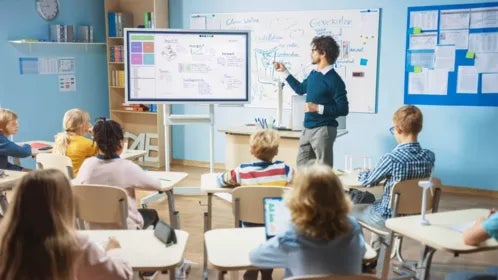
Educational innovation takes the form of a variety of active methodologies that are transforming classrooms around the world. These methodologies seek not only to improve academic performance, but also to prepare students to function with critical awareness, autonomy and responsibility in a global and changing context. In this process, the teacher’s role is redefined as that of a guide, mentor and designer of relevant learning experiences.
Among the most established and effective methodologies is Project-Based Learning (PBL), which transforms passive learning into an active and meaningful experience. Through this strategy, students:
- Investigate and solve real-world problems.
- Work collaboratively, fostering positive interdependence.
- Develop cross-curricular skills such as communication, creativity and critical thinking.
- Connect different areas of knowledge in authentic contexts.
- Present tangible, assessable and transferable outcomes and solutions.
Various studies have shown that PBL significantly increases student motivation, improves knowledge retention and promotes the transfer of learning to real life.
The UAX Master’s in Educational Innovation explores this methodology in depth, providing teachers with the tools to design and implement transformative projects tailored to the curriculum and social reality.
Another prime example is the use of the ‘flipped classroom’ model, which rethinks the traditional structure of the teaching-learning process. In this approach, theoretical content is studied at home using videos or interactive materials, whilst class time is devoted to practical activities, discussions or problem-solving. This change offers substantial advantages:
- It allows each student to progress at their own pace.
- It optimises face-to-face time for the development of complex skills.
- It increases pupils’ active participation.
- It fosters autonomy and self-regulation in learning.
Both methodologies — PBL and the flipped classroom — are just two examples of the educational paradigm shift we are witnessing. This shift does not occur in a vacuum: it responds to profound transformations in the social and economic fabric.
Today we live in an increasingly horizontal ‘geometry of social space’, characterised by collaboration, decentralisation, global mobility and interdependence. This new logic demands methodologies which, as well as being effective, are also inclusive, sustainable and mindful of the social and environmental impact of education.
Digital tools that foster teaching innovation
In this regard, methodological innovation cannot be separated from the development of digital and global skills. Schools must prepare pupils for an environment where mass access to information coexists with digital exclusion, hyper-connectivity and disinformation. It is therefore essential to provide up-to-date teacher training in the critical and ethical use of technology, enabling teachers to impart not only the technical skills required to use tools, but also a deep understanding of digital literacy: informed, ethical and critical.
The introduction of digital learning environments and technologies such as generative artificial intelligence is opening up new possibilities for personalising teaching, adapting content to the student’s pace, and collecting useful data for rigorous and effective formative assessment. The use of AI-based digital assistants facilitates the automation of administrative and pedagogical tasks, allowing teachers to focus on providing personalised support to pupils, whilst offering instant feedback on individual and group performance. Furthermore, the development of generative twins and personalised learning models can generate teaching recommendations tailored to each student’s needs, thereby optimising lesson planning and improving pedagogical decision-making.
However, their use must be balanced, mindful and adapted to the students’ age, interests and characteristics, incorporating neuroscience-based teaching strategies that respect diversity and promote inclusive learning.
Within this framework, methodologies such as:
- Design Thinking, for solving complex problems with creativity and empathy.
- Visual Thinking, which enhances visual comprehension and the graphic expression of thought.
- Agile methodologies or frameworks such as Lean Canvas, which enable projects to be organised in an iterative, participatory and flexible manner.
- Gamification and game-based learning, which foster intrinsic motivation and emotional engagement in learning.
What these strategies have in common is the promotion of authentic learning, where pupils cease to be mere recipients of content and become active participants in their own educational process. As Quintas (2020) points out, this active role is built around meaningful projects, games, debates, challenges, design and co-creation, which connect with pupils’ interests and real-world problems.
In short, 21st-century education demands innovative methodologies that respond not only to curricular requirements but also to the major challenges of our time: inequalities, sustainability, digital transformation, and the need for critical citizenship. For this reason, training teachers capable of leading these changes is more urgent and necessary than ever.

Specialise in Educational Innovation with UAX
In a constantly evolving educational landscape, specialised training in educational innovation has become an essential requirement for professionals and teachers who wish to lead change within their institutions.
UAX addresses this need through the Online Master’s in Educational Innovation , a programme designed to transform teaching practice. This master’s degree provides comprehensive training that combines theoretical foundations with immediate practical applications. Throughout the programme, students:
- Explore the latest trends in active learning methodologies.
- Develop skills for designing innovative learning experiences.
- Acquire skills for the effective integration of educational technology.
- Learn to evaluate the impact of the innovations implemented.
- Create their own innovation project applicable to their professional context.
Furthermore, the programme’s online format allows participants to balance their training with their professional practice, facilitating the immediate application of what they have learnt in the classroom. In addition, the practical approach ensures that all theoretical content translates into concrete tools for educational transformation.
The teaching staff consists of practising professionals with extensive experience in teaching innovation, which enriches the learning experience with real-life case studies and proven solutions across various educational contexts. This connection to the reality of the classroom is one of the aspects most highly valued by the programme’s graduates.
If you are looking to take a significant step forward in your teaching career and become a leader in educational innovation, the Master’s in Educational Innovation offers you the path to achieve this, with a practical, flexible approach tailored to today’s educational demands.
Teaching innovation: the key to transforming 21st-century education
In a world marked by rapid change — climate change, migration, the digital divide, artificial intelligence — teaching innovation is no longer merely an opportunity, but a structural necessity for the global education system.
The education system today faces challenges on an international scale: from the need to nurture citizens committed to sustainability and social justice, to preparing students for professions that do not yet exist. Against this backdrop, educational innovation stands as the main driver of change towards a more inclusive, relevant and transformative education.
Why is innovation in education essential?
Educational innovation has the potential to:
- Cater to the diversity of the student body and personalise learning, using digital tools and data to adapt teaching methods to different learning paces and styles.
- Develop skills for a changing world, such as critical thinking, resilience, digital literacy, collaborative working and ethical awareness.
- Reconnect schools with humanity’s greatest challenges, promoting meaningful learning that links the curriculum to real life and the international agenda (SDGs, global citizenship, gender equality, etc.).
- To capitalise on the opportunities offered by artificial intelligence and other emerging technologies to transform assessment, planning and teaching, whilst remaining true to humanist values.
- To combat educational inequalities arising from social, economic and geographical contexts through more equitable and inclusive pedagogical approaches.
Impact of teaching innovation on educational stakeholders
For students:
- Greater motivation and a sense of belonging to the educational process.
- Deep, context-based learning connected to their personal interests.
- Development of global and digital skills.
- Active and creative participation in their own learning.
- Preparation for engaged, critical and ethical citizenship.
For teachers:
- A renewed role as designers of learning experiences.
- Improved effectiveness and job satisfaction.
- Creation of networks for collaboration and the exchange of best practice.
- Continuing professional development in active teaching methods, educational technology and pedagogical leadership.
For educational institutions:
- A more agile, flexible and innovative organisational culture.
- Reducing school drop-out rates and improving equity indicators.
- Stronger links with the social, economic and cultural environment.
- Enhanced institutional reputation and capacity to respond to new challenges.
Challenges in implementing educational innovation
Despite its obvious benefits, the implementation of educational innovation is not without obstacles and challenges that must be recognised and addressed:
- Resistance to change. One of the main challenges is the natural resistance generated by processes of change, amongst teachers, pupils and families alike who are accustomed to traditional models.
- Insufficient teacher training. Educational innovation requires a process of learning and adaptation that does not always receive the necessary support.
- Limited resources and time. Innovation often requires investment in material, technological or training resources that are not always available.
- Pressure for immediate results. Education systems are often under pressure to deliver short-term quantitative results, whilst changes take time to demonstrate their real impact on deep learning.
- Curricular and assessment rigidity. Overloaded curricula and standardised assessment systems can limit the scope for implementing innovative methodologies that require flexibility and time.
- Difficulty in assessing impact. Measuring the real impact of educational innovations beyond traditional indicators poses a significant methodological challenge that can discourage their implementation.
To overcome these challenges, it is essential to adopt a systematic approach that includes:
- Ongoing training and support for teachers.
- The creation of communities of practice to facilitate the exchange of experiences.
- Gradual implementation to allow for adjustments and adaptations.
- Rigorous yet flexible evaluation of the impact of innovations.
Educational innovation is not a passing fad, but a necessary response to the profound social, technological and economic changes we are experiencing.
Education in the 21st century requires teachers who are prepared to question traditional practices and explore new ways of teaching and learning. It requires flexible institutions that support experimentation and change. And, above all, it needs a shared vision of the kind of education we wish to offer to future generations.
If you are interested in being part of this educational transformation, we encourage you to continue your professional development and to take small steps towards innovation in your own context. Remember that every classroom can become a laboratory for change and that every teacher has the potential to be an agent of transformation.
UAX can be your partner on this exciting journey towards a more inspiring education, tailored to the challenges of the future!
Bibliographical References.
- Fullan, M., Queen, J., McEachen, J., & Deep. (2017). Learning: engage the world, change the world. Retrieved from:https://bit.ly/3inAtTP
- Hanushek, E. and Woessmann, L. (2020). The economic impacts of learning losses. Paris: OECD Education Working Papers. No. 225.
- Mas, J. (2020). The economic impact of education. World Bank.
- Quintás Hijós, A. (2020). Educational theory on technology, play and resources in early years education. Zaragoza: University of Zaragoza Press.
- UNESCO (2016) Educational innovation. Support tools for teaching.