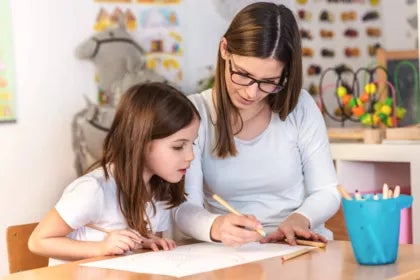





















Are you passionate about psychopedagogy? Would you like to work as a psychopedagogue? Previously on our blog, we discussed this professional role, which focuses on the study of ‘a person in a learning situation’ of any age, assessing, diagnosing and helping those who face the greatest difficulties in the learning process. We told you all about psychopedagogy and the work of a psychopedagogue.
Having re-read that post carefully, you’re probably wondering how educational psychology differs from educational psychology. To clear up any doubts, the first thing to do is to find out what educational psychology is. Read on!
Educational psychology is the application of the scientific method to the study of the behaviour of individuals and social groups in educational settings. It applies to the behaviour of teachers and pupils, as well as that of teaching assistants, young children, immigrants and older people.
In fact, the areas of study within educational psychology overlap with other areas of psychology, such as developmental psychology (covering both children and adolescents), social psychology, psychological assessment, and vocational or educational guidance.

Difference between Educational Psychology and Psychopedagogy
The main difference between psychopedagogy and educational psychology lies in the fact that psychopedagogy studies learning difficulties by taking into account the affective and cognitive aspects of the individual; that is to say, the individual as a whole and their environment. Educational psychology, on the other hand, studies behaviour within the teaching and learning process, taking as its reference the pupil, the teacher, as well as the context in which teaching takes place, what is being taught, and the individual’s environment.
In short, educational psychology addresses an individual’s learning difficulties, whilst educational psychology studies their behaviour. To summarise, these are the main differences:
- Educational psychology: designs and develops teaching techniques for the teaching process; enables the study of children and their environment at different stages of learning; and helps to resolve learning-related problems. You can acquire this knowledge on this Master’s in Educational Psychology .
- Educational psychology: studies human behaviour and educational processes; applies diagnostic assessments of knowledge; enables the analysis of teachers’ and students’ behaviour; and helps to improve the human teaching-and-learning process. You can acquire this knowledge on this Bachelor’s Degree in Psychology in Madrid or on the Online Bachelor’s Degree in Psychology
As well as understanding the differences between educational psychology and educational psychology, it is essential to consider innovations in the field of education. In a world where our understanding of the human brain is constantly evolving, neuroeducation is emerging as a key interdisciplinary field for optimising teaching and learning processes. This integrative approach combines the principles of neuroscience with pedagogy, offering innovative tools to understand how the brain functions during learning. The Master’s in Educational Neuropsychology focuses on exploring these connections between the brain and education, equipping professionals with practical and theoretical skills to design more effective, student-centred learning environments
As you have seen, both educational psychology and educational pedagogy, whilst having their differences, are crucial when it comes to improving the teaching and learning process. Would you like to contribute through your professional work?