In a globalised world, languages are essential for understanding the different cultures of countries across the five continents. Territorial borders are becoming increasingly porous and open to the world; therefore, it is necessary to reach a common understanding amongst different countries in order to advance society.
It is therefore becoming increasingly clear that a person will have more opportunities in a globalised world if they are proficient in several languages, enabling them to function with complete fluency across all five continents.
Mastering several languages also indicates that one is a person of great talent and potential, as it is truly enviable to be able to express oneself both orally and in writing in several languages. And, of course, it is a great help when travelling and getting to know other cultures. Are you one of the lucky ones?
Now, if we focus on international and diplomatic relations, that is, those between different countries which shape the progress of joint agreements adopted for common causes and in the interests of the majority of humanity, we can see that languages are a key and fundamental pillar for making that understanding a reality.
The importance of translation in international relations
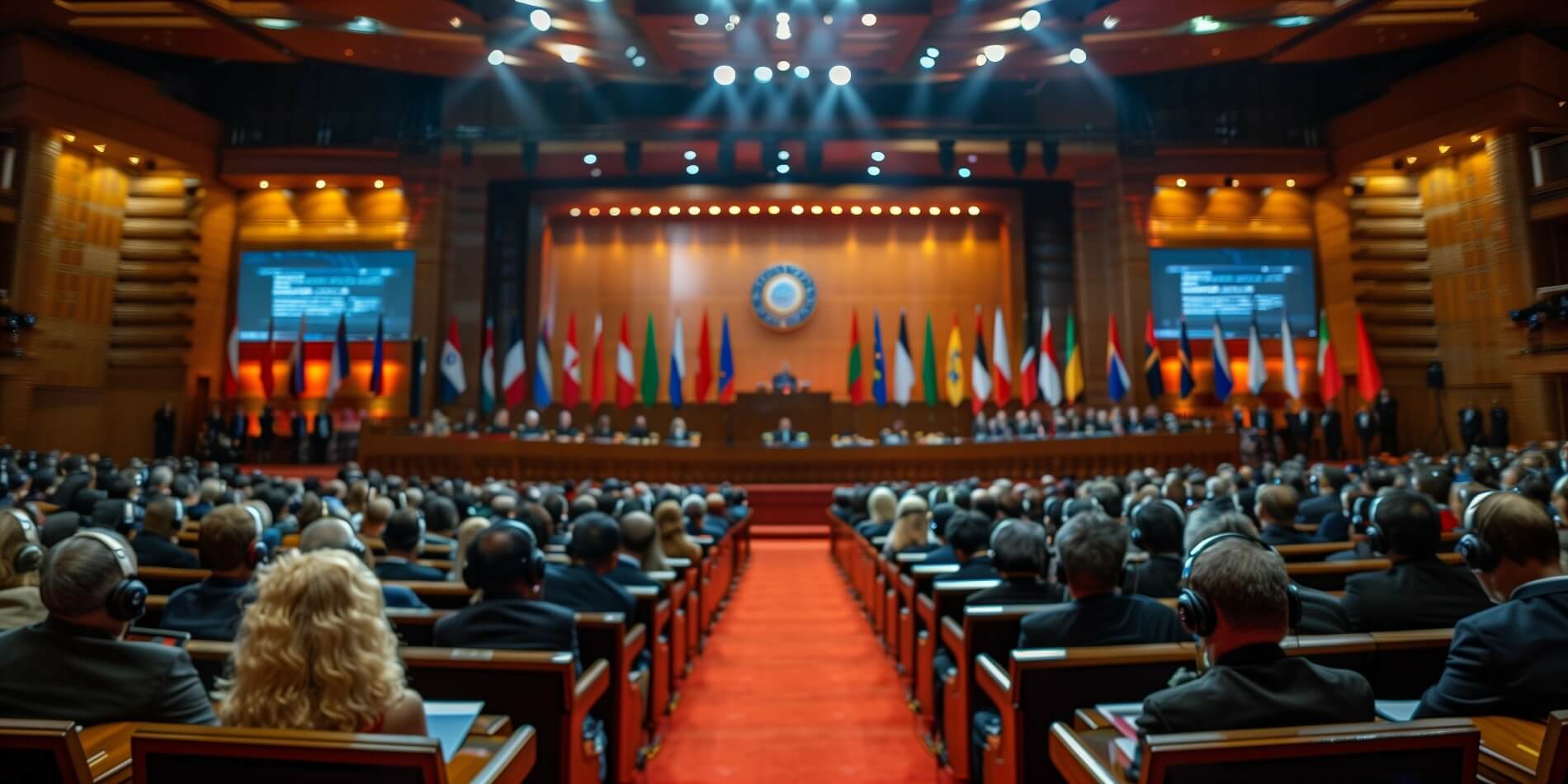
In international relations, translation and interpreting are key to mutual understanding amongst world leaders. For this reason, many people pursue careers in applied languages, working as translators and interpreters. It is, without doubt, a highly sought-after profession in a globalised world. Bear in mind that at key meetings between leaders from different countries, there will often be participants who do not have a command of the common language of mutual understanding – for example, English – and will therefore have to resort to their mother tongue to express themselves, or to another language that may not be understood by other leaders. This is where the translator and interpreter come into play, conveying in real time the message put forward by each leader into languages such as English, French or German.
The role of translators and interpreters is also vital at international conferences, which are held regularly in various countries, where experts in various disciplines deliver high-level presentations.
Would you like to play a part in this vital role in the 21st century? To do so, there are degree programmes in international relations , through which students can acquire the necessary skills to contribute to mutual understanding in the field of diplomacy – a key element in international relations. In turn, you’ll have access to other career opportunities, such as working as a translator in a museum or on guided tourist tours, amongst many other future options.
As you have seen, the importance of translation and interpreting in international relations is clear. Now it is simply a matter of deciding whether you wish to take on this role, enter a profession in high demand, and use your language skills to help forge even closer ties between different countries.
If so, find out more about our dual degrees in international relations.