







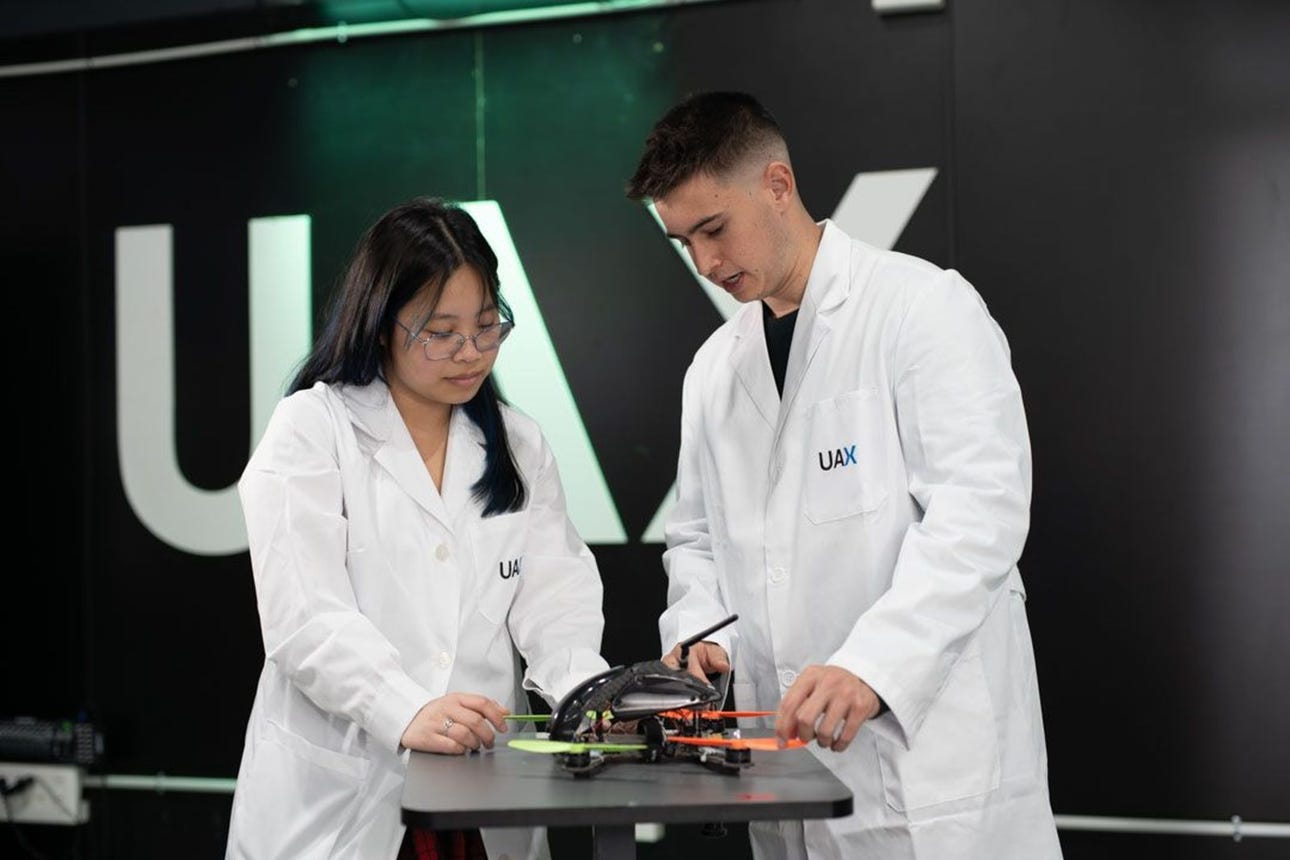










The main challenge for companies in the coming years will be to extract real value from technology for their businesses and to drive a reinvention of talent by integrating the Tech Generation – a digitally native generation that needs to manage the pace at which technology is driving the market and the time required for business development. This is the thesis put forward in the report “The Future of Work: How Technology is Redesigning Organisations, Roles and Talent” , produced by Alfonso X el Sabio University (UAX) in collaboration with MIT Technology Review in Spanish.
Based on the perspectives of executives from major organisations such as José María Clavería, CFO of UFD, Naturgy’s electricity distribution arm; Ana Ortín, CDAIO at Mahou San Miguel; Rodrigo Fuentes, Head of People at AXA Spain; Juan José Cestero, Head of People at ILUNION Hotels; and Luis Couceiro, Director of Universities at the UAX Group, the study confirms that technology underpins the challenges facing business and the labour market, from professions to training programmes and the challenges of building inclusive workforces where senior and younger staff combine their strengths.
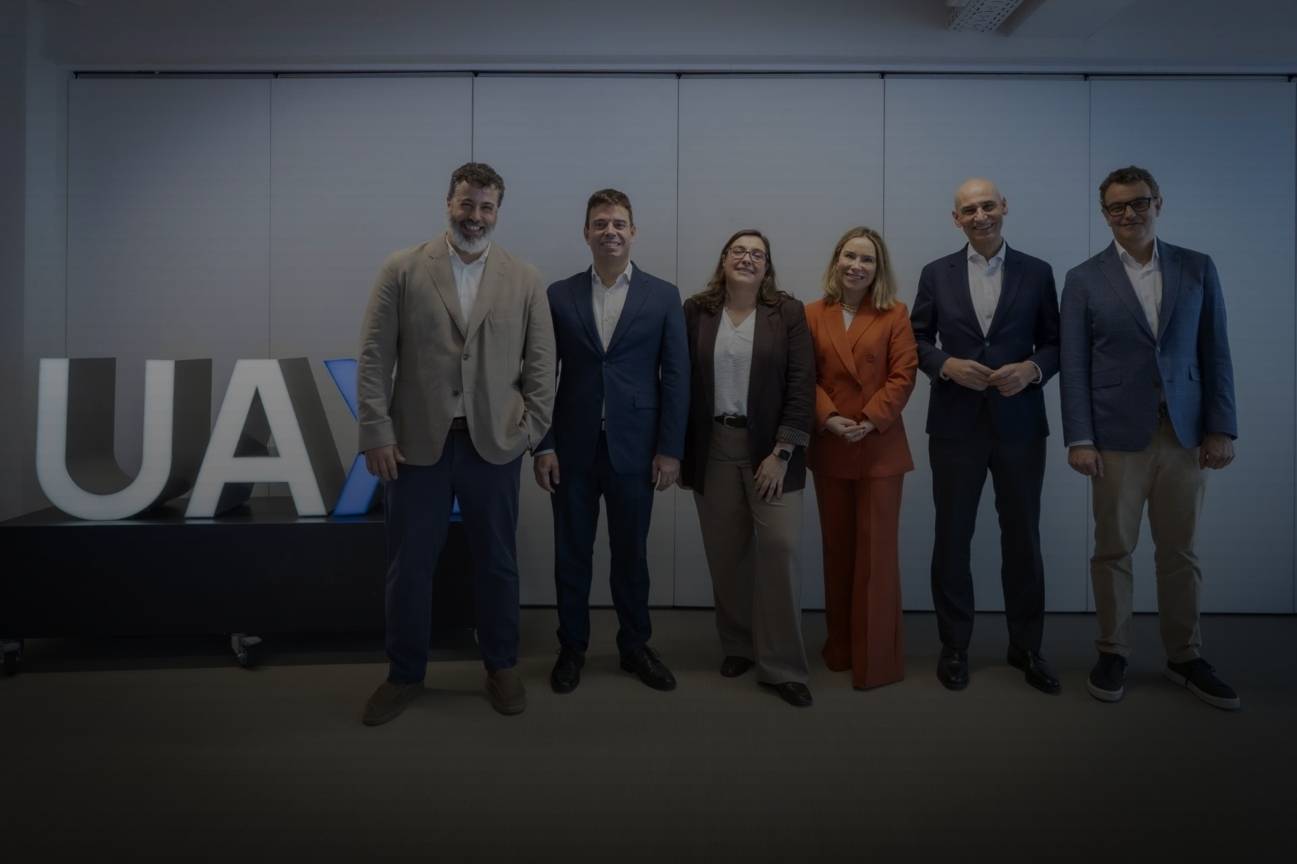
The report was presented on Wednesday at the university’s campus in Chamberí, Madrid. María del Castillo, Director of Business & Tech at the UAX Group, stated: “The integration of technology into organisations is forcing us to rethink processes, change the way decisions are made and, ultimately, create a new way of working where knowledge and professional judgement are key. With this report, we are listening to the market’s needs to design up-to-date, high-quality training for our students, which connects them with the activities of companies and facilitates their entry into the workforce with the skills required by the business ecosystem ”.
The event was attended by executives from major organisations, including Francisco Fernández, Head of HR at Atlético de Madrid, who spoke about market trends and stated that “AI is accelerating a transformation that was already underway and is forcing us to rethink what it means to add value. “I think we’re too preoccupied with which jobs are going to disappear, and perhaps we should be more concerned with understanding how the jobs we already know are going to change.”
The business challenge: the link between technology and competitiveness is growing ever closer
Digitalisation has brought companies a host of technologies that can either be an ally in business management or merely an experiment. To ensure that technology acts as a lever for growth, all the experts agree on the need to be clear about which problem it must solve and where it makes the most sense to apply it. “Rather than talking about an overvaluation of technology, or of a specific technology, what is being overvalued is the immediate impact without any real transformation,” says Clavería, CFO of UFD, Naturgy’s electricity distribution company.
For his part, Rodrigo Fuentes, Head of People at AXA Spain, emphasises the very reconfiguration of processes that is resulting from the incorporation of technologies: “The ultimate aim is to harness this technology to rethink entire processes,” he says, adding: “Applying it to just one stage creates a bottleneck: the customer perceives an improvement in one small area, but their overall experience does not improve.”
This technological maelstrom has shortened adoption times and, as Ana Ortín, CDAIO at Mahou San Miguel, points out: “You can’t afford to be a follower. If you’re not among the first, the pace leaves you no time to observe, understand and wait for things to stabilise before adopting it”, and she points out that in the new market, the key will lie in “trial and error”.
Experts also point out that the adoption gap is exponential and exists across sectors, generations and countries, which compounds the challenge. This pace also has an impact on the role of the younger generations and their entry into the labour market.
The talent challenge: generational and cultural
The report notes that the technological wave has driven an evolution of current jobs towards higher-value roles that combine sector-specific knowledge with digital skills, the ability to interpret data and the use of new tools to improve decision-making. Furthermore, it identifies the ability to manage frustration and learn from mistakes as particularly relevant skills for the Tech Generation, who are accustomed to a technological environment characterised by immediacy – a factor that results in a short tenure in their first job (1.1 years compared with 1.8 years for millennials or 2.8 years for Generation X).
Meanwhile, Juan José Cestero, Head of People at ILUNION, highlights the cultural aspect of talent management and points out that the process of adopting technology also entails a cultural shift that takes time to become successfully established within organisations: “The first year probably won’t go exactly as you’d like; the following year will go better, and by the year after that, things will be running more smoothly.”
Upskilling, Reskilling and Lifelong Learning as a Solution
These realities call for a combined talent strategy that supports employees throughout technological transformation processes through continuous training, upskilling and reskilling initiatives, to prevent differences in the pace of adoption from creating new skills gaps. In fact, the World Economic Forum notes that 85 per cent of organisations already prioritise the reskilling of their workforce.
Luis Couceiro, director of universities at Grupo UAX, has emphasised the role of the university as a training centre for the professionals of the future and as the “absolute guarantor of the ethical use of AI” in companies. This is a challenge that Alfonso X el Sabio University is addressing through the creation of an AI Committee, , which ensures the ethical use of this technology within the group, through collaboration with organisations via more than 10,000 agreements, and through the development of training programmes aligned with the new reality. In line with this, more than 700 UAX students have already taken part in projects to learn how to develop their own applications and agents. “By carrying out this study and through direct contact with the business world, we at UAX are staying ahead of the curve by offering official programmes and our own degree courses that we can adapt as companies’ needs evolve. In this way, we help ensure our students are 100 per cent prepared with the skills demanded by the professional market, ” says Couceiro.
New professions and skills
Among the most sought-after roles, specialists in data architecture, artificial intelligence development and engineering, and AI managers are coming to the fore due to their ability to manage, supervise and train other staff in the use of these technologies; currently, he warns, they are hard to find. Furthermore, he points out that sectors such as marketing, human resources, law and business management are incorporating digital tools and artificial intelligence into their standard processes, which is shifting traditional roles towards profiles with technological skills and analytical insight.
As for the skills that companies are valuing most in their professionals, the report argues that people are playing a more significant role in setting objectives, monitoring results and making decisions, given that AI tools are taking on a greater share of operational tasks. In this regard, the report highlights the emergence of a new hybrid role dedicated to artificial intelligence (AI) literacy, understood as the ability to understand, use, evaluate and oversee AI systems in a critical and responsible manner, and to possess sufficient judgement to identify their limitations and biases, interpret their responses and utilise them appropriately.
The study, carried out as part of UAX’s Observatory on the Impact of Technologies on Professions, confirms the university’s commitment to actively listening to the market in order to gain a deeper understanding of the evolving talent requirements of the industry.