Table of Contents
What career opportunities are there for those studying Clinical and Biomedical Laboratory Science?
The healthcare vocational training course with the best job prospects
How much does a Clinical and Biomedical Laboratory Technician earn?
What can you do after studying Clinical and Biomedical Laboratory Technology?
What career opportunities are there after studying Clinical and Biomedical Laboratory Technology?
Studying this vocational training course qualifies you to work in various areas of the healthcare sector. With your qualification as a Higher-Level Technician in Clinical and Biomedical Laboratory , you’ll be able to secure roles in:
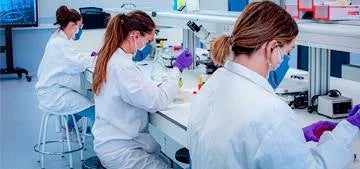
- Clinical and Diagnostic Laboratories: You will be responsible for analysing and testing biological samples, such as blood, urine or tissue, which are essential for doctors to diagnose illnesses.
- Research Laboratories: If you’re passionate about science, you can choose to work in the field of biomedical research. Here, you’ll take part in developing new techniques and searching for innovative treatments.
- Specialist Laboratory Technician: This is the most common career path. You will be responsible for managing, organising and supervising the day-to-day running of the laboratory, ensuring the quality of samples and maintaining equipment in optimal condition.
- Toxicology Laboratory Technical Assistant: You will analyse samples to detect chemicals, drugs or blood alcohol levels, which are essential for making accurate diagnoses.
- Sales Representative for Hospital and Pharmaceutical Products: If you have good interpersonal skills and are interested in the commercial side of things, this is an ideal option for you. You will promote products and services to hospitals and pharmacies, establishing partnerships and conducting negotiations.
- Other career paths: Some less conventional options include roles in teaching, healthcare management or specialist consultancy within the healthcare sector.
If you need more information, don’t miss our article: What are the duties of a Laboratory Technician?
The healthcare vocational training course with the best job prospects
Among the healthcare vocational training programmes , the Clinical and Biomedical Laboratory programme stands out for its high employability rate. Unlike other branches of healthcare, this qualification offers a wide range of career opportunities and is highly valued in both the public and private sectors.
Why choose this vocational training programme?
- High demand in the job market: Laboratories are constantly in need of qualified professionals to carry out critical, high-precision analyses.
- Comprehensive practical and theoretical training: The course combines theoretical classes with work placements in companies and hospitals, allowing you to directly apply what you have learnt in a real-world setting.
- Flexible options: After completing the vocational training, you can continue to specialise or pursue further studies at university level, which further enhances your competitiveness in the job market.
Which has better career prospects, Radiography or Laboratory Science?
This is one of the most frequently asked questions among those considering a vocational training course in healthcare. Although both the vocational training course in Diagnostic Imaging and the one in Clinical and Biomedical Laboratory offer good prospects, the reality is that:
- Clinical and Biomedical Laboratory: This has a very broad scope, ranging from clinical analysis, research and diagnosis to more specialised areas such as toxicology and immunodiagnostics.
- Diagnostic Imaging: This is a specialised branch that focuses on imaging techniques and, whilst it is also in high demand, may require additional investment in training and certifications.
Generally speaking, vocational training in Clinical and Biomedical Laboratory Science tends to offer more career opportunities and greater flexibility to adapt to different roles within the healthcare system, which puts it in a favourable position compared to training in radiography.
How much does a Clinical and Biomedical Laboratory Technician earn?
One of the aspects that most interests prospective students is remuneration. Although salaries may vary depending on the region, the type of centre (public or private) and experience, in general, it can be said that:
- Starting salary: A newly qualified laboratory technician usually starts on a gross annual salary of around 18,000 to 20,000 euros.
- With experience: With a few years’ experience, the salary can rise to between 22,000 and 28,000 euros a year.
- Experienced professionals: For those with more than 10 or 20 years’ experience, salaries may exceed 35,000 euros per annum, and may even reach higher levels in certain private centres.
These figures give you an idea of the potential for financial growth in the profession, making it an attractive option for those seeking stability and competitive pay in the healthcare sector.

What can you do after studying Clinical and Biomedical Laboratory Science?
Once you’ve completed your studies, there are a variety of options available. Here are a few recommendations:
- Look for work placements in companies or healthcare centres: Undertaking a work placement will help you consolidate what you’ve learnt and gain experience in a real-world setting. Many institutions have agreements with vocational training centres, which makes it easier to enter the job market.
- Continue with university studies: If you wish to explore the subject in greater depth, you could choose to continue your studies in degree programmes such as Biomedicine , Biochemistry, Biotechnology or even a Bachelor’s degree in Nursing.
- Specialisation and supplementary courses: Consider taking specialisation courses in specific areas such as immunology, genetics or advanced laboratory techniques. This will boost your employability and enable you to access roles with greater responsibility.
- Networking and attending events: Attend conferences, seminars and job fairs in the healthcare sector. These activities will enable you to meet professionals in the field and discover job opportunities.
- Consider international mobility: As the healthcare sector is global, you have the option of seeking opportunities abroad. Many European institutions value vocational training and offer exchange programmes or international scholarships.
Your future in the healthcare sector with UAX FP
Can you imagine studying at an institution that not only offers you a qualification with high employability prospects, but also connects you directly with the professional world? At UAX FP, studying Clinical and Biomedical Laboratory Science is much more than just acquiring technical knowledge: it is a transformative experience that boosts your career from day one.
State-of-the-art facilities and technology
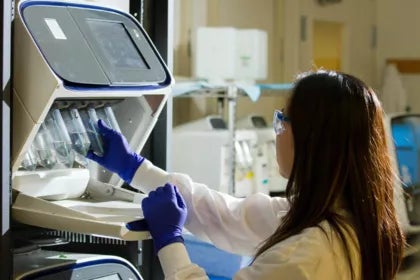
At UAX FP, you’ll have access to state-of-the-art laboratories, such as the UAX BioLab , where cutting-edge technology and the advanced Labster simulator will allow you to practise using equipment similar to that which you’ll use in a professional setting. This practical experience sets you apart and prepares you for any challenge.
Practical and Innovative Teaching Methodology
With 70 per cent practical training and a curriculum designed by healthcare experts, at UAX FP you will learn to carry out clinical, biochemical, microbiological, immunological and genetic analyses.
Direct links to the business sector
Thanks to more than 8,800 agreements with companies and prestigious institutions in the healthcare sector, UAX FP offers you work placements in laboratories and leading centres. This collaborative network ensures you can quickly enter the job market, increasing your career opportunities and boosting your professional future.
Dual and personalised training
UAX FP’s dual-track programme combines theoretical classes with work placements in companies, integrating learning in an organic way that is tailored to the sector’s real needs. Furthermore, if you already have prior qualifications, we offer personalised credit transfer schemes to facilitate your access to new academic opportunities.
Comprehensive support and exclusive grants
With grants of up to 40 per cent and bespoke funding plans, at UAX FP we are committed to ensuring that nothing stands in the way of your success. Furthermore, our team of advisers will guide you every step of the way, guaranteeing a smooth and secure transition to your new career stage.
Conclusion
In summary, the Higher Vocational Training (FP) programme in Clinical and Biomedical Laboratory Technology, available in both face-to-face and online formats, offers excellent career prospects within the healthcare sector. With a high employment rate, extensive opportunities for specialisation and a sector that is constantly growing, this qualification offers you the chance to build a solid and rewarding career.
We hope this article has helped to answer your questions and inspired you to take the next step in your professional career.
If you have any further queries or require more information, please do not hesitate to contact us.
At UAX FP, we’re here to help you achieve your goals!