See all Online Master's Degrees in Health
See all Master's Degrees in Engineering
Most searched curriculums
Official qualification
With this master's degree you will learn from experts in emergency medicine, you will carry out intra- and extra-hospital internships in SUMMA, 112 and TOP hospitals, and you will obtain 1 extra certification: Advanced Life Support (ACLS), by the American Heart Association (AHA). Best University in the area of Health Sciences in the Student Choice Awards 2026
In collaboration with:
Gain qualifications at the highest level with the Master’s Degree in Adult Emergency and Critical Care Nursing (Online). UAX is ranked second in the list of the best universities for nursing in Spain, according to ConSalud.es, based on international educational excellence indices.
You will learn to assess situations, maximise the effectiveness of your decision-making, and manage situations requiring rapid, organised, systematic and evidence-based care :
In addition, you will obtain the Advanced Cardiac Life Support (ACLS) certification from the American Heart Association (AHA):

This micro-credential equips you to use tools such as ChatGPT, Copilot, Gemini and Claude to analyse information, create content and optimise professional tasks, whilst integrating innovative solutions in an ethical and responsible manner within real-world contexts.

Develop your professional potential through leadership and interpersonal skills in healthcare settings. This micro-credential provides you with the keys to managing teams, communicating effectively and solving problems in real-world settings, by applying personal leadership techniques and practical productivity tools in the healthcare sector.
University Master's Degree in Adult Emergencies and Emergencies for Nursing Professionals
First Year
ANNUAL SUBJECTS
| Code | Subjects | Character* | ECTS |
|---|---|---|---|
| M130719 | External Academic Placements I | OB | 7 |
| M130720 | External Academic Placements II | OB | 5 |
| M130721 | Master’s Thesis | OB | 6 |
| TOTAL: | 18 | ||
FIRST FOUR-MONTH PERIOD
| Code | Subjects | Character* | ECTS | ||||||||||||||||||
|---|---|---|---|---|---|---|---|---|---|---|---|---|---|---|---|---|---|---|---|---|---|
| M130709 | Critical Emergencies | OB | 6 | ||||||||||||||||||
Critical EmergenciesCódigo: M130709 Imprimir Course 1: First-semester module. Compulsory. 6 credits. Profesores
Objectives *To identify the various components of the nervous system and their normal functioning. *To carry out a comprehensive neurological assessment of any patient experiencing altered levels of consciousness. *To distinguish between drowsiness, stupor, lethargy and a comatose state. *Understand the risks of traumatic brain injury, its manifestations and possible complications. *To identify the different types of stroke, the risk factors, their clinical manifestations and the most appropriate care. *Distinguish between the different types of seizures and their risks. *Identify the different types of headaches that may occur. *Carry out a correct and appropriate assessment of patients in a comatose state. *Identify warning signs in a patient showing signs of central nervous system infections. *Understand the care and medical treatment indicated for each of the neurological emergencies studied. *Understand the biomechanics of injuries in patients with multiple trauma. *Identify the immediate care required for a patient with multiple trauma and the necessary interventions. *Provide appropriate care in both the pre-hospital and hospital settings. *Understand the general guidelines for care in an ICU. *To understand the common complications in a patient with multiple trauma. *To identify, in an emergency situation, the different types of burns and their possible causes. *Understand the pathophysiology of a burn. *Assess the severity of a burn. *Understand the immediate actions to take in each situation. *To identify and prevent potential complications of burns. *Carry out a comprehensive assessment of a burn patient. *Plan care for patients with burns. *Understand existing protocols regarding the transfer of burn patients and their pharmacological treatment. *Define the concept of poisoning. *Classify the different types of poisoning. *Understand the general symptoms associated with most substances that cause poisoning. *List some basic guidelines for action in the event of a serious poisoning incident. *Treat the most common cases of poisoning. *Distinguish between medical and surgical abdominal conditions. *Learn how to examine, assess and stabilise abdominal conditions in an emergency situation. *To assess the digestive system appropriately. *Identify gastrointestinal emergencies requiring urgent medical attention. *Understand the most common causes of acute diarrhoea and its potential complications. *Identify the causes of intestinal obstruction and its most common clinical manifestations. *To distinguish the severity of acute abdominal pain and the immediate action it requires. *Define the possible causes, complications and required management in patients with gastrointestinal haemorrhage. *To differentiate between the most common biliary tract emergencies and the possible causes of acute pancreatitis. *Understand the possible liver emergencies a patient may present with and their associated symptoms. *To recognise proctological emergencies and the most appropriate treatment. *To identify perforation of a hollow viscus and its common manifestations. *To propose the appropriate medical treatment and care for each situation studied. Prerequisites Hold a diploma or degree in nursing Learning outcomes Knowledge: RK2 Gain an in-depth understanding of the biomechanics of injuries in patients with multiple trauma and learn how to carry out appropriate interventions. RK3 To master the pathophysiology of burns, their severity and classification, the immediate action to be taken in each case, and the existing protocols regarding the transfer of these patients. RK4 Gain an in-depth understanding of the causes, symptoms, treatment and care of the most common gastrointestinal emergencies. RK8 To provide training in taking as comprehensive a medical history as possible in urgent and emergency situations. RK9 To provide training in the understanding of urgent and emergency situations and disasters, as well as familiarity with the ten principles of out-of-hospital emergency care. RK10 To master the pharmacology of commonly used medicines and their routes of administration in urgent and emergency situations. RK11 To gain a deeper understanding of the fundamentals of urgent and emergency healthcare Skill: RS2 To master the care and treatment of the neurological emergencies studied and to provide training in the care of these patients. RS3 Acquire advanced training in the general symptoms associated with the majority of substances causing poisoning and the required emergency response. RS5 Provide training in the performance of all techniques and procedures covered in the basic practical workshops for emergency and urgent care. RS6 To provide training in the most appropriate course of action for each emergency situation, as well as the correct sequence of activities. RS7 Optimise resources with a view to providing patients with high-quality, evidence-based clinical care to improve survival rates. RS8 To develop the skills required to carry out the procedures indicated in emergency situations, as well as to apply up-to-date methodology. RS10 To be competent in the application of various advanced techniques to achieve optimal outcomes. RS11 Specialise in the techniques required to carry out urgent treatments in different clinical situations. Competence: RC1 To provide training in advanced professional intervention for patients in critical and emergency situations. RC4 To acquire advanced training in patient care in critical and emergency situations, with a view to improving specific competencies within the professional field. RC8 Be able to facilitate urgent diagnostic investigations and an interdisciplinary treatment plan to achieve the best possible outcome for the patient. Course content Three modules: Module 1: Multiple trauma and neurological emergencies. Altered levels of consciousness. 1. Anatomical and physiological review. 2. Neurological examination. 3. Traumatic brain injury. 4. Cerebrovascular accidents. 5. Seizures/status epilepticus. 6. Coma. 7. Headaches. 8. Infections of the central nervous system. 9. Patients with multiple trauma. Introduction. 10. Causes of multiple trauma and the biomechanics of accidents. 11. Care and management of patients with multiple trauma. 12. Management of different conditions. Module 2: Emergency cases caused by external agents. Burns and poisonings. 1. Introduction to burns. 2. Burns. Classification. 3. Assessment of the burn patient. 4. Pathophysiology of burns. 5. Immediate care for burns. 6. Treatment of burns. 7. Long-term care for burns. Prevention of sequelae. 8. Special types of burns. 9. Introduction to poisoning. 10. Assessment of poisoning. 11. Emergency care for poisoning. 12. Specific types of poisoning. 13. Food poisoning. 14. Anaphylactic shock. Module 3: Gastrointestinal emergencies 1. Introduction. 2. Acute diarrhoea. 3. Gastrointestinal haemorrhage. 4. Acute abdominal pain. 5. Urgent biliary conditions. 6. Proctological emergencies. Simulations. Clinical placements in nursing practice laboratories: Conducting MEGACODES (on-site role-play simulations of urgent and emergency situations) with the active participation of students. These practical scenarios are structured according to the course content. Training activities Lectures. Seminars. E-learning. Individual and group tutorials. Independent study. Examination. Clinical placements Assessment system and criteria The assessment criteria for this module consist of: 1. Assessment of reports on various practical case studies, including the submission of a final assignment set for completion at the end of the module, applying the knowledge acquired in the different subjects. (20%). 2. Portfolio (20%). Submission and assessment of one practical case per subject, in which students describe the case and specify the recognition, diagnosis and treatment of the urgent and/or emergency situation. (10%). Face-to-face assessment of the practical situations encountered during the in-house placements (10%) 3. Face-to-face written examination (60%) which comprehensively assesses the skills acquired by the student. * In the case of a supplementary examination session, the final assessment will take the form of a face-to-face examination at the Villanueva de la Cañada campus. The final mark will be based entirely on the examination mark. Addendum Castejón de la Encina, M.ª E. (2019). Clinical Safety in Pre-hospital Emergency Services. Elsevier. Retrieved from https://www.clinicalkey.com/student/nursing/content/toc/3-s2.0-C20160043735 Martínez González, M. Á. (2023). Concepts of Public Health and Preventive Strategies. Elsevier. Retrieved from https://www.clinicalkey.com/student/nursing/content/toc/3-s2.0-C20210029758 Sweet, V. (2021). Sheehy. Emergency Nursing. Elsevier. Retrieved from https://www.clinicalkey.com/student/nursing/content/toc/3-s2.0-C20190048418 National Association of Emergency Medical Technicians. (2024). PHTLS: Prehospital Trauma Life Support (10th ed.). ISBN 9781284272314. Bibliography Basic: 1. Dueñas Laita, A Acute poisonings in emergency medicine and critical care : Masson. 2002. ISBN: 8445808001 2.- Gulias, A. Manual of Medical Therapy and Emergency Procedures 7th ed. McGraw-Hill, 2016. ISBN: 9786071513007 3. Gutiérrez Vázquez, Isauro Ramón Emergency Medicine Panamericana Medical Publishers. 2007. ISBN: 9789687988788 4. Herndon, David N. Comprehensive Management of Burns : Elsevier Masson. 2009. ISBN: 9788445819388 5. Jiménez Murillo, Luis Emergency and Urgent Care Medicine. : Elsevier, 2014. ISBN: 9788490221495 6. Jims Clinical Examination in Neurology : Jims. 2007. ISBN: 8495062127 7. Moya Mir, Manuel S. Quick Guide to Emergency Management : Editorial Médica Panamericana. 2009. ISBN: 9788498351873 8. Ottolino Lavarte, Pablo Rafael Comprehensive Management of the Multiple Trauma Patient : Editorial Médica Panamericana. 2008. ISBN: 9789806908185 9. Raya Moles, José Alberto Comprehensive Emergency Care for Multiple Traumas : Formación Alcalá. 2003. ISBN: 8495658658 10. Suñer, R Treatise on Neurological Nursing: Madrid [etc.]: Elsevier, 2013. 2013. ISBN: 9788490226032 11. Zarranz, Juan J. Neurology / Elsevier,. 2018. ISBN: 9788491130710 |
|||||||||||||||||||||
| M130710 | Emergencies in Internal Medicine | OB | 6 | ||||||||||||||||||
Emergencies in Internal MedicineCódigo: M130710 Imprimir Course 1: First-semester module. Compulsory. 6 credits. Profesores
Objectives • To identify the frequency and incidence of cardiovascular conditions in A&E. • To understand the physiology and anatomy of the cardiovascular system. • To be able to interpret an electrocardiogram and identify urgent cardiac conditions. • To be familiar with current guidelines for the immediate management of cardiopulmonary arrest. • To acquire the necessary knowledge to avoid unnecessary procedures in cases of cardiorespiratory arrest and to carry out the necessary ones as quickly as possible. • To learn how to perform basic cardiopulmonary resuscitation (CPR) on adults and children, in order to prevent the long-term consequences of delays in initial care. • To be familiar with advanced cardiopulmonary resuscitation procedures in adults and children, in order to improve recovery following cardiac arrest. • To acquire the knowledge required to use early defibrillation devices on patients who have suffered a cardiac arrest. • To distinguish between different cardiac conditions and be able to act accordingly. • To identify the various cardiac arrhythmias in the A&E department and be able to treat them until the patient is stabilised. • To differentiate the pathophysiology of acute coronary syndrome in order to establish appropriate treatment. • Acquire the knowledge to assess acute vascular conditions and determine the necessary treatment. • To identify the prevalence and incidence of respiratory and endocrine-metabolic conditions in the emergency department. • Understand the physiology and anatomy of the respiratory and endocrine systems. • To recognise and identify potential critical or urgent respiratory conditions. • To understand and identify potential critical or urgent endocrine and metabolic conditions. • To be able to prioritise interventions in a rational and professional manner in different critical or emergency situations. • To provide the most up-to-date interventions, always in line with the latest recommendations issued by various international organisations. • To be familiar with the various treatment devices. Prerequisites Hold a diploma or degree in nursing Learning outcomes Knowledge: RK1 Be able to quickly identify potential critical/urgent endocrine-metabolic situations and provide training in the appropriate interventions. RK8 Be able to compile as comprehensive a medical history as possible in urgent and emergency situations. RK9 Be able to demonstrate knowledge of urgent, emergency and disaster situations, as well as the ten principles of out-of-hospital emergency care. RK10 To have a thorough understanding of commonly used pharmacology and its routes of administration in urgent and emergency situations. RK11 To gain a deeper understanding of the fundamentals of urgent and emergency healthcare Skill: RS1 To provide training in the use of early defibrillation devices on patients who have suffered a cardiac arrest. RS7 To optimise resources whilst striving to provide patients with high-quality, evidence-based care to improve survival rates. RS5 Provide training in the performance of all techniques and procedures covered in the basic practical workshops for emergency and urgent care. RS6 To provide training in the most appropriate course of action in each emergency and urgent care situation, as well as the correct sequence of activities. RS8 To develop the skills required to carry out the procedures indicated in emergency situations, as well as to apply the most up-to-date methodology. RS9 To apply current guidelines for the immediate management of cardiopulmonary arrest, as well as to perform advanced cardiopulmonary resuscitation manoeuvres in adults and children to improve post-arrest recovery. RS10 To be competent in the application of various advanced techniques to achieve optimal outcomes. RS11 Specialise in techniques for carrying out emergency treatments in different clinical situations. Competence: RC1 To provide training in advanced professional intervention for patients in critical and emergency situations. RC4 To acquire advanced training in patient care in critical and emergency situations, with the aim of improving specific competencies within the professional field. RC6 To provide training in assessing acute vascular conditions and determining the necessary treatment and care. RC7 Be able to rapidly identify potential critical/emergency respiratory conditions and be trained in the appropriate interventions. RC8 To have the ability to facilitate urgent diagnostic investigations and an interdisciplinary treatment plan to achieve the best possible outcome for the patient. Description of the content Two modules: Module 1: Cardiovascular Emergencies. 1. Review of the anatomy and physiology of the cardiovascular system. 1.1. Anatomy of the cardiovascular system. 1.2. Physiology of the cardiovascular system. 2. Cardiac arrest. Latest guidelines. 2.1. Basic life support. 2.2. Advanced life support. 3. Cardiological emergencies. 3.1. Chest pain. 3.2. Arrhythmias in A&E. 3.3. Acute coronary syndrome. 3.4. Heart failure. 3.5. Pericardial disease. 4. Vascular emergencies. 4.1. Hypertensive emergencies. 4.2. Thromboembolic disease. 4.3. Acute arterial ischaemia of the extremities. Module 2: Respiratory and endocrine-metabolic emergencies. 1. Respiratory emergencies. 1.1. Anatomical and physiological review. 1.2. Respiratory emergencies. 1.2.1. Acute respiratory failure (ARF). 1.3. Airway management devices. 1.4. Alternative devices for airway management. 2. Endocrinological emergencies. 2.1. Anatomical and physiological overview and acute conditions. 2.1.1. Parathyroid glands. 2.1.2. Thyroid gland. 2.1.3. Adrenal glands. 2.1.4. Pancreas. 3. Metabolic emergencies. 3.1. Electrolyte imbalances. 3.1.1. Sodium-related disorders. 3.1.2. Potassium-related disorders. 3.1.3. Calcium-related disorders. 3.1.4. Magnesium-related disorders. Simulations. In-house practical sessions in nursing practice laboratories: Conducting MEGACODES (on-site role-play simulations of urgent and emergency situations) with the active participation of students. These practical cases are structured according to the course content. Teaching activities Lectures. Seminars. E-learning. Individual and group tutorials. Independent study. Examination. Clinical placements Assessment system and criteria Regular assessment period: 1. Assessment of reports on various practical case studies set for resolution, applying the knowledge acquired in the different modules (20 per cent). 2. Portfolio (20%). Assessment of a literature review of the latest recommendations from the main official bodies in the field of emergency medicine on the topics covered in the module (10%). Face-to-face assessment of the practical scenarios encountered during the in-house placements (10%). 3. In-person written examination comprehensively covering the skills acquired by the student (60%). Extraordinary examination session In the supplementary examination session, the mark obtained in the examination for that session will be used as the sole assessment criterion. Addendum Martínez González, M. Á. (2023). Concepts of public health and preventive strategies. Elsevier. Retrieved from https://www.clinicalkey.com/student/nursing/content/toc/3-s2.0-C20210029758 Sweet, V. (2021). Sheehy. Emergency Nursing. Elsevier. Retrieved from https://www.clinicalkey.com/student/nursing/content/toc/3-s2.0-C20190048418 Bibliography Core: 1. Cabrera Bueno, Fernando Electrocardiography: Editorial Médica Panamericana. 2015. ISBN: 9788498358889 2. Greenstein, Ben Endocrinology: Panamericana Medical Publishing. 2016. ISBN: 9788479033941 3. Jiménez Murillo, Luis Urgent and Emergency Medicine: Elsevier, 2014. ISBN: 9788490221495 4. Moya Mir, Manuel S. Treatise on Emergency Medicine : Oceano/Ergon. 2010. ISBN: 978841514006 5. Rivas Jiménez, Miguel Emergency Medicine Handbook : Editorial Médica Panamericana. 2010. ISBN: 9788498352542 6. Rodríguez Duque, Juan Carlos Respiratory Diseases : Mediterráneo. 2011. ISBN: 9789562203159 7. Ruesga Zamora, Eugenio Alejandro Cardiology : Manual Moderno. 2011. ISBN: 9786074480641 8. West, John B. Respiratory Physiology. : Wolters Kluwer, 2012. ISBN: 9788415419600 |
|||||||||||||||||||||
| M130711 | General A&E | OB | 6 | ||||||||||||||||||
General A&ECódigo: M130711 Imprimir Course 1: First-semester module. Compulsory. 6 credits. Profesores
Objectives • To recognise and distinguish the fundamental differences between urgent cases, emergencies and disasters (primarily), which form a basic part of care in A&E departments. • To identify and manage the key elements of a patient’s medical history in A&E, in order to gather the necessary basic information. • Apply patient triage systems that enable prompt care for those patients who require it. • To take into account the characteristics of A&E departments that set them apart from many other departments. • Have a thorough understanding of the structure and organisation of A&E departments. • Be familiar with the protocols for activating and mobilising resources at the Emergency Coordination Centre. • Systematically provide care for patients suffering from an emergency condition. • Assess the patient’s haemodynamic status in an emergency situation. • Provide appropriate care for patients requiring special and urgent attention. • Carry out the necessary procedures to achieve haemodynamic stabilisation in patients with an emergency condition. • Understand emergency pharmacology and how to apply this knowledge. • Avoid carrying out unnecessary procedures that do not benefit the care of patients with an emergency condition. • Understand the up-to-date methodology for the most common procedures in A&E. • To carry out the procedures and administer the necessary medication to stabilise patients with acute conditions and prevent subsequent complications arising from inadequate care. Prerequisites Hold a diploma or degree in nursing. Learning outcomes Outcomes of the training and learning process Knowledge: RK8 To train students to compile as comprehensive a medical history as possible in urgent and emergency situations. RK9 To provide training in the understanding of urgent and emergency situations and disasters, as well as knowledge of the ten principles of out-of-hospital emergency care. RK10 To master commonly used pharmacology and its routes of administration in urgent and emergency situations. RK11 To gain an in-depth understanding of the fundamentals of urgent and emergency healthcare RK12 To acquire advanced training in the operation of the main A&E departments: protocols, resources and procedures. Skills: RS5 To provide training in the performance of all techniques and procedures covered in the basic practical workshops for emergency and urgent care. RS6 To provide training in the most appropriate course of action in each urgent and emergency situation, as well as the correct sequence of activities. RS7 Optimise resources whilst striving to provide patients with high-quality, evidence-based care to improve survival rates. RS8 To develop the skills required to carry out the procedures indicated in urgent situations, as well as to apply up-to-date methodology. RS10 To be competent in the application of various advanced techniques to achieve optimal results. RS11 To specialise in the techniques required to carry out urgent treatments in different clinical situations. Competence: RC1 To provide training in advanced professional intervention for patients in critical and emergency situations. RC4 To acquire advanced training in patient care in critical and emergency situations, with the aim of improving specific competencies within the professional field. RC5 Ability to summarise, in a written piece of work, one of the conditions encountered in clinical practice by means of a comprehensive literature review on the chosen topic and the integration of knowledge, presenting case studies that support the technique or procedure carried out and thereby justifying the proposed treatment, as well as presenting it in scientific language in accordance with the proposed writing guidelines. Description of the content Module 1: Definitions and structure in A&E. 1. Definitions: Urgent care, emergencies and disasters: a. Definition of an urgent condition. b. Definition of an emergency. c. Definition of a disaster. d. Other definitions in A&E. 2. Medical history in the A&E department: a. Medical history details. 3. Triage: a. The MAT-SET system. b. The MANCHESTER triage system. 4. A&E services: a. Characteristics of the Emergency Medical Service (EMS). b. Emergency Coordination Centre. 5. ‘Ten Commandments for Out-of-Hospital Emergencies’: a. Preparation. b. Response. c. Approach. d. Primary assessment. e. Life-saving support. f. Extraction. g. Secondary assessment. h. Stabilisation. i. Transport. j. Transfer. Module 2: Emergency Procedures and Pharmacology. 1. General assessment. 2. Haemodynamic assessment and invasive haemodynamic monitoring. 3. Nursing procedures. 3.1 Vascular access (central venous and arterial lines). 3.2 Special catheters. 3.3 Inhalation therapy. 3.4 Suctioning of secretions from the lower respiratory tract. 3.5 Punctures (thoracocentesis, special drains, emergency paracentesis, etc.). 4. Specific procedures in A&E nursing. 4.1 Specific patient mobilisation methods for emergency situations. 4.2 Specific methods of temperature regulation for emergency situations. 4.3 Specific methods for administering blood products in emergency situations. 4.4 Specific ophthalmological procedures for emergency situations. 4.5 Specific nasal and ear procedures for emergency situations 4.6 Compression and immobilisation dressings specific to emergency situations. 4.7 Wound care specific to emergency situations. 5. Pharmacology in emergency care. Simulations. In-house practical sessions in nursing practice laboratories: Conducting ‘MEGACODES’ (on-site simulations of urgent and emergency situations) with the active participation of the students. These practical scenarios are structured according to the course content. Training activities Lectures, seminars, e-learning, individual and group tutorials, Independent study, examination and clinical placements. Assessment system and criteria Regular Assessment Period System for assessing the acquisition of competences: 1. Assessment of reports on various practical case studies set for resolution, applying the knowledge acquired in the different modules (30 per cent). 2. Assessments designed to measure the learning process, reflecting the skills the student has acquired as the modules progress (10%). 3. Final knowledge assessments (60%). The written examination must be passed in accordance with the conditions specified therein in order for the percentages of the various components to be totalled; should the student fail to pass, this mark will be recorded in the official examination register. Extraordinary examination session In the supplementary examination session, the mark obtained in the examination for that session will be used as the sole assessment criterion. Addendum Sweet, V. (2021). Sheehy. Emergency Nursing. Elsevier. Retrieved from https://www.clinicalkey.com/student/nursing/content/toc/3-s2.0-C20190048418 Martínez González, M. Á. (2023). Concepts of Public Health and Preventive Strategies. Elsevier. Retrieved from https://www.clinicalkey.com/student/nursing/content/toc/3-s2.0-C20210029758 Bibliography Core: 1. Jiménez Murillo, Luis Emergency and Urgent Care Medicine. : Elsevier, 2014. ISBN: 9788490221495 2. Proehl, Jean A. Emergency Nursing: Techniques and Procedures Madrid: Elsevier, 2005. 2005. ISBN: 8481748439 |
|||||||||||||||||||||
| M130712 | Obstetric Emergencies | OB | 6 | ||||||||||||||||||
Obstetric EmergenciesCódigo: M130712 Imprimir Course 1: First-semester module. Compulsory. 6 credits. Profesores
Objectives • To understand the information that must always be gathered during obstetric or gynaecological consultations in order to determine the level of medical care required. • To distinguish between the various conditions and key risk factors that warrant immediate medical attention. • To recognise the various signs and symptoms that may indicate hypertensive conditions during pregnancy. • To learn how to carry out a comprehensive assessment and examination of women and pregnant women, depending on the condition they present with. • To recognise and assess the various obstetric emergencies and urgent conditions. •• To differentiate between the main obstetric emergency situations. • Understand how to assist a woman during an out-of-hospital birth. • To understand how to perform neonatal resuscitation. • To identify the signs and symptoms of an emergency in the event of a uterine rupture. • To identify the signs and symptoms of an emergency in the event of cord prolapse. • Understand triage procedures for the most common reasons for consultation in obstetrics and gynaecology. • To know how to manage the various types of haemorrhage that may occur in women and pregnant women. Prerequisites Hold a diploma or degree in nursing Learning outcomes Knowledge: RK8 To provide training in taking as comprehensive a medical history as possible in urgent and emergency situations. RK9 To provide training in the understanding of urgent, emergency and disaster situations, as well as knowledge of the ten principles of out-of-hospital emergency care. RK10 To master commonly used pharmacology and its routes of administration in urgent and emergency situations. Skills: RS5 To provide training in all the techniques and procedures covered in the basic practical workshops for urgent and emergency care. RS6 To provide training in the most appropriate course of action in each urgent and emergency situation, as well as the correct sequence of activities. RS7 Optimise resources whilst striving to provide patients with high-quality, evidence-based care to improve survival rates. RS8 To develop the skills required to carry out the procedures indicated in urgent situations, as well as to apply up-to-date methodology. RS10 To be competent in the application of various advanced techniques to achieve optimal outcomes. RS11 Specialise in the techniques required to carry out urgent treatments in different clinical situations. Competence: RC1 To train students to carry out advanced professional interventions in patients in critical and emergency situations. RC2 To provide training in the care of patients with obstetric or gynaecological emergencies in order to determine the level of care required. RC4 To acquire advanced training in patient care in critical and emergency situations, with a view to improving specific competencies within the professional field. RC5 Ability to summarise, in a written assignment, one of the conditions encountered in clinical practice by conducting a comprehensive literature review on the chosen topic and integrating this knowledge by presenting case studies that support the technique or procedure performed and thus justify the proposed treatment, as well as presenting it in scientific language in accordance with the proposed writing guidelines. RC8 The ability to facilitate urgent diagnostic investigations and an interdisciplinary treatment plan to achieve the best possible outcome for the patient. © Ministry of Science, Innovation and Universities Legal notice Accessibility Description of the content Module 1: Obstetric emergencies and care during out-of-hospital births. 1. Anatomy of the female reproductive system, embryonic development and the physiology of pregnancy. 2. Introduction and triage system. 3. Basic and advanced life support for pregnant women. 4. Metrorrhagia. 5. Hypertensive disorders of pregnancy. 6. Umbilical cord prolapse. 7. Uterine rupture. 8. Out-of-hospital delivery. 9. Preterm labour. Simulations. Practical sessions in nursing practice laboratories, Conducting MEGACODES (on-site role-play simulations of urgent and emergency situations) with the active participation of students. These practical scenarios are structured according to the course content. Training activities Lectures. Seminars. E-learning. Individual and group tutorials. Independent study. Examination. Practical placements Assessment system and criteria Regular assessment period: 1. Assessment of reports on various practical case studies set for resolution, applying the knowledge acquired in the different modules (20%). 2. A written examination held in person, which comprehensively assesses the skills acquired by the student (60%). 3. In-person assessment of the practical situations encountered during the in-house placements (20%). The written examination must be passed in accordance with the conditions specified therein in order for the percentages of the various components to be totalled; should the student fail to pass, this mark will be recorded in the official examination register. Extraordinary examination session In the supplementary examination session, the mark obtained in the examination for that session will be used as the sole assessment criterion. Addendum Castejón de la Encina, M.ª E. (2019). Clinical Safety in Pre-hospital Emergency Services. Elsevier. Retrieved from https://www.clinicalkey.com/student/nursing/content/toc/3-s2.0-C20160043735 Martínez González, M. Á. (2023). Concepts of Public Health and Preventive Strategies. Elsevier. Retrieved from https://www.clinicalkey.com/student/nursing/content/toc/3-s2.0-C20210029758 Sweet, V. (2021). Sheehy. Emergency Nursing. Elsevier. Retrieved from https://www.clinicalkey.com/student/nursing/content/toc/3-s2.0-C20190048418 Bibliography Core: 1. Gutiérrez, Z., Valero, D. J. D. L. F., Practical Guide to Obstetric and Gynaecological Emergencies habe. 2010. ISBN: 978-84-936046 2.- Heppard, Martha C. S. Obstetric Emergencies : Elsevier Science. 2002. ISBN: 8481746541 |
|||||||||||||||||||||
| TOTAL: | 24 | ||||||||||||||||||||
SECOND FOUR-MONTH PERIOD
| Code | Subjects | Character* | ECTS | ||||||||||||
|---|---|---|---|---|---|---|---|---|---|---|---|---|---|---|---|
| M130713 | Disasters | OB | 6 | ||||||||||||
DisastersCódigo: M130713 Imprimir Course 1. Second-term module. Compulsory. 6 credits. Profesores
Objectives 1. To be able to carry out the specified actions in a disaster situation in accordance with established contingency plans. 2. To distinguish between different types of out-of-hospital incidents based on their severity and impact. 3. To recognise and apply the protocols, logistics and operational guidelines for incidents involving multiple casualties, disasters and nuclear, biological or chemical threats. 4. To recognise and distinguish between the different types of medical transport in out-of-hospital clinical practice. 5. Identify the health risks or pathophysiological implications of medical transport. 6. Be able to deal with high-risk situations such as high-altitude mountain rescue or water rescue. Prerequisites Hold a diploma or degree in nursing Learning outcomes Knowledge: RK5 Acquire advanced training in the characteristics of a disaster and the recommended action plans, the specific equipment used, the basic principles of medical transport, and the various systems for classifying and triaging casualties. RK9 To provide training in the knowledge of urgent care, emergencies and disasters, as well as an understanding of the ten principles of out-of-hospital emergency care. RK11 Gain an in-depth understanding of the fundamentals of urgent and emergency healthcare RK12 Acquire advanced training in the operation of the main Accident and Emergency Departments: protocols, resources and procedures. Skill: RS7 Optimise resources whilst striving to provide patients with high-quality, evidence-based care to improve survival rates. RS10 Be competent in the application of various advanced techniques to achieve optimal outcomes. RS11 Specialise in techniques for carrying out urgent treatments in different clinical situations. Competence: RC1 Be capable of carrying out advanced professional interventions in patients in critical and emergency situations. RC8 Have the ability to facilitate urgent diagnostic investigations and an interdisciplinary treatment plan to achieve the best possible outcome for the patient. Description of the content Module 1: Healthcare provision in incidents involving multiple casualties, disasters and nuclear, biological or chemical (NBC) incidents. Action plans, logistics and triage. 1. General concepts. 1.1. Out-of-hospital demand. 1.2. Mass casualty incidents. 1.3. Disasters. 1.4. Disasters. 1.5. Nuclear, chemical or biological (NBC) threats. 1.6. Disaster medicine. 2. Comprehensive emergency and urgent care system. Ten principles of pre-hospital care. Emergency plans. 2.1. Concept of emergency services and systems. 2.2. Models of emergency systems. 2.3. The Spanish emergency model. 2.4. Ten Principles of Out-of-Hospital Care. 2.5. Emergency plans. 2.6. Healthcare sectorisation. 2.7. Temporary healthcare facilities. 2.8. Evacuation. 3. Logistics and action plans for different scenarios. NBC (Nuclear, Biological and Chemical) emergency protocols. 3.1. Chaos management. 3.2. Emergency healthcare logistics. 3.3. Logistical procedures. 3.4. Contingency plan for an incident involving multiple casualties. 3.5. Contingency plan for catastrophes and disasters. 3.6. Action plan for NBC incidents. 4. Classification and triage. 5. Specialist equipment for out-of-hospital emergencies. Module 2: Medical rescue and the pathophysiology of medical transport. Mountain and aquatic environments. Medical helicopter transport. 1. General concepts. 1.1. Ground medical transport. 1.2. Air transport. 1.3. Maritime medical transport. 1.4. Primary medical transport. 1.5. Secondary medical transport. 1.6. Tertiary medical transport. 1.7. General recommendations for patient transfer. 1.8. Transfer of patients to the referral centre. 2. Pathophysiology of medical transport. 2.1. Physical factors relating to medical transport. 2.2. Most common patient transfer positions. 2.3. Special transfers. 2.4. Precautions during ground medical transport according to condition. 2.5. Pathophysiology of air transport. 3. Rescue. Mountain and aquatic environments. 4. Protocols and action plans for medical transport. Training activities Lectures. Seminars. E-learning. Individual and group tutorials. Independent study. Examination. Assessment system and criteria Regular assessment 1. Assessment of practical activities (40%) 2. Submission and assessment of an assignment prepared by the student recounting a real-life disaster, describing its consequences and the actions taken by the emergency services. In this same assignment, the student will critically assess, in relation to the course content, any potential errors in the response and propose improvements (10%) 3. Final knowledge test (50%) The written examination must be passed in accordance with the conditions specified therein in order for the overall mark to be calculated; should the student fail, this mark will be recorded in the official examination register. Extraordinary examination session: Students will be assessed on 100% of the course content in the exam, which may be multiple-choice, essay-based or oral, depending on requirements Addendum Society of Critical Care Management. (2011). Disasters: Principles of Management. Training Manual (FDM – Fundamentals of Disaster Management) (1st ed.). AWWE Publishers. ISBN 9789507622922. National Association of Emergency Medical Technicians. (2024). PHTLS: Pre-hospital Trauma Life Support (10th ed.). ISBN 9781284272314. Bibliography Basic: 1.- A. SERRANO MORAZA, D. FERNANDEZ AYUSO MANUAL OF MEDICAL HELICOPTER TRANSPORT Elsevier, 2009. ISBN: 9788445819678 2. Barbería Marcalain, Eneko Disasters: Elsevier, 2015. ISBN: 9788490228289 3. Chapleau, Will Health Emergency Technician : Elsevier. 2008. ISBN: 9788480862998 4. Cique Moya, Alberto CBRN Emergencies: Guidelines for Medical Intervention : Marbán. 2009. ISBN: 9788471016669 5. Giménez Mediavilla, J.J.; Castillo Ruiz de Apodaca, M.C.; González Rodríguez, D. Healthcare Response to NRBQ Incidents AWWE Medical Publishing. 2016. ISBN: 9789876390422 6. Pérez Salvador, Pilar Manual for Medical Transport Technicians : Arán. 2009. 7. Rodríguez Soler, Alberto J. Manual on Pre-hospital Triage : Elsevier. 2008. ISBN: 9788480862936 |
|||||||||||||||
| M130716 | Mental Health Emergencies and Abuse | OB | 6 | ||||||||||||
Mental Health Emergencies and AbuseCódigo: M130716 Imprimir Course 1. Second-term module. Compulsory. 6 credits. Profesores
Objectives • To identify situations in which victims, family members or friends of those affected by emergencies and disasters require psychological support. • To understand the defining characteristics of crisis situations. • To understand the basic principles of social behaviour in a crisis. • To understand intervention strategies in extreme situations. • To understand the different approaches to providing psychological support to victims and their families or friends following emergencies and disasters. • To draw up a coordinated, interdisciplinary action plan for comprehensive support for victims and their families (healthcare for physical and psychological injuries). • To distinguish the specific characteristics of victims’ reactions depending on the type of emergency: natural disasters, terrorist attacks, accidents, etc. • To assess potential psychological risks, such as post-traumatic stress, among victims and their families following emergencies and disasters. • Understand how to provide psychological support to professionals involved in responding to disasters and terrorist attacks. • To distinguish between the main types of mental health emergencies. • Identify life-threatening risks in mental health emergencies. • To identify signs and symptoms of self-harm in mental health patients and those not diagnosed with a mental health condition. • Learn how to respond to the risk of suicide. • To know how to successfully manage psychiatric emergencies that may arise whilst carrying out professional duties. • Identify social and healthcare resources available to support psychiatric patients. • To define a coordinated, interdisciplinary action plan to support psychiatric patients. • To recognise situations of gender-based violence that require your intervention, even if the victim does not report the situation. • Identify the signs and symptoms of gender-based violence. • Understand the risk factors for gender-based violence. • Understand the defining characteristics of rape, harassment and sexual abuse. • Understand the consequences of gender-based violence. • Understand the different interventions that can be carried out in response to these incidents in emergency situations. • Identify social and healthcare support resources available in cases of gender-based violence. • To understand the legal and ethical implications of such incidents, as well as our obligations as professionals. • To draw up a coordinated, interdisciplinary action plan providing comprehensive support for victims of abuse and family members involved in the process (healthcare for physical and psychological injuries). • To recognise situations of child abuse that require your intervention. • Identify signs and symptoms of child abuse. • To understand the risk factors for child abuse. • To understand the defining characteristics of the different forms of child abuse. • Understand the consequences of child abuse. • Understand the different interventions that can be carried out in cases of child abuse in emergency situations. • Identify social and health support services available in cases of child abuse. • To understand the legal and ethical implications of such incidents, as well as our obligations as professionals when dealing with child abuse. • To draw up a coordinated, interdisciplinary action plan providing comprehensive support for victims of child abuse and family members involved in the process (healthcare for physical and psychological injuries). • To recognise situations of elder abuse that require your intervention. • To identify signs and symptoms of abuse in older people. • To understand the risk factors for abuse of older people. • To understand the defining characteristics of the different forms of abuse affecting older people. • Understand the consequences of abuse of older people. • Understand the different interventions that can be carried out in cases of elder abuse in emergency situations. • Identify social and healthcare support resources available in cases of elder abuse. • To understand the legal and ethical implications of such incidents, as well as our obligations as professionals when faced with elder abuse. • To define a coordinated, interdisciplinary action plan providing comprehensive support for victims of this type of abuse. Prerequisites Hold a diploma or degree in nursing Learning outcomes Knowledge: RK6 Specialise in the appropriate interventions for different mental health emergencies. RK7 Acquire advanced training in the defining characteristics of rape, sexual harassment and sexual abuse, and the appropriate care for each case. RK11 Gain an in-depth understanding of the fundamentals of urgent and emergency healthcare RK12 Acquire advanced training in the functioning of the main A&E departments: protocols, resources and procedures. Skills: RS4 Gain a deeper understanding of the various interventions that can be carried out in response to gender-based violence, child abuse or elder abuse in emergency situations. RS7 Optimise resources with a view to providing patients with high-quality, evidence-based clinical care to improve survival rates. RS8 Develop skills to carry out the procedures indicated in emergency situations, as well as apply up-to-date methodology. Competence: RC1 To provide training in advanced professional intervention for patients in critical and emergency situations. RC3 To gain a deeper understanding of the various approaches to providing psychological support to victims, family members, friends and professionals involved in emergencies, disasters and terrorist attacks. RC4 To acquire advanced training in patient care in critical and emergency situations, with the aim of improving specific competencies within the professional field. RC8 To be able to facilitate urgent diagnostic assessment and an interdisciplinary treatment plan to achieve the best possible outcome for the patient. Course content Two modules: Module 1: Psychosocial support in urgent and emergency situations. Mental health care in emergencies. Ethical and legal aspects. 1. Psychosocial Support. a. Crises and typical reactions to crises. b. Psychosocial support in situations involving catastrophes, natural disasters, terrorism and mass casualty incidents. c. Support for response teams. d. Ethical and legal considerations. 2. Mental Health Emergencies. a. Introduction. b. Triage. c. Main mental health emergency situations. i. Suicidal behaviour. ii. Anxiety disorders, depression and panic attacks or panic disorder. iii. Acute psychosis. iv. Psychiatric psychomotor agitation and aggressive behaviour. v. Alcohol withdrawal syndrome, overdose and other toxic substances. d. Ethical and legal considerations. Module 2: Gender-based violence, child abuse and elder abuse. Ethical and legal aspects. 1. Gender-based violence. a. Introduction. b. Risk factors for gender-based violence. c. Forms of gender-based violence. d. Sexual violence, harassment and other forms of sexual abuse. e. Consequences of gender-based violence. f. Intervention in emergency situations. g. Ethical and legal considerations. 2. Child abuse. a. Introduction. b. Risk factors. c. Forms of child abuse. d. Child sexual abuse. e. Consequences of child maltreatment and sexual abuse. f. Children under the age of 6. g. Intervention in emergency situations. h. Legal and ethical considerations. 3. Elder abuse. a. Introduction. b. Risk factors. c. Forms of abuse of older people. d. Rape and sexual abuse of older people. e. Consequences of abuse of older people. f. Dependent older people and institutional abuse. g. Interventions in emergency situations. h. Legal and ethical considerations. Training activities Lectures. Seminars. E-learning. Individual and group tutorials. Independent study. Exam. Assessment system and criteria Regular assessment System for assessing the acquisition of competences: - Assessment of practical activities (40%). - Portfolio (10%). - Final knowledge tests (50%). The written examination must be passed in accordance with the conditions specified therein in order for the percentages of the various components to be totalled; should the examination not be passed, this mark will be recorded in the official examination register. Extraordinary examination session: Students will be required to cover 100% of the course content for the examination, which may be multiple-choice, essay-based or oral, depending on requirements Bibliography Core: 1. Bernabeu Tamayo, Mª Dolores Psychiatric and Mental Health Nursing. / Monsa, 2010. ISBN: 9788496429802 2. Fornés Vives, Joana Mental Health and Psychiatric Nursing : Editorial Médica Panamericana. 2005. ISBN: 8479036354 |
|||||||||||||||
| M130722 | Clinical Management and Patient Safety in A&E | OB | 6 | ||||||||||||
| TOTAL: | 18 | ||||||||||||||
*Character: BT: Basic Training, Ob: Required, Op: Optional
At UAX you can combine your studies with your professional and personal life. Our differential value is a methodology without barriers, focused on you and your desire to learn.
What is our methodology like?
Teaching with 100% online classes and 3 face-to-face practicals.
Our degree is official, verified by the Council of Universities and fully valid in Spain, as well as in the European Higher Education Area.
It is recognised by the Education Systems of Latin America, being recognised and approved by the different Ministries of Education in Latin America:
SENESCYT, MEN (MinEducation), SEP, Mescyt, among others, automatically.
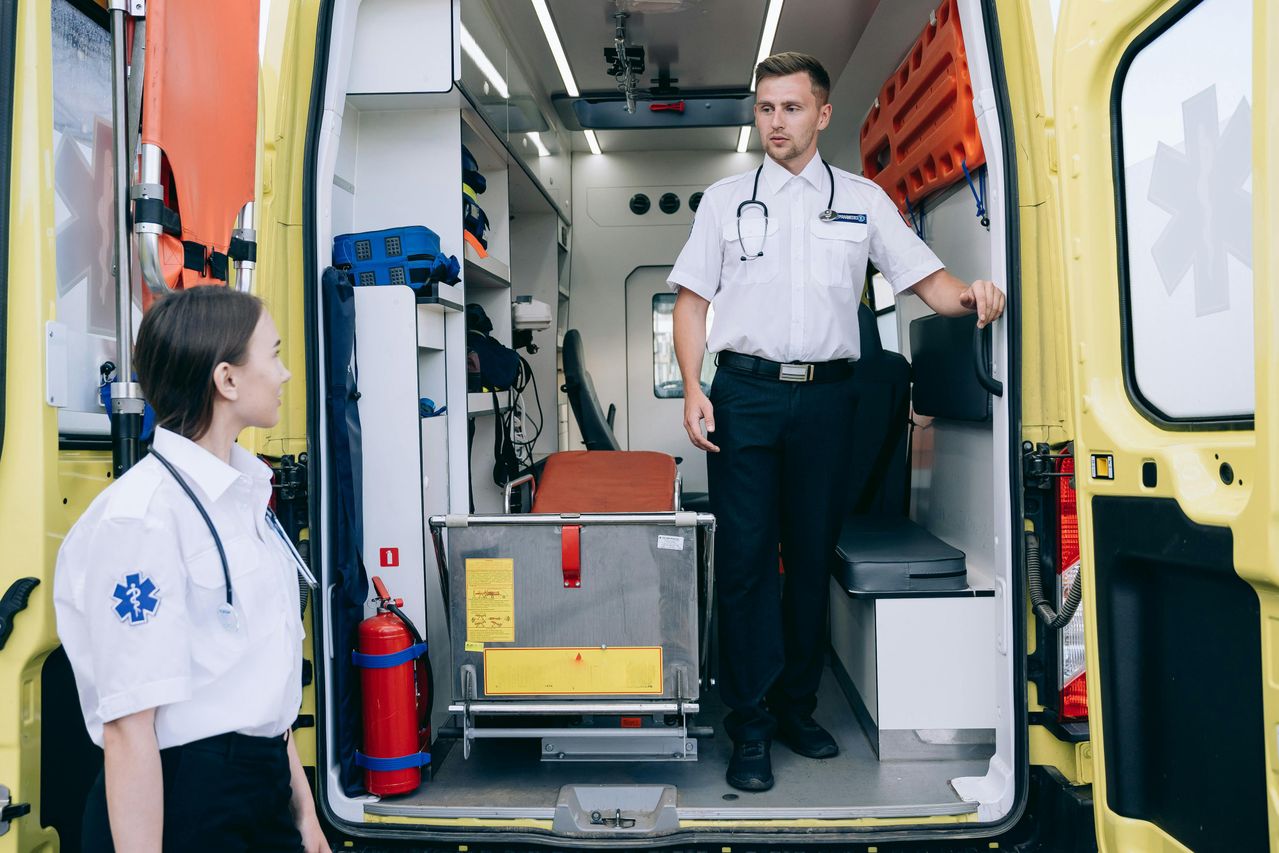
At UAX we offer you the possibility of a 300-hour placement, of which at least 72 hours will be at SUMMA, so that you can apply everything you have learnt during the master's degree. The unit tutor, together with the coordination of the master's degree, will evaluate and supervise your internship. You will be able to do them in:
Collaborating entities for external internships:
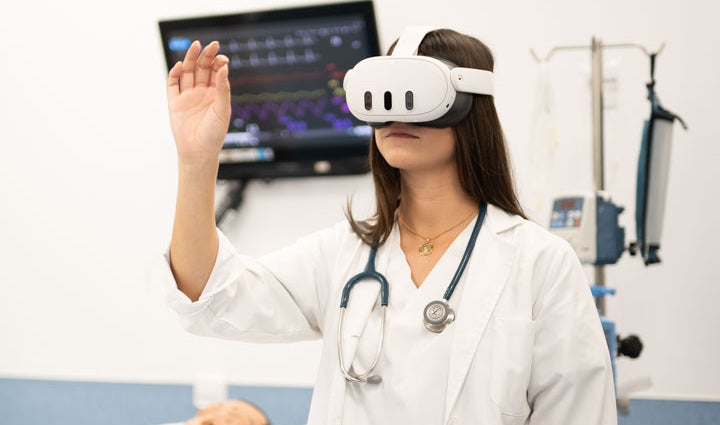
The essential practical part of the master's degree takes place in the Virtual Simulation Hospital (VSH), a key facility that replicates real clinical environments. Here, students practice in clinical areas equipped with advanced simulators, allowing them to face emergency scenarios in a controlled and safe environment.
Clinical simulation rooms:
Anatomy rooms:
Biological Laboratories:
Shared laboratories and computer rooms
The flexibility of online learning, with opportunities to connect
Take your exams online wherever you are or, if you prefer, in person at our designated centres in Spain and Latin America, subject to availability and capacity.
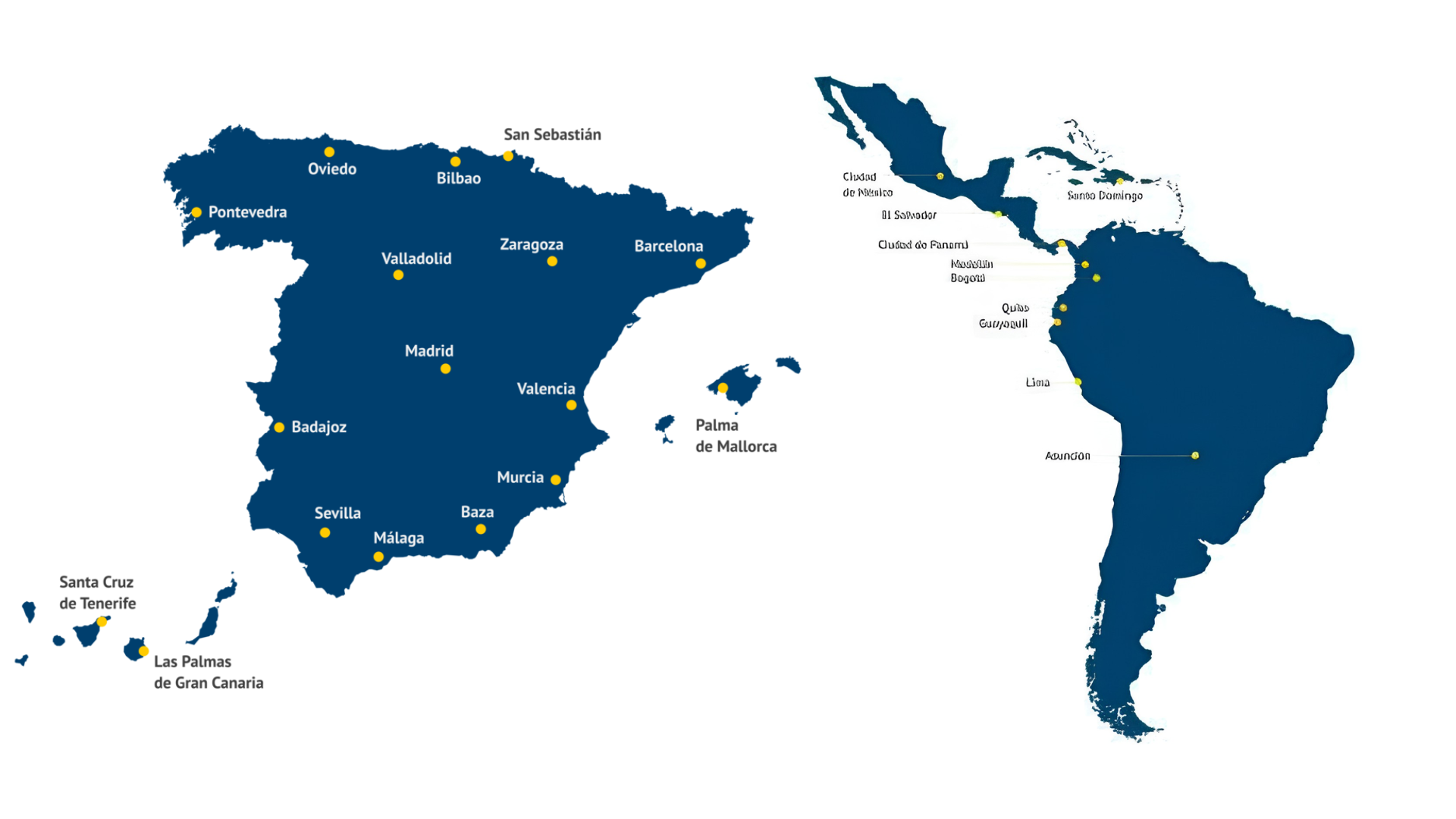
What’s more, as a student at UAX Online, you’ll have access to our Campus Hubs – a network of exclusive physical spaces where you can study, access libraries, work in co-working areas and connect with other students. Because studying online doesn’t mean studying alone.
Campus Hubs available in: Alcobendas, Alcorcón, Valencia San Vicente, Murcia, Barcelona, Málaga, Seville and Arganda.
Access is via your UAX student card, subject to availability and the opening hours of each centre.

Senate
Nurse specialist in emergencies, emergencies and critical patients, with extensive experience in hospital emergency services, ICU and out-of-hospital emergencies. Accredited instructor in advanced life support, trauma and defibrillation, and with a solid track record in university teaching, clinical training and academic coordination of practices in highly complex care environments.

Graduate in Nursing and Physiotherapy, with advanced training in intensive care, emergency and health management, and several master's degrees in leadership, human resources and nursing unit management. Director of Nursing at Hospital Universitario Quirónsalud Madrid, with extensive experience in the care of critical adults and in the coordination of clinical teams in highly complex hospital environments.

Doctor in Nursing, specialist in paediatric intensive care, with an extensive experience in high complexity units. She combines her clinical experience with university teaching and research focused on the comfort, pain, sedation and well-being of critical paediatric patients and their families. She has participated in multicentre projects and has scientific publications in leading journals.

Midwife with a solid career in childbirth and maternal and child health care, with extensive experience in highly complex hospital settings. She combines her clinical practice with the tutoring of residents and university teaching, providing a comprehensive vision based on evidence, the humanisation of care and the continuous improvement of obstetric care.

PhD in Molecular Medicine, with training in medical research, neuroscience and biochemistry. University professor and researcher with experience in teaching and clinical and experimental projects in institutions such as ICO-IDIBELL and Sapienza Università di Roma, specialising in research applied to clinical practice.

PhD in Nursing, specialising in intra- and extra-hospital health research, with an interest in psychosocial factors in surgical patients. She has more than 20 years of experience in surgical, traumatology, urology and nephrology units, combining clinical practice with team leadership as a supervisor.

PhD in Health Sciences, with extensive experience in epidemiology, public health and healthcare quality, as well as in the development and implementation of health information systems oriented towards decision-making and clinical research. Specialist in Family and Community Nursing, with a solid background in university teaching, academic coordination and management of clinical practices in Primary Care.

PhD in Health Sciences, with an extensive clinical career as a nurse, and solid experience in university teaching and research in the field of nursing. She has developed her professional career combining nursing practice, academic leadership and research activity, being principal investigator of a group focused on nursing care.
The Online Master's Degree in Adult Emergencies and Emergencies for Nursing Professionals is aimed at qualified nursing professionals who are able to integrate knowledge of emergency pathologies and acquire the critical decision-making skills required in these situations.
Number of new places offered: 60
The Online Master's Degree in Adult Emergencies and Emergencies for Nursing Professionals is aimed at nursing professionals who are capable of integrating knowledge of emergency pathologies and acquiring the critical decision-making skills required in these situations.
Merit assessment criteria and tests
An interview will be held to assess the candidate's academic certification of all the marks obtained in the undergraduate studies that give access to postgraduate studies at the Alfonso X el Sabio University. In this same interview, the C.V. of the candidates is assessed (studies completed and degrees obtained), together with the professional experience accumulated. Participation in congresses or seminars, and other postgraduate qualifications, as well as the professional activity carried out, are also taken into account.
Assessment of admission
The following criteria will be taken into account for the admission of candidates, which will be applied only in the event that demand exceeds supply:
Body responsible for admission
The Admissions Department, in coordination with the Head of Studies, will be the body responsible for the management and assessment of applications for admission to the degree. In the event of any doubt or complaint, the file will be submitted to the Faculty/School Board to which this Master's Degree is attached.
Link to Admission Process and Admission Test Regulations.
A maximum of 9 ECTS credits has been established for the Recognition of Credits Taken for Accreditation of Work and Professional Experience.
The work and professional experience provided by the student must provide the same competences that are acquired with the recognised subjects, therefore, only the subject of:
| External academic internships I | 9 ECTS | 158 hours of work experience |
In order to do so, a previous work experience of 18 months as a Nurse in a hospital emergency department must be accredited.
Regulations for the Transfer and Recognition of Credits
The UAX has published the regulations for the transfer and recognition of credits.
Now you have the opportunity to study the Master's Degree in Emergency Medicine for Nursing Professionals at UAX Mare Nostrum, the university responsible for issuing the official qualification. This blended learning programme offers the convenience and flexibility of live online classes, taught from Monday to Friday afternoons, complemented by intensive face-to-face practical workshops that take place over five weekends in Malaga.
reinforcement.look

El programa incluye 158 horas de prácticas hospitalarias (Externas I), con posibilidad de convalidación si acreditas al menos 18 meses de experiencia en servicios de urgencias, y 39 horas adicionales de prácticas hospitalarias obligatorias (Externas II). No se requieren prácticas extrahospitalarias, lo que facilita compatibilizar tu formación con tu actividad profesional.

Durante tu formación en UAX Mare Nostrum tendrás la oportunidad de realizar tus prácticas en hospitales de referencia como Quirónsalud Málaga o Viamed, centros de prestigio donde podrás adquirir experiencia directa en un entorno real y altamente especializado.
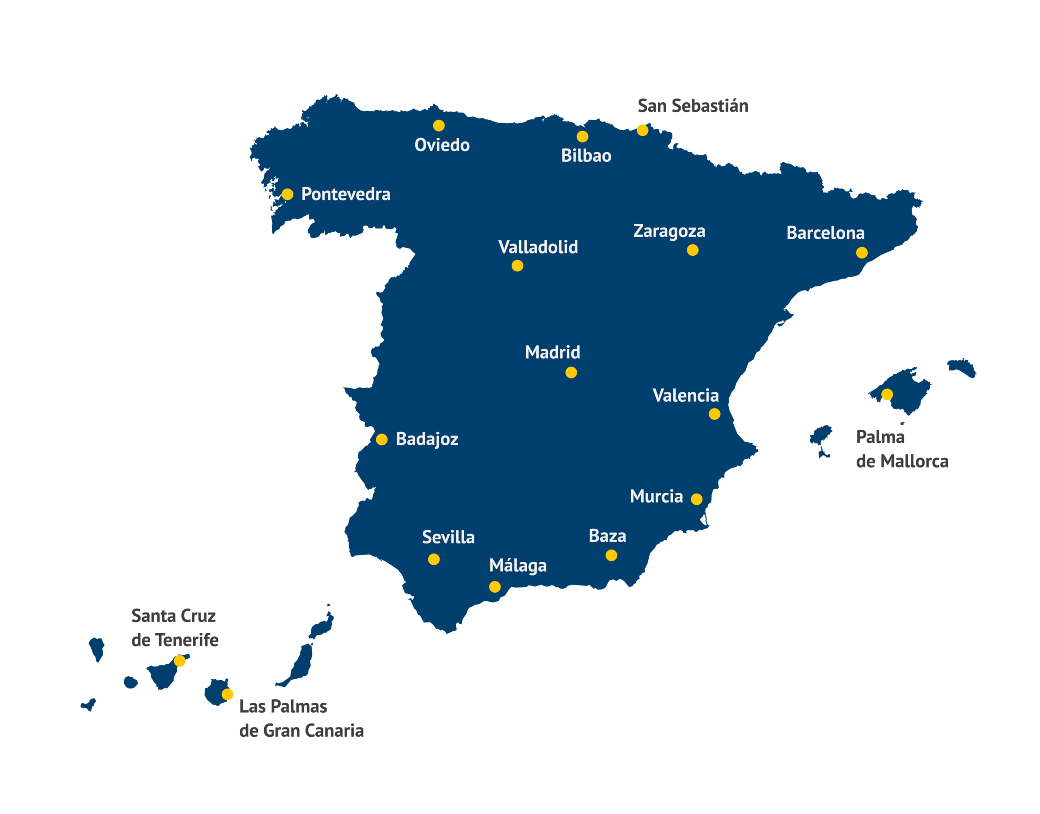
Ponemos a tu disposición distintas sedes para que puedas realizar tus exámenes presenciales en el lugar que mejor se adapte a ti, incluyendo nuestros campus de Málaga y Madrid (Villanueva de la Cañada o Chamberí), así como otros centros distribuidos por toda España.
According to the World Economic Forum, it is estimated that Spain must increase the number of nursing professionals by 80%, incorporating 238,000 new professionals by 2030.
Graduates of the Master's Degree in Adult Emergencies and Emergencies for Nursing Professionals obtain comprehensive training in fundamental subjects related to emergencies and emergencies that enable them to act safely in critical situations.
Not sure?
We'll help you find out which programme fits your profile.
We need to know a little bit about you so that we can provide you with a personalised service.
All fields are required
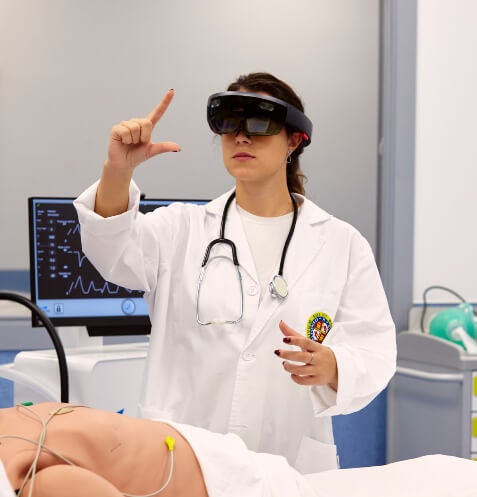
A unique centre in Spain to complete your training in the most innovative, well-rounded way. Find out more
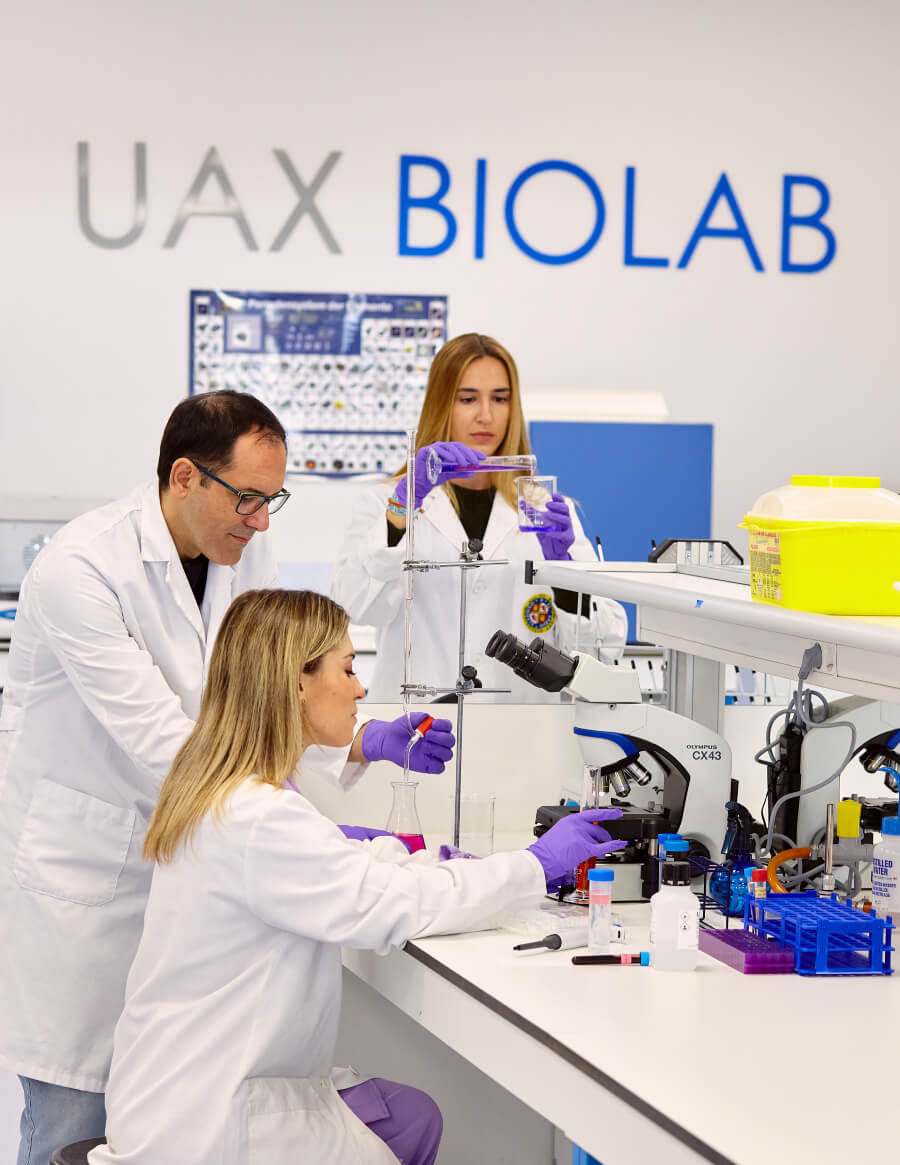
Learn with our new professional laboratory equipped with the latest technology. Find out more
Scholarships and financial support for studying at UAX
We know that studying is an investment. That’s why we want to remove financial barriers and make things easier for you. Fill in the form and let our advisers help you discover the scholarships, agreements and personalised financial support that best suit your situation.

Ministry of Education, Vocational Training and Sport
Find out about the scholarships and grants offered by the Ministry of Education, Vocational Training and Sport, categorised by type and level of education.

Attracting Pre-doctoral Research Talent
Financial support for outstanding students who wish to carry out innovative research and contribute to the advancement of knowledge in their disciplines.
If you’ve already decided to take the plunge, enrol early and benefit from a direct grant. It’s a way of rewarding your commitment and giving you a head start in planning your future.
Students from Ibero-America
This programme is aimed at Ibero-American citizens or foreign nationals legally resident in countries within the OEI’s sphere of influence. The scholarship covers a 50 per cent discount on the total tuition fees.

Students from Ecuador
This programme is aimed at citizens with Ecuadorian nationality and/or residence who wish to undertake an online master’s degree in Spain. The scholarship covers a 50 per cent discount on the total tuition fees.

2025, 2nd Edition
Grants for students on higher-level vocational training, undergraduate, postgraduate or master’s programmes enrolled at Spanish universities with a Santander agreement. A financial supplement to support you whilst undertaking your work placements.
If you graduated from UAX and are now thinking of studying for a new degree, we want to continue supporting you. That’s why we’re offering you a 10% discount on tuition fees.
If you have an immediate family member (up to second degree of kinship) enrolled at UAX, you can benefit from a 5 per cent discount on tuition fees. Because studying as a family is even better.
Studying for two degrees at the same time is a challenge, and we want to support you. If you’re already at UAX and enrol on a second degree programme, you’ll receive a grant towards your booking fee and tuition fees.
If you’d like to continue your studies with us and progress from vocational training to a bachelor’s degree, from one bachelor’s degree to another, or from a bachelor’s degree to a postgraduate degree, we’re here to support you with a grant covering up to 25 per cent of your tuition fees.
If you have a strong academic record, we would like to recognise your talent with a scholarship designed for new students. (Excludes the degree in Medicine).
*Terms and conditions to be published
If you’re a high-performance athlete, at UAX we want to help you balance your passion with your studies. We offer specific grants that can cover up to 50 per cent of your tuition fees.
Other related qualifications
We offer a wide range of courses, so you’re sure to find a programme that suits you.
Master's Degree in Healthcare Management (Online)
In collaboration with:
Start:
October
Length:
9 months
Master’s Degree in Nursing Services Management (Online)
In collaboration with:
Start:
October
Length:
9 months
Online Master's Degree in Bioinformatics
Start:
October
Length:
9 months
Degree in Nursing
In collaboration with:
Start:
September
Length:
4 years
This degree, according to RD 822/2021 (art. 34) must undergo the process of accreditation renewal. During the development of the process, an evaluation team of the Foundation for Knowledge Madrimasd will meet with different stakeholders of the degree. In addition, they provide us with a form so that any interested party can indicate to the Foundation those aspects they consider relevant to the development of this programme.
You can consult the different indicators in the following links:
Main action plans for the degree:
- Renewal of the information provided to students for the correct development of the degree.

- Improvement in the guidance and direction of the TFM.

- Training in telematic tools and the use of the Virtual Campus.
- Review and supervision of agreements.
Enquiries, complaints and claims
We respond to the genuine needs of our students and staff, because we believe in the continuous improvement of our results. That is why we always want to hear whatever you have to say.
If you are already part of UAX, please visit the ‘Customer Service: complaints, suggestions and compliments’ section on thevirtual campus , logging in with your username and password.
UAX promotes a culture of quality within the university community through the UAX Quality System (SIUAX), for which the University Management bears ultimate responsibility, ensuring that the system’s planning is implemented to effectively meet quality objectives and satisfy the needs, requirements and expectations of customers and stakeholders.
The bodies responsible are:
This organisational structure facilitates two-way communication regarding the various improvement initiatives, thereby enabling and ensuring the development of a culture of quality within the University.
The Degree Programme Monitoring and Improvement Committee for the 2025–26 academic year is composed of: