See all Online Master's Degrees in Health
See all Master's Degrees in Engineering
Most searched curriculums
Official Qualification
9 months / 60 ECTS
Specialise with UAX’s Online Master’s in Teaching Spanish as a Foreign Language (ELE), which focuses on teaching Spanish as a foreign language. You will learn to plan, deliver and assess Spanish language programmes for international students, incorporating teaching strategies, language assessment and intercultural communication.
In collaboration with:

The Master’s Degree in Teaching Spanish as a Foreign Language (Online) prepares you to plan, deliver and assess Spanish courses for students of different ages, levels and cultural backgrounds. You will learn to teach grammar, vocabulary, pronunciation and communicative skills using a practical approach tailored to the realities of the classroom.
Furthermore, you will develop skills in language teaching methodology, language assessment, the creation of teaching materials and intercultural communication, preparing you to teach Spanish in international and multicultural educational settings.
The Master’s programme’s methodology is geared towards the practical application of knowledge in real-life contexts of teaching Spanish as a foreign language (ELE). You will learn to design teaching units, create materials, plan courses and develop assessment systems tailored to different learning profiles and needs.
You will also work on error analysis, adapting content to multicultural settings, and teaching Spanish for different purposes and at different levels. All of this is complemented by work placements at partner centres and institutions linked to the field of teaching Spanish as a foreign language.
Specialised training in the teaching of Spanish, language assessment, intercultural communication and the use of digital tools applied to the teaching of Spanish as a foreign language (ELE).
Learn how to teach grammar, vocabulary, pronunciation and communication skills tailored to different levels and profiles.
Use platforms such as Moodle, Genially, Miro, Kahoot or Quizizz to create dynamic and innovative learning experiences.
Designs systems for assessing and monitoring learning in order to evaluate the progress of students learning Spanish as a foreign language.
It develops the skills needed to work in multicultural contexts, promoting intercultural communication and the adaptation of content.
Expand your opportunities for professional and research development through a university course specialising in the teaching of Spanish.
Improve your scale by adding points in the Teacher or Secondary School Examinations.
Enhance your teaching practice by understanding learning through the lens of neuroeducation. This micro-credential equips you to analyse students’ cognitive, emotional and behavioural processes, identify potential difficulties at an early stage, and apply evidence-based inclusive teaching strategies in the classroom.
Transform the way you work with generative artificial intelligence. This micro-credential empowers you to apply tools like ChatGPT, Copilot, and Gemini to analyze information, create content, and make decisions in real-world academic contexts, integrating solutions ethically and responsibly within the educational field.
Develop your potential in education through leadership and interpersonal skills. This microcredential provides you with the keys to managing teams, communicating effectively, and solving problems in real-world educational settings, combining personal leadership techniques with practical productivity and collaboration tools.
The curriculum combines the fundamentals of applied linguistics and the teaching of Spanish as a foreign language (ELE) with training in the development of teaching materials, digital resources, intercultural understanding, learning in virtual environments and Spanish for specific purposes. The programme is rounded off with work placements and a Master’s Thesis focused on the professional realities of teaching Spanish as a foreign language.
Master's Degree in Teaching Spanish as a Foreign Language
First Year
FIRST FOUR-MONTH PERIOD
| Code | Subjects | Character* | ECTS | ||||||||||||||||||||||||||||||||||||||||||||||||||||||||||||||||||||||||||||||||||||||||||||||||||||||||||||||
|---|---|---|---|---|---|---|---|---|---|---|---|---|---|---|---|---|---|---|---|---|---|---|---|---|---|---|---|---|---|---|---|---|---|---|---|---|---|---|---|---|---|---|---|---|---|---|---|---|---|---|---|---|---|---|---|---|---|---|---|---|---|---|---|---|---|---|---|---|---|---|---|---|---|---|---|---|---|---|---|---|---|---|---|---|---|---|---|---|---|---|---|---|---|---|---|---|---|---|---|---|---|---|---|---|---|---|---|---|---|---|---|---|---|
| SM121100 | L2 acquisition and methodological approaches | OB | 3 | ||||||||||||||||||||||||||||||||||||||||||||||||||||||||||||||||||||||||||||||||||||||||||||||||||||||||||||||
L2 acquisition and methodological approachesCódigo: SM121100 Imprimir Course 1: First-semester module. Compulsory. 3 credits. Profesores
Objectives To enable students to: 1. Apply specific methodologies for teaching speaking and writing skills in the Spanish as a Foreign Language classroom. 2. Identify the various approaches and linguistic theories that have been used or are currently used in second language teaching. 3. Assess students’ knowledge of Spanish as a foreign language (ELE) in accordance with the CEFR levels to determine the extent to which the various skills have been acquired. Competences BASIC COMPETENCIES CB6 Possess and understand knowledge that provides a basis or opportunity for originality in the development and/or application of ideas, often in a research context. CB7 Students should be able to apply the knowledge they have acquired and their problem-solving skills in new or unfamiliar settings within broader (or multidisciplinary) contexts related to their field of study. CB8 Students should be able to integrate knowledge and address the complexity of making judgements based on information which, whilst incomplete or limited, includes reflections on the social and ethical responsibilities associated with the application of their knowledge and judgements. CB10 Students should possess the learning skills that enable them to continue their studies in a manner that will be largely self-directed or autonomous. CROSS-CURRICULAR COMPETENCIES CT1. Use IT tools, programmes and applications to support teaching. CT2. Develop communication skills for effective teaching practice. GENERAL COMPETENCIES CG1. Understand the theoretical and practical aspects of teaching and learning Spanish as a foreign language in order to achieve adequate teacher training in ELE. CG2. Identify different professional contexts in order to adapt to teaching in international and/or multicultural settings. CG3. Prepare and incorporate materials, tools, resources and the use of new technologies, adapted to the different levels of the CEFR, for use in ELE classes. SPECIFIC COMPETENCIES CE1. To employ specific teaching methodologies for the instruction of oral and written skills in the Spanish as a foreign language classroom. CE2. Identify the various approaches, linguistic theories and assessment methods for application in the teaching of Spanish as a foreign language. CE11. Assess knowledge of Spanish as a foreign language (ELE) in accordance with the CEFR levels to determine the degree to which the various skills have been acquired. Learning outcomes 1. Applies specific methodologies to the teaching of oral and written skills in the Spanish as a Foreign Language classroom. 2. Identifies the different approaches and linguistic theories that have been used or are currently used in second language teaching. 3. Assess proficiency in Spanish as a foreign language (ELE) against the CEFR levels to determine the degree to which the various skills have been acquired. Course content • Contrast between language acquisition and language learning • Theories of language acquisition • Methods and approaches to second language learning • Linguistic awareness Training activities AF2 Virtual face-to-face sessions 10 hours AF4 Student study 58 hours AF5 Individual or group tutorials 2 hours AF6 Online forums 2 hours AF7 Assessment 3 hours Assessment system and criteria ASSESSMENT CRITERIA • Exams testing knowledge of the subject matter, problem-solving, reasoning, analysis of case studies, etc., will account for: 60% of the final mark. • Completion of practical work and set exercises: 25% of the final mark. • Active participation in forums, contributing your views, knowledge and experiences: 10% of the final mark. • Self-assessment tests: 5% of the final mark. To pass the module in the standard assessment period, you must achieve a mark of 5.0 out of 10.0 or higher in the final mark (weighted average) for the module. Similarly, your exam mark must be 5.0 out of 10.0 or higher to be included in the overall average with the other activities. SUPPLEMENTARY EXAMINATION PERIOD Assessment in the supplementary examination period will take the form of a single in-person examination, which will account for 100 per cent of the student’s mark. This examination will be the same for all students who did not pass the module in the ordinary examination session. It will include, at least, a practical component designed to assess the skills acquired by students during the course of the module. To pass the module in the supplementary examination period, students must achieve a mark of 5.0 out of 10.0 or higher in the final mark for the module. 100 per cent of the final mark will be based on the mark obtained in the supplementary final examination for the module. Timetable Click on this link to view the detailed timetable in Excel
Bibliography Essential: 1. Baralo, M. The Acquisition of Spanish as a Foreign Language Arco Libros. 1999. ISBN: 9788476353639 2. Griffin, K. Applied Linguistics in the Teaching of Spanish as a Second Language Arco/Libros. 2005. ISBN: 9788476356050 3. Krashen, S. Second Language Acquisition and Second Language Learning Pergamon Press. 1981. ISBN: 9780080253381 4. Larsen-Freeman, D. and Long, M. An Introduction to the Study of Second Language Acquisition Gredos. 1994. ISBN: 9788424916640 5. Pastor Cesteros, S. Second Language Learning. Applied Linguistics in Language Teaching University of Alicante Press. 2004. ISBN: 9788479088033 6. Richards, J.C. and Rodgers, T.C. Approaches and Methods in Language Teaching Cambridge University Press–Edinumen. 2003. ISBN: 9788483233559 7. Sánchez Pérez, A. Language teaching over the last hundred years. Methods and approaches SGEL. 2009. ISBN: 9788497784238 8. Santos Gargallo, I. Applied Linguistics in the Teaching and Learning of Spanish as a Foreign Language. Arco. 2017. ISBN: 9788476353912 |
|||||||||||||||||||||||||||||||||||||||||||||||||||||||||||||||||||||||||||||||||||||||||||||||||||||||||||||||||
| SM121101 | Analysis and production of materials in ELE | OB | 3 | ||||||||||||||||||||||||||||||||||||||||||||||||||||||||||||||||||||||||||||||||||||||||||||||||||||||||||||||
Analysis and production of materials in ELECódigo: SM121101 Imprimir Course 1: First-semester module. Compulsory. 3 credits. Profesores
Objectives To enable students to: Apply specific methodologies for teaching speaking and writing skills in the Spanish as a Foreign Language classroom. Understand the different approaches, linguistic theories and assessment methods used in the teaching of Spanish as a foreign language. Distinguish between the sociocultural and pragmatic-discursive components in the teaching and learning of Spanish as a foreign language. Adapt grammatical content to the student’s language level and develop strategies for teaching it. Identify the phonetic and phonological principles relevant to teaching the pronunciation of Spanish as a foreign language. Determine the appropriate lexical content for each language level and select the appropriate methodology for teaching it. Analyse teaching materials and resources for the classroom and design specific materials according to the students’ level and profile. To programme and plan teaching units, tasks and projects that integrate the development of the various language skills and the practice of the different communicative competences. Analyse the content of the CEFR and PCIC and their significance for analysing and designing materials. Be able to analyse teaching materials published over the years within the context of Spanish as a Foreign Language (ELE). Competencies BASIC COMPETENCES CB7 Students should be able to apply the knowledge they have acquired and their problem-solving skills in new or unfamiliar environments within broader (or multidisciplinary) contexts related to their field of study. CB8 Students should be able to integrate knowledge and address the complexity of making judgements based on information which, whilst incomplete or limited, includes reflections on the social and ethical responsibilities associated with the application of their knowledge and judgements. CB9 Students should be able to communicate their conclusions – and the knowledge and underlying reasoning that support them – to specialist and non-specialist audiences clearly and unambiguously. CB10 Students should possess the learning skills that enable them to continue their studies in a manner that will be largely self-directed or autonomous. GENERAL COMPETENCIES CG1. To understand the theoretical and practical aspects of teaching and learning Spanish as a foreign language in order to achieve adequate teacher training in ELE. CG2. To identify different professional contexts in order to adapt to teaching in international and/or multicultural settings CG3. To prepare and incorporate materials, tools, resources and the use of new technologies adapted to the different levels of the CEFR for use in ELE classes. CG4. To prepare courses and syllabuses to manage and coordinate teaching practice. CG5. Select pragmatic content related to the teaching of Spanish as a foreign language to address sociocultural aspects in the classroom. CROSS-CURRICULAR COMPETENCIES CT1. Use IT tools, programmes and applications to support teaching practice. CT2. Develop communication skills for effective teaching practice. SPECIFIC COMPETENCIES CE1. Employ specific teaching methodologies for teaching oral and written skills in the Spanish as a foreign language classroom CE2. Identify the various approaches, linguistic theories and assessment methods for application in the teaching of Spanish as a foreign language. CE3. Distinguish the sociocultural and pragmatic-discursive components of Spanish for the teaching and learning of Spanish as a foreign language (ELE). CE4. Adapt grammatical content to the language levels of the CEFR and develop strategies for teaching it. CE5. Identify the phonetic and phonological principles relevant to the teaching of Spanish pronunciation as a foreign language. CE6. Determine the appropriate lexical content for each language level and select the appropriate methodology for teaching it. CE7. Analyse teaching materials and resources to identify the approaches they incorporate, with a view to designing specific materials tailored to the level and profile of their students. CE10. Design and plan teaching units, tasks and projects to integrate the development of the various language activities and the practice of the different communicative skills. Learning outcomes Employs specific methodologies in the teaching of oral and written skills in the Spanish as a Foreign Language classroom. Is familiar with the various approaches, linguistic theories and assessment methods used in the teaching of Spanish as a foreign language. Distinguishes between the sociocultural and pragmatic-discursive components in the teaching and learning of Spanish as a foreign language. Adapts grammatical content to the student’s language level and develops strategies for teaching it. Identifies the phonetic and phonological principles relevant to teaching the pronunciation of Spanish as a foreign language. Determine the appropriate lexical content for each language level and select the appropriate methodology for teaching it. Analyses teaching materials and resources for the classroom and designs specific materials according to the students’ level and profile. They programme and plan teaching units, tasks and projects that integrate the development of the various language skills and the practice of the different communicative competences. Analyses the content of the CEFR and PCIC and their significance for analysing and designing materials. Is able to analyse teaching materials published over the years within the context of Spanish as a Foreign Language (ELE). Description of the course content • Module I: Foundations for the development and analysis of teaching materials 1.1 Types of teaching materials 1.2 Worksheet for analysing teaching materials 1.3 Analysis of different teaching materials • Section II: Production of teaching materials 2.1 Creating materials to develop reading comprehension 2.2 Creating materials to develop written expression 2.3 Creating materials to develop listening comprehension 2.4 Creating materials to develop oral expression and interaction • Block III: Planning a teaching unit 3.1 The sociocultural component and different types of materials (Spanish as a Foreign Language for children, immigrants, etc.) 3.2 Creating a teaching unit Training activities AF2 Virtual face-to-face sessions 10 hours AF4 Student study 58 hours AF5 Individual or group tutorials 2 hours AF6 Online forums 2 hours AF7 Assessment 3 hours Assessment system and criteria ASSESSMENT CRITERIA • Exams testing knowledge of the subject matter, problem-solving, reasoning, analysis of case studies, etc., will account for: 60% of the final mark. • Completion of practical work and set exercises: 25% of the final mark. • Active participation in forums, contributing your views, knowledge and experiences: 10% of the final mark. • Self-assessment tests: 5% of the final mark. To pass the module in the standard assessment period, you must achieve a mark of 5.0 out of 10.0 or higher in the final mark (weighted average) for the module. Similarly, your exam mark must be 5.0 out of 10.0 or higher to be included in the overall average with the other activities. SUPPLEMENTARY EXAMINATION PERIOD Assessment in the supplementary examination period will take the form of a single in-person examination, which will account for 100 per cent of the student’s mark. This examination will be the same for all students who did not pass the module in the ordinary examination session. It will include, at least, a practical component designed to assess the skills acquired by students during the course of the module. To pass the module in the supplementary examination period, students must achieve a mark of 5.0 out of 10.0 or higher in the final mark for the module. 100 per cent of the final mark will be based on the mark obtained in the supplementary final examination for the module. Timetable Click on this link to view the detailed timetable in Excel
Bibliography Core: 1. García Santa-Cecilia, A How to Design a Foreign Language Course Arco Libros. 2000. ISBN: 9788476354308 2. GARCÍA SANTA-CECILIA, Álvaro The Curriculum for Spanish as a Foreign Language Edelsa. 1995. ISBN: 847711093X Supplementary: 3.- Gelabert, Mª José; Bueso, Isabel; Benítez, Pedro Production of materials for teaching Spanish Arco Libros. 2002. ISBN: 84-7635-488-6 4.- Martín Peris, Ernesto (ed.) Training Spanish teachers: Innovation and challenges Difusión. 2015. ISBN: 9788416347988 5. Martínez-Atienza de Dios, María; Zamorano Aguilar, Alfonso Theory and Methodology for Teaching Spanish as a Foreign Language, Vol. 3 Published by Clave-ELE. 2018. ISBN: 9788416108978 6. Sánchez Lobato, Jesús; Santos Gargallo, Isabel Handbook for Teacher Training: Teaching Spanish as a Second Language (L2)/Foreign Language (LE) SGEL. 2016. ISBN: 978-84-9778-9 Others: 7.- Cestero Mancera, Ana María, Penadés Martínez, Inmaculada, (eds.) Teacher’s Handbook for Teaching Spanish as a Second Language (ELE) University of Alcalá, Publications Service. 2017. ISBN: 9788416599387 8. Regueiro Rodríguez, María Luisa Curriculum Planning for Teaching Spanish as a Foreign Language Arco Libros. 2014. ISBN: 978-84-7635-8 |
|||||||||||||||||||||||||||||||||||||||||||||||||||||||||||||||||||||||||||||||||||||||||||||||||||||||||||||||||
| SM121102 | Teaching grammar in Spanish as a foreign language (ELE) | OB | 6 | ||||||||||||||||||||||||||||||||||||||||||||||||||||||||||||||||||||||||||||||||||||||||||||||||||||||||||||||
Teaching grammar in Spanish as a foreign language (ELE)Código: SM121102 Imprimir Course 1: First-semester module. Compulsory. 6 credits. Profesores
Objectives To enable students to: Understand the different approaches, linguistic theories and assessment methods used in the teaching of Spanish as a foreign language. Adapt grammatical content to the student’s language level and develop strategies for teaching it. Develop teaching materials and resources using new technologies and social media. Design tools to assess students’ knowledge of Spanish as a foreign language (ELE) according to their level. Recognise the most common grammatical errors according to the CEFR. To identify and reflect on the most common errors made by learners, depending on their mother tongue. Competences BASIC COMPETENCES CB6 Possess and understand knowledge that provides a basis or opportunity for originality in the development and/or application of ideas, often in a research context. CB7 Students should be able to apply the knowledge they have acquired and their problem-solving skills in new or unfamiliar settings within broader (or multidisciplinary) contexts related to their field of study. CB10 Students should possess the learning skills that enable them to continue their studies in a manner that will be largely self-directed or autonomous. GENERAL COMPETENCIES CG1. To understand the theoretical and practical aspects of teaching and learning Spanish as a foreign language in order to achieve adequate teacher training in ELE. CG2. To identify different professional contexts in order to adapt to teaching in international and/or multicultural settings CG3. To prepare and incorporate materials, tools, resources and the use of new technologies adapted to the different levels of the CEFR for use in ELE classes. CROSS-CURRICULAR COMPETENCIES CT1. Use IT tools, programmes and applications to support teaching. CT2. Develop communication skills for effective teaching practice. SPECIFIC COMPETENCIES CE2. Identify the various approaches, linguistic theories and assessment methods for application in the teaching of Spanish as a foreign language. CE4. Adapt grammatical content to the language levels of the CEFR and develop strategies for teaching it. CE8. Develop and incorporate teaching materials and resources through the efficient and secure use of new technologies and virtual learning networks. CE11. Assess knowledge of Spanish as a foreign language (ELE) according to the CEFR levels to determine the degree to which the various skills have been acquired. Learning outcomes Is familiar with the various approaches, linguistic theories and assessment methods used in the teaching of Spanish as a foreign language. Adapts grammatical content to the student’s language level and develops strategies for teaching it. Develops teaching materials and resources using new technologies and social media. Designs tools to assess knowledge of Spanish as a foreign language (ELE) according to the student’s level. Recognise the most common grammatical errors according to the CEFR. Identify and reflect on the most common errors made by learners, depending on their mother tongue. Description of the content • Module I: Grammar - The concept of grammar - Grammar in the Spanish as a Foreign Language (ELE) classroom • Module II: Aspects of grammar - The noun phrase: noun, adjective, pronoun - The verb phrase: ser/estar, tenses and moods (consecutio temporum) - Prepositions, conjunctions and time markers Training activities AF2 Virtual face-to-face sessions 20 hours AF4 Student study 120 hours AF5 Individual or group tutorials 4 hours AF6 Online forums 3 hours AF7 Assessment 3 hours Assessment system and criteria ASSESSMENT CRITERIA • Exams testing knowledge of the subject matter, problem-solving, reasoning, analysis of case studies, etc., will account for: 60% of the final mark. • Completion of practical work and set exercises: 25% of the final mark. • Active participation in forums, contributing your views, knowledge and experiences: 10% of the final mark. • Self-assessment tests: 5% of the final mark. To pass the module in the standard assessment period, you must achieve a mark of 5.0 out of 10.0 or higher in the final mark (weighted average) for the module. Similarly, your exam mark must be 5.0 out of 10.0 or higher to be included in the overall average with the other activities. SUPPLEMENTARY EXAMINATION SESSION Assessment in the supplementary examination period will take the form of a single in-person examination, which will account for 100% of the student’s mark. This examination will be the same for all students who did not pass the module in the ordinary examination session. It will include, at least, a practical component designed to assess the skills acquired by students during the course of the module. To pass the module in the supplementary examination period, students must achieve a mark of 5.0 out of 10.0 or higher in the final mark for the module. 100 per cent of the final mark will be based on the mark obtained in the supplementary final examination for the module. Timetable Click on this link to view the detailed timetable in Excel
Bibliography Core: 1. Alejandro Castañeda Castro, Zeina Alhmoud, Irene Alonso Aparicio, Jordi Casellas Guitart, María Dolores Chamorro Guerrero, Lourdes Miquel López, Jenaro Ortega Olivares Teaching Advanced Grammar in Spanish as a Foreign Language SGEL. 2014. ISBN: 8497785355 2. Carmen Aguirre Martínez Grammar and the Teaching of Spanish: The Most Relevant Grammatical Aspects of Learning Spanish Habla con Eñe S.L.. 2019. ISBN: 9788494980930 3. Herrera, F. and Sans, N. (eds.) Teaching Grammar in the Spanish Classroom: New Perspectives and Proposals Difusión. 2018. ISBN: 8416943890 4. Leonardo Gómez Torrego Easy Spanish Grammar. Answers to all your questions Espasa Calpe. 2012. ISBN: 9788467005271 5. Llopis García, R., Real Espinosa, J. M. and Ruiz Campillo, J. P Which Grammar to Teach, Which Grammar to Learn Edinumen. 2012. ISBN: 8498482409 Supplementary: 6.- Bosque, I. and Demonte, V. (eds.) Descriptive Grammar of the Spanish Language Espasa Calpe. 1999. ISBN: 84-239-7917-2 7.- David Serrano Dolader Word Formation and the Teaching of Spanish as a Foreign/Second Language Routledge. 2018. ISBN: 9781138684157 8. Javier Muñoz-Basols, Elisa Gironzetti, Manel Lacorte The Routledge Handbook of Spanish Language Teaching. Methodologies, Contexts and Resources for Teaching Spanish as a Second Language Routledge. 2019. ISBN: 9780367580452 9. María Luz Gutiérrez Araus Fundamental Issues in the Grammar of Spanish as a Second Language Arco Libros. 2005. ISBN: 8476355998 10. Various authors Teaching Grammar of Spanish Ediciones SM. 2010. ISBN: 9788467541359 11. Various authors Grammar Explained for Intermediate Levels with Exercises + Answers Enclave-ELE. 2012. ISBN: 9788415299424 |
|||||||||||||||||||||||||||||||||||||||||||||||||||||||||||||||||||||||||||||||||||||||||||||||||||||||||||||||||
| SM121103 | Teaching skills in Spanish as a Foreign Language (ELE) | OB | 6 | ||||||||||||||||||||||||||||||||||||||||||||||||||||||||||||||||||||||||||||||||||||||||||||||||||||||||||||||
Teaching skills in Spanish as a Foreign Language (ELE)Código: SM121103 Imprimir Course 1: First-semester module. Compulsory. 6 credits. Profesores
Objectives To enable students to: Use specific methodologies for teaching oral and written skills in the Spanish as a Foreign Language classroom Distinguish between the sociocultural and pragmatic-discursive components in the teaching and learning of Spanish as a foreign language (ELE). Incorporate the use of new technologies into the teaching of Spanish as a foreign language. Develop teaching materials and resources using new technologies and social media. Design and plan teaching units, tasks and projects that integrate the development of different language activities and the practice of various communicative skills. Reflect on the various teaching strategies for fostering each communicative skill. Assess the different skills that learners will develop in the classroom. Reflect on the integration of these skills in the development of communicative competence. Competences BASIC COMPETENCES CB6 Possess and understand knowledge that provides a basis or opportunity for originality in the development and/or application of ideas, often in a research context. CB7 Students should be able to apply the knowledge they have acquired and their problem-solving skills in new or unfamiliar environments within broader (or multidisciplinary) contexts related to their field of study. CB8 Students should be able to integrate knowledge and address the complexity of making judgements based on information which, whilst incomplete or limited, includes reflections on the social and ethical responsibilities associated with the application of their knowledge and judgements. CB9 Students should be able to communicate their conclusions – and the underlying knowledge and reasoning – to specialist and non-specialist audiences clearly and unambiguously. CB10 Students should possess the learning skills that enable them to continue their studies in a manner that will be largely self-directed or autonomous. GENERAL COMPETENCIES CG1. To understand the theoretical and practical aspects of teaching and learning Spanish as a foreign language in order to achieve adequate teacher training in ELE. CG2. To identify different professional contexts in order to adapt to teaching in international and/or multicultural settings CG3. To prepare and incorporate materials, tools, resources and the use of new technologies adapted to the different levels of the CEFR for use in ELE classes. CG4. To prepare courses and syllabuses to manage and coordinate teaching practice. CG5. Select pragmatic content related to the teaching of Spanish as a foreign language to address sociocultural aspects in the classroom. CG6. Identify and apply tools and knowledge of new technologies to the practice of teaching Spanish as a foreign language. CROSS-CURRICULAR COMPETENCIES CT1. Use IT tools, programmes and applications to support teaching practice. CT2. Develop communication skills for effective teaching practice. SPECIFIC COMPETENCIES CE1. Employ specific teaching methodologies for teaching oral and written skills in the Spanish as a Foreign Language classroom CE3. Distinguish the sociocultural and pragmatic-discursive components of Spanish for the teaching and learning of Spanish as a Foreign Language (ELE). CE8. Develop and incorporate teaching materials and resources through the efficient and safe use of new technologies and virtual learning networks. CE10. Design and plan teaching units, tasks and projects to integrate the development of different language activities and the practice of various communicative skills. CE11. Assess proficiency in Spanish as a foreign language (ELE) in accordance with the CEFR levels to determine the degree to which the various skills have been acquired. Learning outcomes Employs specific methodologies in the teaching of oral and written skills in the Spanish as a Foreign Language classroom Distinguishes between the sociocultural and pragmatic-discursive components in the teaching and learning of Spanish as a foreign language. Incorporates the use of new technologies into the teaching of Spanish as a foreign language. Develops teaching materials and resources using new technologies and social media. Designs and plans teaching units, tasks and projects that integrate the development of different language activities and the practice of various communicative skills. Reflects on the various teaching strategies for fostering each communicative skill. Assesses the different skills that learners will develop in the classroom. Reflects on the integration of these skills in the development of communicative competence. Description of the content • MODULE I: Communicative skills - Definition of a skill - Skills in the CEFR and the PCIC - Macro-skills and micro-skills • SECTION II: Reading and Writing Skills - Reading comprehension: processes and teaching methods - Written expression: processes and teaching methods • SECTION III: Oral comprehension and production skills - Listening comprehension: processes and teaching methods - Oral expression: processes and teaching methods • SECTION IV: Development and integration of language skills - Processes and teaching methods Training activities AF2 Virtual face-to-face sessions 20 hours AF4 Student study 120 hours AF5 Individual or group tutorials 4 hours AF6 Online forums 3 hours AF7 Assessment 3 hours Assessment system and criteria ASSESSMENT CRITERIA • Exams testing knowledge of the subject matter, problem-solving, reasoning, analysis of case studies, etc., will account for: 60% of the final mark. • Completion of practical work and set exercises: 25% of the final mark. • Active participation in forums, contributing your views, knowledge and experiences: 10% of the final mark. • Self-assessment tests: 5% of the final mark. To pass the module in the standard assessment period, you must achieve a mark of 5.0 out of 10.0 or higher in the final mark (weighted average) for the module. Similarly, your exam mark must be 5.0 out of 10.0 or higher to be included in the overall average with the other activities. SUPPLEMENTARY EXAMINATION SESSION Assessment in the supplementary examination period will take the form of a single in-person examination, which will account for 100 per cent of the student’s mark. This examination will be the same for all students who did not pass the module in the ordinary examination session. It will include, at least, a practical component designed to assess the skills acquired by students during the course of the module. To pass the module in the supplementary examination period, students must achieve a mark of 5.0 out of 10.0 or higher in the final mark for the module. 100 per cent of the final mark will be based on the mark obtained in the supplementary final examination for the module. Timetable Click on this link to view the detailed timetable in Excel
Bibliography Essential: 1. Cassany, D Written Expression in L2/ELE. Workbooks on the Teaching of Spanish/LE Arcolibros. 2005. ISBN: 8476356129 2.- Eusebio Hermira, Sonia ‘Communicative skills or activities in language’ in Teacher Training in Spanish: Innovation and Challenges. Difusión. 2015. ISBN: 8416347988 Supplementary: 3.- Blanco, A. and Nogueroles, M. ‘Strategies for second language learning’. *Cuadernos de didáctica del español/LE*. Arcolibros. 2018. ISBN: 9788476359679 4.- Denyer, M: Reading: A Pragmatic and Cognitively Active Skill Edinumen. 1998. ISBN: 9788488957269 5. Giovannini, A. and Martín Peris, E. Teacher in Action 3. Skills Edelsa. 2006. ISBN: 9788477111641 6. Muñoz Basols, J., Gironzetti, E. and Lacorte, M. (eds.) The Routledge Handbook of Spanish Language Teaching Routledge. 2019. ISBN: 978-1-138-182 7. Nunan, D. Task Design for Communicative Language Teaching Cambridge University Press. 2002. ISBN: 9788483230466 |
|||||||||||||||||||||||||||||||||||||||||||||||||||||||||||||||||||||||||||||||||||||||||||||||||||||||||||||||||
| SM121104 | Teaching vocabulary and pronunciation in Spanish as a foreign language (ELE) | OB | 3 | ||||||||||||||||||||||||||||||||||||||||||||||||||||||||||||||||||||||||||||||||||||||||||||||||||||||||||||||
Teaching vocabulary and pronunciation in Spanish as a foreign language (ELE)Código: SM121104 Imprimir Course 1: First-semester module. Compulsory. 3 credits. Profesores
Objectives To enable students to: Distinguish between the sociocultural and pragmatic-discursive components of Spanish for the teaching and learning of Spanish as a foreign language (ELE). Identify the phonetic and phonological foundations relevant to the teaching of Spanish pronunciation as a foreign language, at both the segmental and suprasegmental levels. Determine the appropriate lexical content for each language level and select the appropriate methodology for teaching it. Analyse teaching materials and resources for the classroom and design specific materials tailored to the students’ level and profile in order to improve pronunciation and expand vocabulary. Develop teaching materials and resources using new technologies and social media. Competencies BASIC COMPETENCES CB6. Possess and understand knowledge that provides a basis or opportunity for originality in the development and/or application of ideas, often within a research context. CB7 Students are able to apply the knowledge they have acquired and their problem-solving skills in new or unfamiliar settings within broader (or multidisciplinary) contexts related to their field of study. CB9 Students should be able to communicate their conclusions – and the underlying knowledge and reasoning – to specialist and non-specialist audiences clearly and unambiguously. CB10 Students should possess the learning skills that enable them to continue their studies in a manner that will be largely self-directed or autonomous. GENERAL COMPETENCIES CG1. To be familiar with the theoretical and practical aspects of teaching and learning Spanish as a foreign language in order to achieve adequate teacher training in ELE. CG3. To prepare and incorporate materials, tools, resources and the use of new technologies adapted to the different levels of the CEFR for use in ELE classes. CG5. Select pragmatic content related to the teaching of Spanish as a foreign language to address sociocultural aspects in the classroom. CROSS-CURRICULAR COMPETENCIES CT1. Use IT tools, programmes and applications to support teaching practice. CT2. Develop communication skills for effective teaching practice. SPECIFIC COMPETENCIES CE3. Distinguish the sociocultural and pragmatic-discursive components of Spanish for the teaching and learning of Spanish as a foreign language (ELE). CE5. Identify the phonetic and phonological principles relevant to teaching the pronunciation of Spanish as a foreign language. CE6. Determine the appropriate lexical content for each language level and select the appropriate methodology for teaching it. CE7. Analyse teaching materials and resources to identify the approaches they incorporate, with a view to designing specific materials tailored to the level and profile of their students. CE8. Develop and incorporate teaching materials and resources through the efficient and secure use of new technologies and virtual learning networks. Learning outcomes Distinguish the sociocultural and pragmatic-discursive components of Spanish for the teaching and learning of Spanish as a foreign language (ELE). Identifies the phonetic and phonological foundations relevant to teaching the pronunciation of Spanish as a foreign language at both the segmental and suprasegmental levels. Determines the appropriate lexical content for each linguistic level and selects the appropriate methodology for teaching it. Analyses teaching materials and resources for the classroom and designs specific materials tailored to the students’ level and profile to improve pronunciation and expand vocabulary. Develop teaching materials and resources using new technologies and social media. Course content description • Vocabulary: • Lexical competence • Vocabulary teaching • Creating materials for teaching vocabulary in the ELE classroom • Pronunciation: • Segmental elements • Supersegmental elements • Stress, rhythm and intonation • The creation of materials for teaching Spanish pronunciation Training activities AF2 Virtual face-to-face sessions 10h AF4 Student study 58 hours AF5 Individual or group tutorials 2 hours AF6 Online forums 2 hours AF7 Assessment 3 hours Assessment system and criteria ASSESSMENT CRITERIA • Exams testing knowledge of the subject matter, problem-solving, reasoning, analysis of case studies, etc., will account for: 60% of the final mark. • Completion of practical work and set exercises: 25% of the final mark. • Active participation in forums, contributing your views, knowledge and experiences: 10% of the final mark. • Self-assessment tests: 5% of the final mark. To pass the module in the standard assessment period, you must achieve a mark of 5.0 out of 10.0 or higher in the final mark (weighted average) for the module. Similarly, your exam mark must be 5.0 out of 10.0 or higher to be included in the overall average with the other activities. SUPPLEMENTARY EXAMINATION PERIOD Assessment in the supplementary examination period will take the form of a single in-person examination, which will account for 100 per cent of the student’s mark. This examination will be the same for all students who did not pass the module in the ordinary examination session. It will include, at least, a practical component designed to assess the skills acquired by students during the course of the module. To pass the module in the supplementary examination period, students must achieve a mark of 5.0 out of 10.0 or higher in the final mark for the module. 100 per cent of the final mark will be based on the mark obtained in the supplementary final examination for the module. Timetable Click on this link to view the detailed timetable in Excel
Bibliography Core: 1. F. Herrera (ed.) Teaching Vocabulary in the Spanish Classroom. The Power of Words Difusión. 2017. ISBN: 9788416943883 2. F.J. Cantero Serena and M. Giralt Lorenz Pronunciation and the oral approach in foreign languages Octaedro. 2020. ISBN: 9788418083211 3. J. Gil Fernández Phonetics for Spanish Teachers: From Theory to Practice Arco Libros. 2007. ISBN: 8476356455 4. M. Cortés Moreno Teaching Spanish Prosody: Stress and Intonation Edinumen. 2002. ISBN: 8495986019 Supplementary: 5.- F.J. Cantero Serena The Art of Not Teaching Language Octaedro. 2019. ISBN: 9788417667474 6. M. Serrano Marín Intonation in Spanish and modal particles in German: the phonology/pragmatics interface Entre Líneas. 2018. ISBN: 2603-7351 7. Romero Gualda, M. Victoria A Lexicon for Learning Spanish as a Second Language Arco. 2008. ISBN: 9788476357361 |
|||||||||||||||||||||||||||||||||||||||||||||||||||||||||||||||||||||||||||||||||||||||||||||||||||||||||||||||||
| SM121105 | Pragmatics and Interculturality in Teaching Spanish as a Foreign Language | OB | 3 | ||||||||||||||||||||||||||||||||||||||||||||||||||||||||||||||||||||||||||||||||||||||||||||||||||||||||||||||
Pragmatics and Interculturality in Teaching Spanish as a Foreign LanguageCódigo: SM121105 Imprimir Course 1: First-semester module. Compulsory. 3 credits. Profesores
Objectives To enable students to: Distinguish between the sociocultural and pragmatic-discursive components of Spanish for the teaching and learning of Spanish as a foreign language (ELE). Analyse teaching materials and resources for the classroom and design specific materials tailored to the students’ level and profile. Develop teaching materials and resources using new technologies and virtual learning networks. Plan and organise teaching units, tasks and projects that integrate the development of different language activities and the practice of various communicative skills. Design tools to assess students’ knowledge of Spanish as a foreign language (ELE) according to their level. Competencies BASIC COMPETENCES CB7 Students should be able to apply the knowledge they have acquired and their problem-solving skills in new or unfamiliar environments within broader (or multidisciplinary) contexts related to their field of study. CB8 Students should be able to integrate knowledge and address the complexity of forming judgements based on information which, whilst incomplete or limited, includes reflections on the social and ethical responsibilities associated with the application of their knowledge and judgements. CB9 Students should be able to communicate their conclusions – and the knowledge and underlying reasoning that support them – to specialist and non-specialist audiences clearly and unambiguously. CB10 Students should possess the learning skills that enable them to continue their studies in a manner that will be largely self-directed or autonomous. GENERAL COMPETENCIES CG1. To understand the theoretical and practical aspects of teaching and learning Spanish as a foreign language in order to achieve adequate teacher training in ELE. CG2. To identify different professional contexts in order to adapt to teaching in international and/or multicultural settings CG3. To prepare and incorporate materials, tools, resources and the use of new technologies adapted to the different levels of the CEFR for use in ELE classes. CG5. Select pragmatic content related to the teaching of Spanish as a foreign language to address sociocultural aspects in the classroom. CG7. Produce and exchange information, communicate and participate in collaborative and learning networks for the teaching of Spanish as a foreign language in virtual environments. CROSS-CURRICULAR COMPETENCIES CT1. Use IT tools, programmes and applications to support teaching. CT2. Develop communication skills for effective teaching practice. SPECIFIC COMPETENCIES CE3. Distinguish the sociocultural and pragmatic-discursive components of Spanish for the teaching and learning of Spanish as a foreign language (ELE). CE7. Analyse teaching materials and resources to identify the approaches they incorporate, with a view to designing specific materials tailored to the level and profile of their students. CE8. Develop and incorporate teaching materials and resources through the efficient and secure use of new technologies and virtual learning networks. CE10. Design and plan teaching units, tasks and projects to integrate the development of different language activities and the practice of various communicative skills. CE11. Assess knowledge of Spanish as a foreign language (ELE) in accordance with the CEFR levels to determine the degree to which the various skills have been acquired. Learning outcomes Distinguish the sociocultural and pragmatic-discursive components of Spanish for the teaching and learning of Spanish as a foreign language (ELE). Analyses teaching materials and resources for the classroom and designs specific materials according to the students’ level and profile. Develops teaching materials and resources using new technologies and virtual learning networks. Plans and organises teaching units, tasks and projects that integrate the development of different language activities and the practice of various communicative skills. Designs tools to assess students’ knowledge of Spanish as a foreign language (ELE) according to their level. Description of the course content • Communicative competence • Pragmatic competence: linguistic, cognitive and social • Pragmatics and grammar • Sociocultural aspects and intercultural competence • Addressing pragmatic and sociocultural components in the ELE classroom • Assessment of pragmatic competence Training activities AF2 Live online sessions 10 hours AF4 Student study 58 hours AF5 Individual or group tutorials 2 hours AF6 Online forums 2 hours AF7 Assessment 3 hours Assessment system and criteria ASSESSMENT CRITERIA • Exams testing knowledge of the subject matter, problem-solving, reasoning, analysis of case studies, etc., will account for: 60% of the final mark. • Completion of practical work and set exercises: 25% of the final mark. • Active participation in forums, contributing your views, knowledge and experiences: 10% of the final mark. • Self-assessment tests: 5% of the final mark. To pass the module in the standard assessment period, you must achieve a mark of 5.0 out of 10.0 or higher in the final mark (weighted average) for the module. Similarly, your exam mark must be 5.0 out of 10.0 or higher to be included in the overall average with the other activities. SUPPLEMENTARY EXAMINATION PERIOD Assessment in the supplementary examination period will take the form of a single in-person examination, which will account for 100 per cent of the student’s mark. This examination will be the same for all students who did not pass the module in the ordinary examination session. It will include, at least, a practical component designed to assess the skills acquired by students during the course of the module. To pass the module in the supplementary examination period, students must achieve a mark of 5.0 out of 10.0 or higher in the final mark for the module. 100 per cent of the final mark will be based on the mark obtained in the supplementary final examination for the module. Timetable Click on this link to view the detailed timetable in Excel

Bibliography Core: 1. Amenós Pons, José; Ahern, Aoife; Escandell Vidal, M.ª Victoria Communication and Cognition in Teaching Spanish as a Foreign Language: The Pragmatic Perspective Edinumen. 2019. ISBN: 9788491796251 Supplementary: 2.- Council of Europe Common European Framework of Reference for Languages: Teaching, Learning and Assessment MECD, Anaya. 2002. 3. González Plasencia, Yeray Intercultural Communication in Foreign Language Teaching Peter Lang. 2019. 4. Grice, Paul Studies in the Way of Words Harvard University Press. 1991. 5. Hall, Edward T. Beyond Culture Anchor Books/Doubleday. 1989. 6. Haverkate, Henk Speech acts, speakers, and hearers John Benjamins. 1984. 7. Hofstede, Geert Culture’s consequences: Comparing values, behaviours, institutions, and organisations across nations Sage Publications. 2001. 8. Ishihara, Noriko and Cohen, Andrew D. Teaching and Learning Pragmatics Longman. 2010. 9. Pinto, Derrin and De Pablos-Ortega, Carlos Let’s Be Pragmatic Yale University Press. 2014. 10. Searle, John R. Speech Acts: An essay in the philosophy of language Cambridge University Press. 2011. 11. Ting-Toomey, Stella and Chung, Leeva C. Understanding Intercultural Communication Oxford University Press. 2012. Links Dictionary of Key Terms in Spanish as a Foreign Language (ELE) – The Dictionary of Key Terms in Spanish as a Foreign Language (ELE) is a reference work for teachers, trainers and postgraduate students which, in addition to resolving specific queries, has two further objectives: to publicise the studies that have had the greatest impact on teaching methodology and to assist in the gradual systematisation of the terminology of this specialism. It caters for different levels of reading, ranging from simply looking up the definition of a term to a more in-depth and theoretical contextualisation that relates it to other terms. Each entry is accompanied by two types of bibliography – one basic and the other specialised – to guide professionals wishing to explore this information further. The Dictionary of Key Terms in ELE comprises almost seven hundred terms, of which 382 have their own entry. ELEInternacional Blog – A platform with over 800 downloadable resources and activities, as well as articles and posts related to language teaching and learning. TodoELE – TodoELE is a website created by and for teachers of Spanish as a foreign language, which has been online since 2002. From the outset, its aim has been to collect and make available everything an ELE teacher needs: high-quality activities and materials for their lessons, resources for professional development to improve their teaching practice, job vacancies to enable them to practise their profession, and the opportunity to connect, communicate and share with other teachers. Over the years, as well as publishing hundreds of pieces of content, Todoele has developed and collaborated on various projects related to ELE. Between 2011 and 2014, it organised seven editions of the online Todoele Meetings, some of whose videos can be viewed on our YouTube channel. It also helped to establish the *Journal of Spanish Language Teaching*, and more recently has been involved in the publication of the *Atlas de ELE*. Since March 2023, Todoele has been moderating *Formespa*, the longest-running active mailing list for ELE teachers. |
|||||||||||||||||||||||||||||||||||||||||||||||||||||||||||||||||||||||||||||||||||||||||||||||||||||||||||||||||
| SM121106 | Digital educational resources for learning Spanish as a foreign language | OB | 6 | ||||||||||||||||||||||||||||||||||||||||||||||||||||||||||||||||||||||||||||||||||||||||||||||||||||||||||||||
Digital educational resources for learning Spanish as a foreign languageCódigo: SM121106 Imprimir Course 1: First-semester module. Compulsory. 6 credits. Profesores
Objectives To enable students to: Use specific methodologies for teaching oral and written skills in the Spanish as a Foreign Language classroom Develop teaching materials and resources using new technologies and social media. Design tools to assess students’ knowledge of Spanish as a foreign language (ELE) according to their level. Identify different ways of sharing resources online, using online resources, linking to others and collaborating via digital tools or virtual learning networks. Become aware of the importance of online safety, school safety and digital footprints, both as a teacher and in order to convey this to their pupils. Identify, design and implement training activities that develop digital competence and apply technology, helping their students to acquire and develop the key competences of the Common European Framework of Reference for Languages. Be familiar with the main social media platforms and use them as a teaching strategy, effectively developing processes of communication, participation and collaborative learning. Integrate social media into other platforms or learning environments (LMS, blogs, etc.) Competencies BASIC COMPETENCES CB6. Possess and understand knowledge that provides a basis or opportunity for originality in the development and/or application of ideas, often within a research context. CB7 Students are able to apply the knowledge they have acquired and their problem-solving skills in new or unfamiliar environments within broader (or multidisciplinary) contexts related to their field of study. CB9 Students should be able to communicate their conclusions – and the underlying knowledge and reasoning – to specialist and non-specialist audiences clearly and unambiguously. CB10 Students should possess the learning skills that enable them to continue their studies in a manner that will be largely self-directed or autonomous. GENERAL COMPETENCIES CG3. To prepare and incorporate materials, tools, resources and the use of new technologies, adapted to the different levels of the CEFR, for use in Spanish as a Foreign Language (ELE) classes. CG4. To prepare courses and syllabuses to manage and coordinate teaching practice. CG6. Identify and apply tools and knowledge of new technologies to the practice of teaching Spanish as a foreign language. CG7. Produce and exchange information, communicate and participate in collaborative and learning networks for the teaching of Spanish as a foreign language in virtual environments. CROSS-CURRICULAR COMPETENCIES CT1. Use IT tools, programmes and applications to support teaching. CT2. Develop communication skills for effective teaching practice. SPECIFIC COMPETENCIES CE1. Employ specific teaching methodologies for the instruction of oral and written skills in the Spanish as a foreign language classroom CE8. Develop and incorporate teaching materials and resources through the efficient and secure use of new technologies and virtual learning networks. CE11. Assess knowledge of Spanish as a Foreign Language (ELE) in accordance with the CEFR levels to determine the degree to which the various skills have been acquired. CE14 Distinguish between and classify different ways of sharing resources on the internet through the use of online resources and collaboration via digital tools or virtual learning networks for the delivery of online teaching. Learning outcomes Employs specific methodologies in teaching oral and written skills in the Spanish as a Foreign Language classroom Develops teaching materials and resources using new technologies and social media. Designs tools to assess students’ knowledge of Spanish as a foreign language (ELE) according to their level. Identifies different ways of sharing resources online, using online resources, linking to other sites and collaborating via digital tools or virtual learning networks. Recognises the importance of online safety, school safety and digital footprints, both as a teacher and in order to convey this to their pupils. Identifies, designs and implements training activities that develop digital competence and apply technology, helping their pupils to acquire and develop the key competences of the Common European Framework of Reference for Languages. Is familiar with the main social media platforms and uses them as part of their teaching strategy, effectively facilitating processes of communication, participation and collaborative learning. Integrates social media into other platforms or learning environments (LMS, blogs, etc.) Description of the content • LMS platforms: definition, main platforms and examples of use • Online resources: classification and educational uses • Addressing diversity and online resources • TAC tools: educational applications • TAC tools: OER (open educational resources) • Educational and non-educational social media. Social learning • Networks and virtual environments for curating educational content Training activities AF2 Virtual face-to-face sessions 20h AF4 Student study 120 hours AF5 Individual or group tutorials 4 hours AF6 Online forums 3 hours AF7 Assessment 3 hours Assessment system and criteria ASSESSMENT CRITERIA • Exams testing knowledge of the subject matter, problem-solving, reasoning, analysis of case studies, etc., will account for: 60% of the final mark. • Completion of practical work and set exercises: 25% of the final mark. • Active participation in forums, contributing your views, knowledge and experiences: 10% of the final mark. • Self-assessment tests: 5% of the final mark. To pass the module in the standard assessment period, you must achieve a mark of 5.0 out of 10.0 or higher in the final mark (weighted average) for the module. Similarly, your exam mark must be 5.0 out of 10.0 or higher to be included in the overall average with the other activities. SUPPLEMENTARY EXAMINATION PERIOD Assessment in the supplementary examination period will take the form of a single in-person examination, which will account for 100 per cent of the student’s mark. This examination will be the same for all students who did not pass the module in the ordinary examination session. It will include, at least, a practical component designed to assess the skills acquired by students during the course of the module. To pass the module in the supplementary examination period, students must achieve a mark of 5.0 out of 10.0 or higher in the final mark for the module. 100 per cent of the final mark will be based on the mark obtained in the supplementary final examination for the module. Timetable Click on this link to view the detailed timetable in Excel
Bibliography Core: 1. Muñoz-Basols, J., Fuertes Gutiérrez, M. and Cerezo, A. (eds.) Technology-Mediated Spanish Language Teaching: From Social Justice to Artificial Intelligence (AI) Routledge. 2024. ISBN: 9780367704506 2. Román-Mendoza, E. Learning to Learn: Critical Technopedagogy for Teaching Spanish as a Foreign/Second Language Routledge. 2018. ISBN: 9781138954632 3. Trujillo, F. et al. Technology versus/for Language Learning: Reflections and Conversations on the Future of Teaching and Learning a Foreign Language. Difusión. 2022. ISBN: 8436016735926 Others: 4.- Arrarte, G. Information Technologies in the Teaching of Spanish Arco/Libros. 2011. ISBN: 9788476358245 5.- Castañeda, L. and Adell, J. (eds) Personal Learning Environments: Keys to the Networked Educational Ecosystem Marfil. 2013. ISBN: 978-84-268-16 6. Cruz, M (ed.) E-Research and Spanish as a Second Language/Foreign Language: Research in the Digital Age Routledge. 2021. ISBN: 9780429433528 7. Gabarrón Pérez, Á., Pino Rodríguez, Salvadores Merino, A. M. C. and Trujillo Sáez, F. Technology for the Teaching and Learning of Foreign Languages. Computer-Assisted Language Learning: Past, Present and Future Pragmalinguistics, 28, 238–254. 2020. ISBN: 1133-682X 8. Trujillo, F. S., and Salvadores, C. M. Technology for the Teaching and Learning of Foreign Languages: A Review of the Literature RIED. Ibero-American Journal of Distance Education, 22(1), 153–169. 2019. ISBN: 1138-2783 |
|||||||||||||||||||||||||||||||||||||||||||||||||||||||||||||||||||||||||||||||||||||||||||||||||||||||||||||||||
| SM121150 | An Introduction to Spanish Linguistics | CM | 3 | ||||||||||||||||||||||||||||||||||||||||||||||||||||||||||||||||||||||||||||||||||||||||||||||||||||||||||||||
An Introduction to Spanish LinguisticsCódigo: SM121150 Imprimir Course 1: First-semester module. Supplementary module for the Master’s degree. 3 credits. Profesores
Objectives To enable students to: o Become familiar with the materials and key texts used in the teaching of Spanish. o Understand the characteristics of the Spanish language and its specific terminology o Master the structure of the Spanish language and distinguish between its systematic and normative aspects. o Identify the linguistic varieties of Spanish. Prerequisites Spanish language level C1 Competencies o Be familiar with teaching materials and reference works for teaching Spanish. o Understand the characteristics of the Spanish language and its specific terminology o Have a thorough grasp of the structure of the Spanish language and be able to distinguish between its systematic and normative aspects. o Identify the linguistic varieties of Spanish. Learning outcomes o Be familiar with the materials and reference works used in the teaching of Spanish. o Understands the characteristics of the Spanish language and its specific terminology o Has a thorough grasp of the structure of the Spanish language and can distinguish between its systematic and normative aspects. o Identify the linguistic varieties of Spanish. Course content Theoretical concepts in Spanish linguistics Linguistic competence and communicative competence Spanish and its varieties The linguistic standard Training activities o Training activities Virtual face-to-face sessions Student study Tutorials Online forums Assessment Assessment system and criteria ASSESSMENT CRITERIA • Exams testing subject knowledge, problem-solving, reasoning and case study analysis, etc., will account for: 60% of the final mark. • Active participation in forums, contributing your views, knowledge and experiences: 40% of the final mark. To pass the module in the standard assessment period, you must achieve a mark of 5.0 out of 10.0 or higher in the final mark (weighted average) for the module. Similarly, your exam mark must be 5.0 out of 10.0 or higher to be included in the overall average with the course activities. SUPPLEMENTARY EXAMINATION SESSION Assessment in the supplementary sitting will take the form of a single in-person examination, which will account for 100 per cent of the student’s mark. This examination will be the same for all students who did not pass the module in the ordinary examination session. It will include, at least, a practical component designed to assess the skills acquired by students during the course of the module. To pass the module in the supplementary examination period, students must achieve a mark of 5.0 out of 10.0 or higher in the final mark for the module. 100 per cent of the final mark will be based on the mark obtained in the supplementary final examination for the module. Timetable Click on this link to view the detailed timetable in Excel
Bibliography Supplementary: 1. Escandell, M. V. Introduction to Pragmatics Ariel Lingüística. 1997. ISBN: 978-843440951 2.- Hualde, J. I., Olarrea, A., Escobar, A. M. & Travis, C. E. An Introduction to Hispanic Linguistics Cambridge University Press. 2020. ISBN: 978-110848835 3. Muñoz Basols, J., Moreno, N., Taboada, I. & Lacorte, M. An Introduction to Contemporary Linguistics: Theory and Practice Routledge. 2017. ISBN: 0415631572 Others: 4.- Chomsky, N. The Minimalist Programme Alianza Editorial. 1999. ISBN: 978-842067941 5.- Fromkin, V., Rodman, R. & Hyams, N. An Introduction to Language Thomson Heinle. 2003. ISBN: 978-133755957 |
|||||||||||||||||||||||||||||||||||||||||||||||||||||||||||||||||||||||||||||||||||||||||||||||||||||||||||||||||
| SM121151 | Fundamentals of Teaching Spanish as a Foreign Language | CM | 3 | ||||||||||||||||||||||||||||||||||||||||||||||||||||||||||||||||||||||||||||||||||||||||||||||||||||||||||||||
Fundamentals of Teaching Spanish as a Foreign LanguageCódigo: SM121151 Imprimir Course 1: First-semester module. Supplementary module for the Master’s degree. 3 credits. Profesores
Objectives To equip students to: o Acquire the basic knowledge, skills, tools and techniques required to begin teaching o Establish criteria for assessing the suitability of specific resources and materials for the classroom. o Develop the skills and familiarise themselves with the knowledge required to prepare lessons based on the fundamentals of the communicative approach. o Analyse the diversity of situations and contexts in Spanish language teaching o Provide essential tools for teaching Spanish as a foreign language (ELE). Prerequisites Spanish language level: C1 Competencies o Acquire the basic knowledge, skills, tools and techniques needed to begin teaching o Establish criteria for assessing the suitability of specific resources and materials for the classroom. o To develop the skills and become familiar with the knowledge required to prepare lessons based on the principles of the communicative approach. o To analyse the diversity of situations and contexts in Spanish language teaching o To provide fundamental tools for teaching Spanish as a foreign language (ELE). Learning outcomes o Acquire the basic knowledge, skills, tools and techniques required to begin teaching o Establish criteria for assessing the suitability of specific resources and materials for the classroom. o Develop skills and become familiar with the knowledge required to prepare lessons based on the fundamentals of the communicative approach. o Analyses the diversity of situations and contexts in Spanish language teaching Course content Key references in the teaching of Spanish as a foreign language (ELE): CEFR and PCIC Introduction to foreign language teaching methodology. Communicative skills Resources for ELE teachers and career guidance Training activities o Training activities Virtual face-to-face sessions Student study Tutorials Online forums Assessment Assessment system and criteria ASSESSMENT CRITERIA • Exams testing subject knowledge, problem-solving, reasoning and case study analysis, etc., will account for: 60% of the final mark. • Active participation in forums, contributing your views, knowledge and experiences: 40 per cent of the final mark. To pass the module in the standard assessment period, you must achieve a mark of 5.0 out of 10.0 or higher in the final mark (weighted average) for the module. Similarly, your exam mark must be 5.0 out of 10.0 or higher to be included in the overall average with the course activities. SUPPLEMENTARY EXAMINATION PERIOD Assessment in the supplementary sitting will take the form of a single in-person examination, which will account for 100 per cent of the student’s mark. This examination will be the same for all students who did not pass the module in the ordinary examination session. It will include, at least, a practical component designed to assess the skills acquired by students during the course of the module. To pass the module in the supplementary examination period, students must achieve a mark of 5.0 out of 10.0 or higher in the final mark for the module. 100 per cent of the final mark will be based on the mark obtained in the supplementary final examination for the module. Timetable Click on this link to view the detailed timetable in Excel
Bibliography Core: 1. Dörnyei, Z. and Murphey, T. Group Dynamics in the Language Classroom Edinumen. 2019. ISBN: 978-84-9848-5 2. García Santa-Cecilia, A. How to Design a Foreign Language Course Arco Libros. 2000. ISBN: 978-84-7635-4 3. García Santa-Cecilia, Álvaro The Curriculum for Spanish as a Foreign Language Edelsa. 1995. ISBN: 847711093X 4. Instituto Cervantes The Cervantes Institute’s Curriculum. Reference Levels for Spanish. Biblioteca Nueva. 2006. ISBN: 978-84-97428- 5. Martínez, M. and Zamorano, A. (Eds.) Theory and Methodology for Teaching Spanish as a Foreign Language (Volumes I, II and III) EnClave-ele. 2018. ISBN: 978-84-16108- 6.- Moreno García, Concha Materials, strategies and resources for teaching Spanish as a second language Arco Libros. 2023. ISBN: 978-84-7635-8 7. Pastor Cesteros, Susana Second language learning. Linguistics applied to language teaching University of Alicante Press. 2006. ISBN: 978-84-7908-8 Supplementary: 8.- Baralo, Marta The acquisition of Spanish as a foreign language Arco Libros. 2018. ISBN: 978-84-7635-3 9.- De Santiago, J. and Fernández, J. Fundamentals for Teaching Spanish as a Second Language. Arco Libros. 2017. ISBN: 978-84-7635-9 |
|||||||||||||||||||||||||||||||||||||||||||||||||||||||||||||||||||||||||||||||||||||||||||||||||||||||||||||||||
| TOTAL: | 36 | ||||||||||||||||||||||||||||||||||||||||||||||||||||||||||||||||||||||||||||||||||||||||||||||||||||||||||||||||
SECOND FOUR-MONTH PERIOD
| Code | Subjects | Character* | ECTS | ||||||||||||||||||||||||||||||||||||||||||||||||||||||||||||||||||||||||||||||||||||||||||||||||||||||||||||||
|---|---|---|---|---|---|---|---|---|---|---|---|---|---|---|---|---|---|---|---|---|---|---|---|---|---|---|---|---|---|---|---|---|---|---|---|---|---|---|---|---|---|---|---|---|---|---|---|---|---|---|---|---|---|---|---|---|---|---|---|---|---|---|---|---|---|---|---|---|---|---|---|---|---|---|---|---|---|---|---|---|---|---|---|---|---|---|---|---|---|---|---|---|---|---|---|---|---|---|---|---|---|---|---|---|---|---|---|---|---|---|---|---|---|
| SM121107 | Learning Spanish as a Foreign Language in virtual environments | OB | 3 | ||||||||||||||||||||||||||||||||||||||||||||||||||||||||||||||||||||||||||||||||||||||||||||||||||||||||||||||
Learning Spanish as a Foreign Language in virtual environmentsCódigo: SM121107 Imprimir Course 1. Second-term module. Compulsory. 3 credits. Profesores
Objectives To enable students to: Incorporate the use of new technologies efficiently and safely into the teaching of Spanish as a foreign language. Develop teaching materials and resources using new technologies and virtual learning networks. Identify the different ways of sharing resources on the internet, using online resources, linking to others and collaborating via digital tools or virtual learning networks. Become aware of the importance of online safety, school safety and digital footprints, both as a teacher and in order to convey this to their pupils. Competencies BASIC COMPETENCIES CB6. Possess and understand knowledge that provides a foundation or opportunity for originality in the development and/or application of ideas, often within a research context. CB7 Students should be able to apply the knowledge they have acquired and their problem-solving skills in new or unfamiliar environments within broader (or multidisciplinary) contexts related to their field of study. CB8 Students should be able to integrate knowledge and address the complexity of making judgements based on information which, whilst incomplete or limited, includes reflections on the social and ethical responsibilities associated with the application of their knowledge and judgements. CB9 Students should be able to communicate their conclusions – and the knowledge and underlying reasoning that support them – to specialist and non-specialist audiences clearly and unambiguously. CB10 Students should possess the learning skills that enable them to continue their studies in a manner that will be largely self-directed or autonomous. GENERAL COMPETENCIES CG3. Prepare and incorporate materials, tools, resources and the use of new technologies adapted to the different levels of the CEFR for use in Spanish as a Foreign Language (ELE) classes. CG6. Identify and apply tools and knowledge relating to new technologies for the practice of teaching Spanish as a foreign language. CG7. Produce and exchange information, communicate and participate in collaborative and learning networks for the teaching of Spanish as a foreign language in virtual environments. CG8. Design digital projects for teaching Spanish as a foreign language to promote educational innovation. CROSS-CURRICULAR COMPETENCIES CT1. Use IT tools, programmes and applications to support teaching practice. CT2. Develop communication skills for effective teaching practice. SPECIFIC COMPETENCIES CE1. Employ specific teaching methodologies for teaching oral and written skills in the Spanish as a Foreign Language classroom CE8. Develop and incorporate teaching materials and resources through the efficient and secure use of new technologies and virtual learning networks. CE10. Design and plan teaching units, tasks and projects to integrate the development of different language activities and the practice of various communicative skills. CE11. Assess knowledge of Spanish as a foreign language (ELE) in accordance with the CEFR levels to determine the degree to which the various skills have been acquired. CE14 Distinguish between and classify different ways of sharing resources on the internet through the use of online resources and collaboration via digital tools or virtual learning networks for the delivery of online teaching. Learning outcomes Incorporates the use of new technologies efficiently and safely into the teaching of Spanish as a foreign language. Develops teaching materials and resources using new technologies and virtual learning networks. Identifies the different ways of sharing resources on the internet, using online resources, linking to others and collaborating via digital tools or virtual learning networks. Becomes aware of the importance of online safety, school safety and digital footprints, both as a teacher and in order to convey this to their pupils. Course content description • E-learning and Learning 2.0 • The evolution of technology in society and education. From distance learning to e-learning • Pedagogy and personal learning environments • Digital transformation in education: personal learning environments (PLEs), the teacher as a facilitator, and the design of activities and assessment • LMS and learning, main platforms, criteria for selection • How to create an e-learning project Training activities AF2 Virtual face-to-face sessions 10h AF4 Self-study 58 hours AF5 Individual or group tutorials 2 hours AF6 Online forums 2 hours AF7 Assessment 3 hours Assessment system and criteria ASSESSMENT CRITERIA • Exams testing knowledge of the subject matter, problem-solving, reasoning, analysis of case studies, etc., will account for: 60% of the final mark. • Completion of practical work and set exercises: 25% of the final mark. • Active participation in forums, contributing your views, knowledge and experiences: 10% of the final mark. • Self-assessment tests: 5% of the final mark. To pass the module in the standard assessment period, you must achieve a mark of 5.0 out of 10.0 or higher in the final mark (weighted average) for the module. Similarly, your exam mark must be 5.0 out of 10.0 or higher to be included in the overall average with the other activities. SUPPLEMENTARY EXAMINATION PERIOD Assessment in the supplementary examination period will take the form of a single in-person examination, which will account for 100 per cent of the student’s mark. This examination will be the same for all students who did not pass the module in the ordinary examination session. It will include, at least, a practical component designed to assess the skills acquired by students during the course of the module. To pass the module in the supplementary examination period, students must achieve a mark of 5.0 out of 10.0 or higher in the final mark for the module. 100 per cent of the final mark will be based on the mark obtained in the supplementary final examination for the module. Timetable Click on this link to view the detailed timetable in Excel
Bibliography Core: 1. Castañeda, L. and Adell, J. (eds) Personal Learning Environments: Keys to the Networked Educational Ecosystem Marfil. 2013. ISBN: 978-84-268-16 2. Muñoz-Basols, J., Fuertes Gutiérrez, M. and Cerezo, A. (eds.) Technology-Mediated Spanish Language Teaching: From Social Justice to Artificial Intelligence (AI) Routledge. 2024. ISBN: 9780367704506 3. Román-Mendoza, E. Learning to Learn: Critical Technopedagogy for Teaching Spanish as a Foreign/Second Language Routledge. 2018. ISBN: 9781138954632 Supplementary: 4.- Bergmann, J.; Sams, A. Flip Your Classroom: Reach Every Student in Every Class Every Day. Buck Institute for International Society for Technology in Education. 2012. ISBN: 978-156484315 5.- Castañeda, L., and Adell, J. (eds.). Personal Learning Environments: Keys to the Networked Educational Ecosystem Marfil. 2013. ISBN: 978-84-268-16 |
|||||||||||||||||||||||||||||||||||||||||||||||||||||||||||||||||||||||||||||||||||||||||||||||||||||||||||||||||
| SM121108 | Teaching resources for the Spanish as a Foreign Language (ELE) classroom: literature, music and film | OB | 3 | ||||||||||||||||||||||||||||||||||||||||||||||||||||||||||||||||||||||||||||||||||||||||||||||||||||||||||||||
Teaching resources for the Spanish as a Foreign Language (ELE) classroom: literature, music and filmCódigo: SM121108 Imprimir Course 1. Second-term module. Compulsory. 3 credits. Profesores
Objectives To enable students to: Distinguish between the sociocultural and pragmatic-discursive components in the teaching and learning of Spanish as a foreign language (ELE). Adapt grammatical content to the student’s language level and develop strategies for teaching it. Determine the appropriate lexical content for each language level and select the appropriate methodology for teaching it. Analyse teaching materials and resources for the classroom and design specific materials according to the students’ level and profile. Incorporate the use of new technologies into the teaching of Spanish as a foreign language. Develop teaching materials and resources using new technologies and social media. Understand and apply supplementary teaching resources for teaching Spanish as a foreign language (ELE): Spanish literature, music and film. Understand and explain the links between language and culture through various cultural examples: literature, music and film in their different forms. To examine and evaluate the selection of literary, musical or cinematic content in ELE textbooks. To learn how to use literary, musical or cinematic resources for teaching Spanish as a foreign language. Create teaching materials using literature, music, film or TV series in Spanish. Competencies BASIC COMPETENCIES CB6. Possess and understand knowledge that provides a basis or opportunity for originality in the development and/or application of ideas, often within a research context. CB7 Students should be able to apply the knowledge they have acquired and their problem-solving skills in new or unfamiliar environments within broader (or multidisciplinary) contexts related to their field of study. CB9 Students should be able to communicate their conclusions – and the underlying knowledge and reasoning – to specialist and non-specialist audiences clearly and unambiguously. CB10 Students should possess the learning skills that enable them to continue their studies in a manner that will be largely self-directed or autonomous. GENERAL COMPETENCIES CG1. To understand the theoretical and practical aspects of teaching and learning Spanish as a foreign language in order to achieve adequate teacher training in ELE. CG2. To identify different professional contexts in order to adapt to teaching in international and/or multicultural settings CG3. To prepare and incorporate materials, tools, resources and the use of new technologies adapted to the different levels of the CEFR for use in ELE classes. CG5. Select pragmatic content related to the teaching of Spanish as a foreign language to address sociocultural aspects in the classroom. CG6. Identify and apply tools and knowledge of new technologies to the practice of teaching Spanish as a foreign language. CROSS-CURRICULAR COMPETENCIES CT1. Use IT tools, programmes and applications to support teaching practice. CT2. Develop communication skills for effective teaching practice. SPECIFIC COMPETENCIES CE3. Distinguish the sociocultural and pragmatic-discursive components of Spanish for the teaching and learning of Spanish as a foreign language (ELE). CE4. Adapt grammatical content to the language levels of the CEFR and develop strategies for teaching it. CE6. Determine the appropriate lexical content for each language level and select the appropriate methodology for teaching it. CE7. Analyse teaching materials and resources to identify the approaches they incorporate, with a view to designing specific materials tailored to the level and profile of their students. CE8. Develop and incorporate teaching materials and resources by using new technologies and virtual learning networks efficiently and safely. CE11. Assess knowledge of Spanish as a Foreign Language (ELE) in accordance with the CEFR levels to determine the degree to which the various skills have been acquired. CE12. Examine and utilise teaching aids based on Spanish-language literature, music and film for the teaching of Spanish as a foreign language (ELE). Learning outcomes Distinguishes between the sociocultural and pragmatic-discursive components in the teaching and learning of Spanish as a foreign language (ELE). Adapts grammatical content to the student’s language level and develops strategies for teaching it. Identifies the appropriate lexical content for each language level and selects the appropriate methodology for teaching it. Analyses teaching materials and resources for the classroom and designs specific materials according to the students’ level and profile. Incorporates the use of new technologies into the teaching of Spanish as a foreign language. Develops teaching materials and resources using new technologies and social media. Understands and applies supplementary teaching resources for teaching Spanish as a foreign language (ELE): Spanish literature, music and film. Understands and explains the links between language and culture through various cultural examples: literature, music and film in their different forms. Examines and evaluates the selection of literary, musical or cinematic content in ELE textbooks. Learns to use literary, musical or cinematic resources for teaching Spanish as a foreign language. Create teaching materials using literature, music, film or TV series in Spanish. Course content description • The importance of the cultural component in teaching Spanish as a foreign language • Analysis of literary, musical or cinematic content found in ELE textbooks • Literature in the teaching of Spanish as a foreign language • Music in the teaching of Spanish as a foreign language • Films and TV series in the teaching of Spanish as a foreign language Training activities AF2 Virtual face-to-face sessions 10 hours AF4 Student study 58 hours AF5 Individual or group tutorials 2 hours AF6 Online forums 2 hours AF7 Assessment 3 hours Assessment system and criteria ASSESSMENT CRITERIA • Exams testing knowledge of the subject matter, problem-solving, reasoning, analysis of case studies, etc., will account for: 60% of the final mark. • Completion of practical work and set exercises: 25% of the final mark. • Active participation in forums, contributing your views, knowledge and experiences: 10% of the final mark. • Self-assessment tests: 5% of the final mark. To pass the module in the standard assessment period, you must achieve a mark of 5.0 out of 10.0 or higher in the final mark (weighted average) for the module. Similarly, your exam mark must be 5.0 out of 10.0 or higher to be included in the overall average with the other activities. SUPPLEMENTARY EXAMINATION PERIOD Assessment in the supplementary examination period will take the form of a single in-person examination, which will account for 100 per cent of the student’s mark. This examination will be the same for all students who did not pass the module in the ordinary examination session. It will include, at least, a practical component designed to assess the skills acquired by students during the course of the module. To pass the module in the supplementary examination period, students must achieve a mark of 5.0 out of 10.0 or higher in the final mark for the module. 100 per cent of the final mark will be based on the mark obtained in the supplementary final examination for the module. Timetable Click on this link to view the detailed timetable in Excel
Bibliography Core: 1. Bergala, A The Hypothesis of Cinema: A Short Treatise on the Teaching of Cinema in and outside School Laertes. 2007. ISBN: 9788475846071 2. Collie, J. and Slater, S Literature in the Language Classroom: A resource book of ideas and activities Cambridge University Press. 2002. ISBN: 9780521309967 3. – Instituto Cervantes Curriculum Biblioteca Nueva. 2006. ISBN: 8497426150 Supplementary: 4. Andrés Amorós Guardiola Around the World in 80 Pieces of Music. Essential works and composers of classical, popular and film music La Esfera. 2018. ISBN: 978-84-9164-2 5. Andrés Amorós Guardiola Play It Again, Sam. The Best Film Music Fórcola Ediciones. 2019. ISBN: 978-84-17425- 6. Rocío Lorenzo Barros and Rosa Ana Paz Doce Spanish Workbooks: Lyrics and Music. Vol. 3 USC Publications and Scientific Exchange Service. 2012. ISBN: 9788498878165 7. Rosana Acquaroni Words Not Carried Away by the Wind: Literature and the Teaching of Spanish as a Foreign Language. L2/LE Español Santillana, University of Salamanca. 2007. ISBN: 9788497130462 |
|||||||||||||||||||||||||||||||||||||||||||||||||||||||||||||||||||||||||||||||||||||||||||||||||||||||||||||||||
| SM121109 | Design and creation of digital teaching materials for Spanish as a foreign language (ELE) | OB | 6 | ||||||||||||||||||||||||||||||||||||||||||||||||||||||||||||||||||||||||||||||||||||||||||||||||||||||||||||||
Design and creation of digital teaching materials for Spanish as a foreign language (ELE)Código: SM121109 Imprimir Course 1. Second-term module. Compulsory. 6 credits. Profesores
Objectives To enable students to: Incorporate the use of new technologies efficiently and safely into the teaching of Spanish as a foreign language. Develop teaching materials and resources using new technologies and virtual learning networks. Identify the different ways of sharing resources on the internet, using online resources, linking to others and collaborating via digital tools or virtual learning networks. Become aware of the importance of online safety, school safety and digital footprints, both as a teacher and in order to convey this to their students To understand and use educational tools for creating high-quality digital teaching materials to enhance pupils’ learning in Spanish as a foreign language (ELE) classes. Understand and carry out processes for the production, recording, post-production and dissemination of teaching content in various digital formats. Plan and develop processes for creating multimedia resources for ELE learning: tutorial videos, podcasts, advertisements, etc. Use basic software packages to create content in audio and video formats. To design assessment tools for evaluating learning processes based on multimedia products. Competencies BASIC COMPETENCIES CB6. Possess and understand knowledge that provides a basis or opportunity for originality in the development and/or application of ideas, often within a research context. CB7 Students should be able to apply the knowledge they have acquired and their problem-solving skills in new or unfamiliar environments within broader (or multidisciplinary) contexts related to their field of study. CB9 Students should be able to communicate their conclusions – and the underlying knowledge and reasoning – to specialist and non-specialist audiences clearly and unambiguously. CB10 Students should possess the learning skills that enable them to continue their studies in a manner that will be largely self-directed or autonomous GENERAL COMPETENCIES CG1. To be familiar with the theoretical and practical aspects of teaching and learning Spanish as a foreign language in order to achieve adequate teacher training in ELE. CG3. To prepare and incorporate materials, tools, resources and the use of new technologies adapted to the different levels of the CEFR for use in ELE classes. CG6. To identify and apply tools and knowledge relating to new technologies in the practice of teaching Spanish as a foreign language. CG7. Produce and exchange information, communicate and participate in collaborative and learning networks for the teaching of Spanish as a foreign language in virtual environments. CG8. Design digital projects in the teaching of Spanish as a foreign language to promote educational innovation. CROSS-CURRICULAR COMPETENCIES CT1. Use IT tools, programmes and applications to support teaching practice. CT2. Develop communication skills for effective teaching practice. SPECIFIC COMPETENCIES CE8. Develop and incorporate teaching materials and resources through the efficient and secure use of new technologies and virtual learning networks. CE10. To plan and organise teaching units, tasks and projects to integrate the development of different language activities and the practice of various communicative skills. CE11. Assess knowledge of Spanish as a Foreign Language (ELE) in accordance with the CEFR levels to determine the degree to which the various skills have been acquired. CE14. Distinguish between and classify different ways of sharing resources on the internet through the use of online resources and collaboration via digital tools or virtual learning networks for the delivery of online teaching. Learning outcomes Incorporates the use of new technologies efficiently and safely into the teaching of Spanish as a foreign language. Develops teaching materials and resources using new technologies and virtual learning networks. Identifies different ways of sharing resources online, using online resources, linking to others and collaborating via digital tools or virtual learning networks. Recognises the importance of online safety, school safety and digital footprints, both as a teacher and in order to convey this to their pupils Understands and uses educational tools to create high-quality digital teaching materials to enhance pupils’ learning in Spanish as a foreign language (ELE) classes. Understands and carries out processes involving the production, recording, post-production and dissemination of teaching content in various digital formats. Plans and carries out processes for the creation of multimedia resources for ELE learning: tutorial videos, podcasts, promotional material, etc. Uses basic software packages to create content in audio and video formats. Design assessment tools for learning processes based on multimedia products. Course content description • Digital video: characteristics, formats, conversion, codecs and playback. The recording process: tools and applications. The production process: synopsis, script, storyboard, shots, takes, effects and sound design • The distribution process: physical media, streaming and the Internet (YouTube, Vimeo, etc.). Dissemination via video blogs and podcasts • Sound capture: conditioning and sound design. Sound post-production: editing, mixing and mastering • Multimedia resources as a teaching strategy: integration into teaching practice. Adapting Spanish as a Foreign Language (ELE) content for digital SCORM formats • The process of developing multimedia resources for ELE learning: tutorial videos, podcasts, advertising, etc. Training activities AF2 Virtual face-to-face sessions 20h AF4 Self-study 120 hours AF5 Individual or group tutorials 4 hours AF6 Online forums 3 hours AF7 Assessment 3 hours Assessment system and criteria ASSESSMENT CRITERIA • Exams testing knowledge of the subject matter, problem-solving, reasoning, analysis of case studies, etc., will account for: 60 per cent of the final mark. • Completion of practical work and set exercises: 25% of the final mark. • Active participation in forums, contributing your views, knowledge and experiences: 10% of the final mark. • Self-assessment tests: 5% of the final mark. To pass the module in the standard assessment period, you must achieve a mark of 5.0 out of 10.0 or higher in the final mark (weighted average) for the module. Similarly, your exam mark must be 5.0 out of 10.0 or higher to be included in the overall average with the other activities. SUPPLEMENTARY EXAMINATION PERIOD Assessment in the supplementary examination period will take the form of a single in-person examination, which will account for 100% of the student’s mark. This examination will be the same for all students who did not pass the module in the ordinary examination session. It will include, at least, a practical component designed to assess the skills acquired by students during the course of the module. To pass the module in the supplementary examination period, students must achieve a mark of 5.0 out of 10.0 or higher in the final mark for the module. 100 per cent of the final mark will be based on the mark obtained in the supplementary final examination for the module. Timetable Click on this link to view the detailed timetable in Excel
Bibliography Supplementary: 1. Christian Leborg VISUAL GRAMMAR Editorial Gg, Sl. 2013. ISBN: 9788425226458 2. Esteban Vázquez Cano Media, Teaching Resources and Educational Technology UNED Publishing. 2021. ISBN: 9788436277371 3. Garbiñe Larralde Urkijo Drawing to Learn: Visual Thinking in Education Grao Publishers. 2022. ISBN: 978-841862775 4. García-Beltrán, A., Publishing content in SCORM format Polytechnic University of Madrid. 2007. ISBN: 978-84-690-85 5. Jon Yablonski The Laws of UX (Multimedia Design) Parramón; 2022. ISBN: 978-84-342-43 6. Jordi Musons Reinventing School: A Compass for Families and Educators to Understand 21st-Century Education UNED Press. 2021. ISBN: 9788417623760 7. José Ignacio Aguaded Gómez; Julio Cabero Almenara (eds.) Technologies and Media for Education in the e-Society UNED Press. 2020. ISBN: 9788420678573 8. Juan Silva Quiroz Design and moderation of virtual learning environments UOC Press. 2012. ISBN: 9788490290903 9. Katie Novak DUA Now! A teacher’s guide to implementing Universal Design for Learning CAST, Inc. 2023. ISBN: 9781943085163 10. Marina Arshavskiy Instructional Design for Online Learning: Instructional Design for Online Learning CreateSpace Independent Publishing Platform. 2018. ISBN: 978-172211140 11. Miguel Ángel Carretero Díaz Conventional and Technological Materials for the Educational Management of Diversity UNED Press. 2020. ISBN: 9788436272109 12. Román-Mendoza, E. Learning to Learn: Critical Technopedagogy for the Teaching of Spanish as a Foreign Language (LE) or Second Language (L2) Routledge. 2018. ISBN: 9781138954632 13. Rudolf Arnheim Visual Thinking Paidós. 1986. ISBN: 9788475093772 |
|||||||||||||||||||||||||||||||||||||||||||||||||||||||||||||||||||||||||||||||||||||||||||||||||||||||||||||||||
| SM121110 | Spanish: Specific Aims | OB | 3 | ||||||||||||||||||||||||||||||||||||||||||||||||||||||||||||||||||||||||||||||||||||||||||||||||||||||||||||||
Spanish: Specific AimsCódigo: SM121110 Imprimir Course 1. Second-term module. Compulsory. 3 credits. Profesores
Objectives To enable students to: Apply specific methodologies for teaching speaking and writing skills in the Spanish as a Foreign Language classroom Understand the different approaches, linguistic theories and assessment methods used in the teaching of Spanish as a foreign language. Determine the appropriate lexical content for each language level and select the appropriate methodology for teaching it. Analyse teaching materials and resources for the classroom and design specific materials according to the students’ level and profile. Is familiar with terminology associated with different professional contexts and develops strategies and programmes for teaching Spanish in line with students’ academic and professional requirements. They programme and plan teaching units, tasks and projects that integrate the development of the various language skills and the practice of different communicative competences. Designs tools to assess students’ knowledge of Spanish as a foreign language (ELE) according to their level. Understands the distinction between general language and specialised language. Be familiar with the specific contexts of Spanish for Specific Purposes (ESSP): business Spanish, Spanish for academic purposes, etc. Is able to compile teaching materials for teaching Spanish for specific purposes (EFE) in line with our students’ needs. Competencies BASIC COMPETENCIES CB7 Students should be able to apply the knowledge they have acquired and their problem-solving skills in new or unfamiliar environments within broader (or multidisciplinary) contexts related to their field of study. CB8 Students should be able to integrate knowledge and tackle the complexity of making judgements based on information which, whilst incomplete or limited, includes reflections on the social and ethical responsibilities linked to the application of their knowledge and judgements. CB9 Students should be able to communicate their conclusions – and the knowledge and underlying reasoning that support them – to specialist and non-specialist audiences clearly and unambiguously. CB10 Students should possess the learning skills that enable them to continue their studies in a manner that will be largely self-directed or autonomous. GENERAL COMPETENCIES CG1. To understand the theoretical and practical aspects of teaching and learning Spanish as a foreign language in order to achieve adequate teacher training in ELE. CG2. To identify different professional contexts in order to adapt to teaching in international and/or multicultural settings CG3. To prepare and incorporate materials, tools, resources and the use of new technologies adapted to the different levels of the CEFR for use in ELE classes. CG4. To prepare courses and lesson plans to manage and coordinate teaching practice. CROSS-CURRICULAR COMPETENCIES CT1. Use IT tools, programmes and applications to support teaching. CT2. Develop communication skills for effective teaching practice. SPECIFIC COMPETENCIES CE1. Apply specific teaching methodologies for teaching oral and written skills in the Spanish as a Foreign Language classroom CE2. Identify the various approaches, linguistic theories and assessment methods for application in the teaching of Spanish as a foreign language. CE6. Determine the appropriate lexical content for each language level and select the appropriate methodology for teaching it. CE7. Analyse teaching materials and resources to identify the approaches they incorporate, with a view to designing specific materials tailored to the level and profile of their students. CE9. Use terminology associated with different professional contexts to address the academic and professional needs of their students. CE10. Programme and plan teaching units, tasks and projects to integrate the development of the various language activities and the practice of the different communicative skills. CE11. Assess knowledge of Spanish as a foreign language (ELE) in accordance with the CEFR levels to determine the degree to which the various skills have been acquired. Learning outcomes Uses specific methodologies in the teaching of oral and written skills in the Spanish as a Foreign Language classroom Is familiar with the various approaches, linguistic theories and assessment methods used in the teaching of Spanish as a foreign language. Identifies the appropriate lexical content for each language level and selects the appropriate methodology for teaching it. Analyses teaching materials and resources for the classroom and designs specific materials according to the students’ level and profile. Is familiar with terminology associated with different professional contexts and develops strategies and programmes for teaching Spanish in line with students’ academic and professional requirements. They programme and plan teaching units, tasks and projects that integrate the development of the various language skills and the practice of different communicative competences. Designs tools to assess students’ knowledge of Spanish as a foreign language (ELE) according to their level. Understands the distinction between general language and specialised language. Be familiar with the specific contexts of Spanish for Specific Purposes (ESFP): business Spanish, Spanish for academic purposes, etc. Is able to compile teaching materials for teaching specialised Spanish (EFE) in line with our students’ needs. Description of the course content • General language vs specialised language • Characteristics of specialised languages • Spanish as a specialised language • Spanish for academic purposes • The EFE teacher: characteristics, needs, objectives… • Spanish for professional purposes (business Spanish, tourism Spanish, healthcare Spanish…) • Methodologies used in teaching Spanish for Specific Purposes • Planning an EFE course • Developing EFE units and materials Training activities AF2 Virtual face-to-face sessions 10 hours AF4 Student study 58 hours AF5 Individual or group tutorials 2 hours AF6 Online forums 2 hours AF7 Assessment 3 hours Assessment system and criteria ASSESSMENT CRITERIA • Exams testing knowledge of the subject matter, problem-solving, reasoning, analysis of case studies, etc., will account for: 60% of the final mark. • Completion of practical work and set exercises: 25% of the final mark. • Active participation in forums, contributing your views, knowledge and experiences: 10% of the final mark. • Self-assessment tests: 5% of the final mark. To pass the module in the standard assessment period, you must achieve a mark of 5.0 out of 10.0 or higher in the final mark (weighted average) for the module. Similarly, your exam mark must be 5.0 out of 10.0 or higher to be included in the overall average with the other activities. SUPPLEMENTARY EXAMINATION PERIOD Assessment in the supplementary examination period will take the form of a single in-person examination, which will account for 100 per cent of the student’s mark. This examination will be the same for all students who did not pass the module in the ordinary examination session. It will include, at least, a practical component designed to assess the skills acquired by students during the course of the module. To pass the module in the supplementary examination period, students must achieve a mark of 5.0 out of 10.0 or higher in the final mark for the module. 100 per cent of the final mark will be based on the mark obtained in the supplementary final examination for the module. Timetable Click on this link to view the detailed timetable in Excel
Bibliography Core: 1. Barbara A. Lafford, Anita Ferreira Cabrera, Elisabet Amó Macià Spanish for Specific Purposes (EFE) The Routledge Handbook of Spanish for Specific Purposes (SSP) Routledge Handbooks. 2025. ISBN: 978-036752364 2. Josefa Gómez de Enterría Spanish as a Language of Specialised Communication Arco Libros. 2009. ISBN: 8476357400 3. Leticia Santana Negrín Teaching Spanish for Specific Purposes EnClave-ELE. 2022. ISBN: 8418731389 4. Mª Pilar Valero Fernández A Guide to Teaching Spanish for Specific Purposes: Health Sciences Eris Ediciones. 2022. ISBN: 978-84-124953 Supplementary: 5.- Blanca Aguirre Beltrán Learning and Teaching Spanish for Specific Purposes SGEL. 2012. ISBN: 849778751X 6. Enrique Alcaraz Varó, José Mateo and Francisco Yus Ramos Professional and academic languages Ariel. 2007. ISBN: 84-344-8122-7 7. Guillermo Rojo An Introduction to Corpus Linguistics in Spanish Taylor & Francis. 2021. ISBN: 0367635852 8. Mª Cruz Piñol Corpus Linguistics and the Teaching of Spanish as a Second Language. Arco Libros. 2012. ISBN: 84-7635-850-4 9. Mª Teresa Cabré y Gómez de Enterría Teaching specialist languages: global simulation. Gredos. 2006. ISBN: 8424927931 |
|||||||||||||||||||||||||||||||||||||||||||||||||||||||||||||||||||||||||||||||||||||||||||||||||||||||||||||||||
| SM121111 | Work placements | OB | 6 | ||||||||||||||||||||||||||||||||||||||||||||||||||||||||||||||||||||||||||||||||||||||||||||||||||||||||||||||
Work placementsCódigo: SM121111 Imprimir Course 1. Second-term module. Compulsory. 6 credits. Profesores
Objectives To enable students to: Develop specific professional skills in Spanish as a foreign language within the context of teaching practice. Design and develop learning environments in the Spanish as a Foreign Language (ELE) classroom, with a particular focus on equity, education in the values inherent to a culture of peace and democracy, equal rights and opportunities for men and women, citizenship education and respect for human rights. Assess the most appropriate methodological approaches for different Spanish as a Foreign Language (ELE) teaching and learning contexts, taking into account the various factors involved in the language teaching and learning process. Prepare, implement and evaluate teaching materials for specific teaching and learning sequences in the ELE classroom. Demonstrate an attitude of respect towards interlinguistic and intercultural differences. Develop and incorporate teaching materials and resources through the efficient and safe use of new technologies and virtual learning networks. Competencies BASIC COMPETENCIES CB6 Possess and understand knowledge that provides a basis or opportunity for originality in the development and/or application of ideas, often within a research context. CB7 Students should be able to apply the knowledge they have acquired and their problem-solving skills in new or unfamiliar environments within broader (or multidisciplinary) contexts related to their field of study. CB8 Students should be able to integrate knowledge and address the complexity of making judgements based on information that, whilst incomplete or limited, includes reflections on the social and ethical responsibilities associated with the application of their knowledge and judgements. CB9 Students should be able to communicate their conclusions – and the underlying knowledge and reasoning – to specialist and non-specialist audiences clearly and unambiguously. CB10 Students should possess the learning skills that enable them to continue their studies in a manner that will be largely self-directed or autonomous. GENERAL COMPETENCIES CG1. To understand the theoretical and practical aspects of teaching and learning Spanish as a foreign language in order to achieve adequate teacher training in ELE. CG2. To identify different professional contexts in order to adapt to teaching in international and/or multicultural settings CG3. To prepare and incorporate materials, tools, resources and the use of new technologies adapted to the different levels of the CEFR for use in ELE classes. CG4. To prepare courses and syllabuses to manage and coordinate teaching practice. CG5. Select pragmatic content related to the teaching of Spanish as a foreign language to address sociocultural aspects in the classroom. CG6. Identify and apply tools and knowledge of new technologies to the practice of teaching Spanish as a foreign language. CG7. Produce and exchange information, communicate and participate in collaborative and learning networks for the teaching of Spanish as a foreign language in virtual environments. CG8. Design digital projects in the teaching of Spanish as a foreign language to promote educational innovation. CROSS-CURRICULAR COMPETENCIES CT1. Use IT tools, programmes and applications to support teaching practice. CT2. Develop communication skills for effective teaching practice. SPECIFIC COMPETENCIES CE1. Employ specific teaching methodologies for teaching oral and written skills in the Spanish as a Foreign Language classroom CE4. Adapt grammatical content to the language levels of the CEFR and develop strategies for teaching it. CE6. Determine the appropriate lexical content for each language level and select the appropriate methodology for teaching it. CE7. Analyse teaching materials and resources to identify the approaches they incorporate, with a view to designing specific materials tailored to the level and profile of their students. CE8. Develop and incorporate teaching materials and resources by using new technologies and virtual learning networks efficiently and securely. CE9. Use terminology associated with different professional contexts to address the academic and professional needs of their students. CE10. Programme and plan teaching units, tasks and projects to integrate the development of different language activities and the practice of various communicative skills. CE11. Assess students’ knowledge of Spanish as a foreign language (ELE) in accordance with the CEFR levels to determine the extent to which the various skills have been acquired. Learning Outcomes Develops specific professional competences in Spanish as a foreign language in teaching practice. Designs and develops learning environments in the Spanish as a Foreign Language (ELE) classroom, paying particular attention to equity, education in the values inherent to a culture of peace and democracy, equal rights and opportunities for men and women, citizenship education and respect for human rights. Assess the most appropriate methodological approaches for different Spanish as a Foreign Language (ELE) teaching and learning contexts, taking into account the various factors involved in the language teaching and learning process. Prepares, implements and evaluates teaching materials for specific teaching and learning sequences in the ELE classroom. Demonstrates an attitude of respect towards interlinguistic and intercultural differences. Develops and incorporates teaching materials and resources through the efficient and safe use of new technologies and virtual learning networks. Description of the course content • Theoretical and practical teacher training at the educational centre or organisation. • Analysis and development of teaching resources for Spanish as a Foreign Language (ELE) • Teaching placements: planning Spanish as a foreign language (ELE) lessons, delivering teaching activities and evaluating one’s own teaching practice. Training activities AF4 Student study 20 hours AF5 Individual or group tutorials 5 hours AF7 Assessment 125 hours Assessment system and criteria Assessment by the external supervisor and the university tutor of the student’s performance of the tasks assigned during the external work placement. 70% Assessment by the university tutor of the external placement report. 30% |
|||||||||||||||||||||||||||||||||||||||||||||||||||||||||||||||||||||||||||||||||||||||||||||||||||||||||||||||||
| SM121112 | Programming, planning and evaluation of Spanish as a Foreign Language (ELE) courses | OB | 3 | ||||||||||||||||||||||||||||||||||||||||||||||||||||||||||||||||||||||||||||||||||||||||||||||||||||||||||||||
Programming, planning and evaluation of Spanish as a Foreign Language (ELE) coursesCódigo: SM121112 Imprimir Course 1. Second-term module. Compulsory. 3 credits. Profesores
Objectives To enable students to: Apply specific methodologies for teaching speaking and writing skills in the Spanish as a Foreign Language classroom. Understand the different approaches, linguistic theories and assessment methods used in the teaching of Spanish as a foreign language. Adapt grammatical content to the student’s language level and develop strategies for teaching it. Determine the appropriate vocabulary for each language level and select the appropriate methodology for teaching it. Analyse teaching materials and resources for the classroom and design specific materials based on the students’ level and profile. To incorporate the use of new technologies efficiently and safely into the teaching of Spanish as a foreign language. Develop teaching materials and resources using new technologies and virtual learning networks. To programme and plan teaching units, tasks and projects that integrate the development of the various language skills and the practice of different communicative competences. Design tools to assess students’ knowledge of Spanish as a foreign language (ELE) according to their level. Distinguish between and understand the various levels of teaching planning: curriculum, programme, teaching unit, etc. Competencies BASIC COMPETENCES CB6 Possess and understand knowledge that provides a basis or opportunity for originality in the development and/or application of ideas, often within a research context. CB7 Students should be able to apply the knowledge they have acquired and their problem-solving skills in new or unfamiliar environments within broader (or multidisciplinary) contexts related to their field of study. CB9 Students should be able to communicate their conclusions – and the knowledge and underlying reasoning that support them – to specialist and non-specialist audiences clearly and unambiguously. CB10 Students should possess the learning skills that enable them to continue their studies in a manner that will be largely self-directed or autonomous. GENERAL COMPETENCIES CG1. To understand the theoretical and practical aspects of teaching and learning Spanish as a foreign language in order to achieve adequate teacher training in ELE. CG2. To identify different professional contexts in order to adapt to teaching in international and/or multicultural settings CG3. To prepare and incorporate materials, tools, resources and the use of new technologies adapted to the different levels of the CEFR for use in ELE classes. CG4. To prepare courses and syllabuses to manage and coordinate teaching practice. CG5. Select pragmatic content related to the teaching of Spanish as a foreign language to address sociocultural aspects in the classroom. CG6. Identify and apply tools and knowledge of new technologies to the practice of teaching Spanish as a foreign language. CROSS-CURRICULAR COMPETENCIES CT1. Use IT tools, programmes and applications to support teaching. CT2. Develop communication skills for effective teaching practice. SPECIFIC COMPETENCIES CE1. Employ specific teaching methodologies for teaching oral and written skills in the Spanish as a foreign language classroom CE2. Identify the various approaches, linguistic theories and assessment methods for application in the teaching of Spanish as a foreign language. CE4. Adapt grammatical content to the language levels of the CEFR and develop strategies for teaching it. CE6. Determine the appropriate lexical content for each language level and select the appropriate methodology for teaching it. CE7. Analyse teaching materials and resources to identify the approaches they incorporate, with a view to designing specific materials tailored to the level and profile of their students. CE8. Develop and incorporate teaching materials and resources by using new technologies and virtual learning networks efficiently and safely. CE10. Programme and plan teaching units, tasks and projects to integrate the development of different language activities and the practice of various communicative skills. CE11. Assess knowledge of Spanish as a foreign language (ELE) in accordance with the CEFR levels to determine the degree to which the various skills have been acquired. Learning outcomes Uses specific methodologies in the teaching of oral and written skills in the Spanish as a Foreign Language classroom. Is familiar with the various approaches, linguistic theories and assessment methods used in the teaching of Spanish as a foreign language. Adapts grammatical content to the student’s language level and develops strategies for teaching it. Determines the appropriate lexical content for each language level and selects the appropriate methodology for teaching it. Analyse teaching materials and resources for the classroom and design specific materials based on the students’ level and profile. Effectively and confidently incorporate the use of new technologies into the teaching of Spanish as a foreign language. Develops teaching materials and resources using new technologies and virtual learning networks. Plans and organises teaching units, tasks and projects that integrate the development of the various language skills and the practice of different communicative competences. Designs tools to assess students’ knowledge of Spanish as a foreign language (ELE) according to their level. Distinguishes between and understands the various levels of teaching planning: curriculum, syllabus, teaching unit, etc. Description of the course content • Module I. Fundamentals of curriculum theory in the teaching of Spanish as a foreign language - Curriculum theory: history - Curricula in language teaching • Module II. Stages in planning a course in Spanish as a foreign language - Course planning - Planning and designing teaching activities - Assessment Training activities AF2 Online sessions 10 hours AF4 Student study 58 hours AF5 Individual or group tutorials 2 hours AF6 Online forums 2 hours AF7 Assessment 3 hours Assessment system and criteria ASSESSMENT CRITERIA • Exams testing knowledge of the subject matter, problem-solving, reasoning, analysis of case studies, etc., will account for: 60% of the final mark. • Completion of practical work and set exercises: 25% of the final mark. • Active participation in forums, contributing your views, knowledge and experiences: 10% of the final mark. • Self-assessment tests: 5% of the final mark. To pass the module in the standard assessment period, you must achieve a mark of 5.0 out of 10.0 or higher in the final mark (weighted average) for the module. Similarly, your exam mark must be 5.0 out of 10.0 or higher to be included in the overall average with the other activities. SUPPLEMENTARY EXAMINATION PERIOD Assessment in the supplementary examination period will take the form of a single in-person examination, which will account for 100% of the student’s mark. This examination will be the same for all students who did not pass the module in the ordinary examination session. It will include, at least, a practical component designed to assess the skills acquired by students during the course of the module. To pass the module in the supplementary examination period, students must achieve a mark of 5.0 out of 10.0 or higher in the final mark for the module. 100 per cent of the final mark will be based on the mark obtained in the supplementary final examination for the module. Timetable Click on this link to view the detailed timetable in Excel
Bibliography Core: 1. BORDÓN, Teresa Language assessment in the context of E/2L: foundations and procedures Arco/Libros. 2006. ISBN: 8476356447 2. ESTAIRE, Sheila Language learning through tasks: from curriculum planning to the classroom Edinumen. 2009. ISBN: 9788498481785 3. WOODWARD, Tessa Lesson and Course Planning CUP. 2002. ISBN: 9788483233023 Supplementary: 4.- COUNCIL OF EUROPE Common European Framework of Reference for Languages: Learning, Teaching, Assessment MECD-Anaya. 2001. ISBN: 8466716181 5.- GARCÍA SANTA-CECILIA, Álvaro The Curriculum for Spanish as a Foreign Language Edelsa. 1995. ISBN: 847711093X 6. CERVANTES INSTITUTE Teaching Spanish as a Foreign Language. The Cervantes Institute’s Curriculum CERVANTES INSTITUTE. 1994. ISBN: 9788497426268 |
|||||||||||||||||||||||||||||||||||||||||||||||||||||||||||||||||||||||||||||||||||||||||||||||||||||||||||||||||
| SM121113 | Master’s Thesis | OB | 6 | ||||||||||||||||||||||||||||||||||||||||||||||||||||||||||||||||||||||||||||||||||||||||||||||||||||||||||||||
Master’s ThesisCódigo: SM121113 Imprimir Course 1. Second-term module. Compulsory. 6 credits. Profesores
Objectives To equip students to: Carry out an educational project (Master’s Thesis) on a topic within the field of teaching Spanish as a foreign language, incorporating the competences, skills and attitudes acquired through theoretical training and teaching practice, enabling them to continually reflect upon and adapt their skills and competences, in accordance with the academic, social and cultural requirements of the context in which they practise their teaching profession. In addition, to present this work publicly, demonstrating a good command of oral and written expression. Competencies BASIC COMPETENCIES CB6 Possess and understand knowledge that provides a basis or opportunity for originality in the development and/or application of ideas, often within a research context. CB7 Students should be able to apply the knowledge they have acquired and their problem-solving skills in new or unfamiliar settings within broader (or multidisciplinary) contexts related to their field of study. CB8 Students should be able to integrate knowledge and address the complexity of making judgements based on information which, whilst incomplete or limited, includes reflections on the social and ethical responsibilities associated with the application of their knowledge and judgements. CB9 Students should be able to communicate their conclusions – and the underlying knowledge and reasoning – to specialist and non-specialist audiences clearly and unambiguously. CB10 Students should possess the learning skills that enable them to continue their studies in a manner that will be largely self-directed or autonomous. GENERAL COMPETENCIES CG1. To understand the theoretical and practical aspects of teaching and learning Spanish as a foreign language in order to achieve adequate teacher training in ELE. CG2. To identify different professional contexts in order to adapt to teaching in international and/or multicultural settings CG3. To prepare and incorporate materials, tools, resources and the use of new technologies adapted to the different levels of the CEFR for use in ELE classes. CG4. To prepare courses and lesson plans to manage and coordinate teaching practice. CG5. Select pragmatic content related to the teaching of Spanish as a foreign language to address sociocultural aspects in the classroom. CG6. Identify and apply tools and knowledge of new technologies to the practice of teaching Spanish as a foreign language. CG7. Produce and exchange information, communicate and participate in collaborative and learning networks for the teaching of Spanish as a foreign language in virtual environments. CG8. Design digital projects in the teaching of Spanish as a foreign language to promote educational innovation. CROSS-CURRICULAR COMPETENCIES CT1. Use IT tools, programmes and applications to support teaching practice. CT2. Develop communication skills for effective teaching practice. SPECIFIC COMPETENCIES CE13. Undertake an educational project (Master’s Thesis) on a topic within the field of teaching Spanish as a foreign language and defend it publicly, demonstrating a good command of oral and written expression, in order to demonstrate the knowledge acquired during the Master’s programme. Learning Outcomes Students are able to undertake an educational project (Master’s Thesis) on a topic within the field of teaching Spanish as a foreign language, incorporating the competences, skills and attitudes acquired through theoretical training and teaching practice, enabling them to continually reflect upon and adapt their skills and competences, in accordance with the academic, social and cultural requirements of the context in which they practise their teaching profession. They will also defend it publicly, demonstrating a good command of oral and written expression. Description of the content • Master’s Thesis: definition, structure and its relationship to the competences acquired in the other modules of the programme. • Bibliographic resources: guidance on how to search for them. • How to write a Master’s Thesis. Examples. • How to present a Master’s thesis. Key points for an effective presentation. Learning activities AF2 Virtual face-to-face sessions 2h AF4 Student study 142 hours AF5 Individual or group tutorials 5 hours AF7 Assessment 1h Assessment system and criteria Assessment by the supervisor of the progress made during the various stages of the Master’s Thesis. 15% Assessment of the Master’s Thesis by an examination board. 60% Defence of the Master’s Thesis before an examination board. 25% |
|||||||||||||||||||||||||||||||||||||||||||||||||||||||||||||||||||||||||||||||||||||||||||||||||||||||||||||||||
| TOTAL: | 30 | ||||||||||||||||||||||||||||||||||||||||||||||||||||||||||||||||||||||||||||||||||||||||||||||||||||||||||||||||
*Character: BT: Basic Training, Ob: Required, Op: Optional
The main reason why UAX attracts students like you is the opportunity to balance your personal, professional and academic life. What sets us apart is a barrier-free approach, centred on you and your desire to learn.
What is our approach like?
In addition, you’ll have full access to our campus in Madrid to carry out administrative tasks, get answers to your questions and enjoy the facilities it has to offer.
The work placements on the Online Master’s in Teaching Spanish as a Foreign Language (ELE) will enable you to apply the knowledge you have acquired in real-life contexts of teaching Spanish as a foreign language. During this experience, you will take part in activities relating to lesson planning, the creation of teaching materials, the observation of teaching processes and the adaptation of content to different student profiles.
You will complete 125 hours of curricular work placements (6 ECTS) at centres and institutions specialising in the teaching of Spanish as a foreign language, including language schools, state-run language schools, universities and partner educational organisations.
In addition, you will have access to a network of over 700 work placement agreements that facilitate connections with the educational and professional sectors. Here are some of the centres with which we have agreements. Request further information and discover all our agreements.
The flexibility of online learning, with opportunities to connect
Take your exams online wherever you are or, if you prefer, in person at our designated centres in Spain and Latin America, subject to availability and capacity.
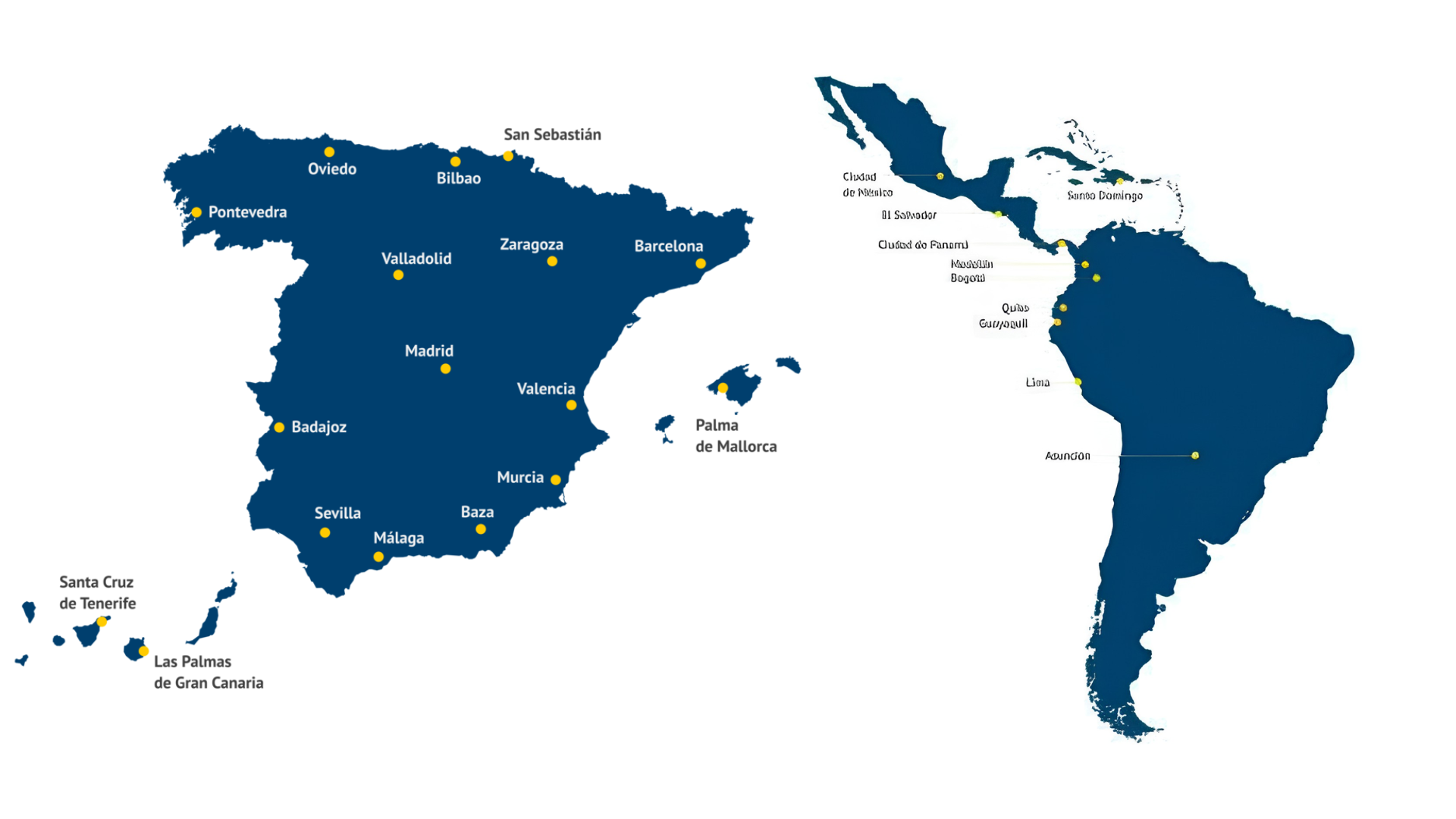
What’s more, as a student at UAX Online, you’ll have access to our Campus Hubs – a network of exclusive physical spaces where you can study, access libraries, work in co-working areas and connect with other students. Because studying online doesn’t mean studying alone.
Campus Hubs available in: Alcobendas, Alcorcón, Valencia San Vicente, Murcia, Barcelona, Málaga, Seville and Arganda.
Access is via your UAX student card, subject to availability and the opening hours of each centre.
She uses digital tools in the teaching of Spanish as a foreign language (ELE) to design teaching materials, create interactive activities, assess language skills and develop learning experiences tailored to students with different profiles and educational backgrounds.

Boost your career with the skills the job market demands
Master Microsoft 365 Copilot and boost your productivity with AI. Learn how to automate tasks, create content, analyse data and optimise your work in Word, Excel, PowerPoint, Outlook and Teams to work more efficiently with this official Microsoft certification.
Faculty
With more than 15 years of experience teaching Spanish to students and professionals from different countries, she is an expert in teacher training and ELE programme development. She combines university teaching with academic coordination and TFM tutoring, providing leadership, innovation and practical experience in language teaching.

Educational consultant and designer of learning experiences, specialising in e-learning, gamification, narrative design and active methodologies. She trains teachers, leads projects and collaborates with educational institutions in the development of innovative proposals. Founder of Ágora Virtual and creator of the GAUBI app.

PhD in Spanish (Spanish Language) and a specialist in sociolinguistics applied to the teaching of Spanish as a foreign language. She has over ten years’ teaching experience in higher education and specialist language centres, and is accredited as an examiner and tutor for SIELE and all levels of DELE.

PhD (cum laude) in Applied Linguistics for Language Teaching and a specialist in educational innovation and the teaching of Spanish as a foreign language (ELE). He combines university teaching with research into gamification, AI and technologies applied to language learning, and is renowned for developing innovative projects for the teaching of Spanish.

She holds a PhD in Translation and specialises in teaching Spanish as a foreign language. She has international teaching experience at institutions such as the Instituto Cervantes, the European Commission and various universities in Europe and Africa. Her career combines teaching Spanish as a foreign language, educational innovation and research into translation and intercultural communication.

He holds a PhD in Literary Studies and specialises in teaching Spanish as a foreign language. A university lecturer and official examiner for the Cervantes Institute’s DELE diplomas, he has experience in teaching, research and academic management, as well as having participated in educational innovation projects related to teaching Spanish as a foreign language.

He holds a PhD in Education (Cum Laude) with an International Distinction and specialises in language education and Spanish as a Foreign Language (ELE) in multicultural contexts. He is currently a Spanish lecturer at the University of Edinburgh and has teaching and research experience in Europe, the Americas and Africa. He is accredited as a DELE examiner and SIELE tutor by the Instituto Cervantes.
PhD in Applied Linguistics for the Teaching of Spanish as a Foreign Language (ELE) and a specialist in language acquisition and error analysis among learners of Spanish. She has over 20 years’ experience in teaching Spanish as a foreign language (ELE), teacher training and language assessment; she is also a DELE examiner at all levels and the author of numerous teaching materials.
She holds a PhD in Translation and Multicultural Communication and is a lecturer in Communication and Public Speaking at UAX. Specialising in language teaching methodology and the teaching of Spanish as a foreign language, she regularly takes part in training activities and seminars relating to the teaching of Spanish as a foreign language (ELE) and intercultural communication.
Master’s degree in Teaching Spanish as a Foreign Language and a specialist in technology applied to the teaching of Spanish as a foreign language. She has international teaching experience at universities and educational institutions in the United States, as well as a professional background in communication and content management.

Number of new places: 210 places
Entry requirements:
The entry requirements will be determined in accordance with the provisions of Royal Decree 822/2021 of 28 September, which regulates access to and admission to official Master’s degree programmes, as set out in Article 18.
The entry requirements for the Master’s programme, which are not subject to a points-based system, consist of holding an official undergraduate degree or equivalent and demonstrating a C1 level of Spanish in accordance with the CEFR for students whose mother tongue is not Spanish.
Entry profile:
You may enrol on this programme if you hold an official undergraduate degree or equivalent, preferably in one of the following areas:
Where demand exceeds supply, the following admission criteria will apply:
When assessing the CV, only academic, training and professional merits directly relevant to the Master’s programme will be taken into account. Proof of any of the merits claimed must be provided by submitting academic certificates, diplomas, certificates issued by the employer or employment contracts, and other documentation that allows the duration, content and suitability of the training or experience to be verified against the criteria described above.
Alfonso X El Sabio University has approved and published regulations brought into line with Royal Decree 822/2021 to address the transfer and recognition of credits.
https://www.uax.com/download/9959/file/Normativa-TRC.pdf
The recognition of credits within the official curriculum of this degree programme will be carried out by assessing the alignment between the skills and knowledge acquired through the courses undertaken and those set out in the curriculum for the corresponding courses.
| Subject | Requirement |
| External Work Placement (6 ECTS) | Teachers who can demonstrate more than 150 hours of teaching experience in Spanish as a Foreign Language (ELE) or 12 months’ work experience |
To apply for recognition, the following must be submitted:
Testimonials from the Master’s in Teaching Spanish as a Foreign Language (ELE)
The commitment to the pedagogical use of information and communication technologies, the practical approach and the performance of the teaching staff are the factors that stand out in my UAX experience. In addition, I can apply the knowledge acquired in the master's degree in my day-to-day professional life.
Led by a qualified, experienced and innovative teaching team, who manage a platform fully adapted to the student, the master's degree has resulted in a high quality online experience that has provided me with the necessary tools to succeed in my profession and greatly improve the teaching-learning process of my students.
We need to know a little bit about you so that we can provide you with a personalised service.
All fields are required
Scholarships and financial support for studying at UAX
We know that studying is an investment. That’s why we want to remove financial barriers and make things easier for you. Fill in the form and let our advisers help you discover the scholarships, partnership schemes and personalised financial support that best suit your situation.

Community of Madrid
Financial support for students with a disability of 33 per cent or more who are studying at universities or higher education institutions specialising in the arts in the Community of Madrid.

Ministry of Education, Vocational Training and Sport
Find out about the scholarships and grants offered by the Ministry of Education, Vocational Training and Sport, categorised by type and level of education.
Attracting Pre-doctoral Research Talent
Financial support for outstanding students who wish to carry out innovative research and contribute to the advancement of knowledge in their disciplines.
If you’ve already decided to take the plunge, enrol early and benefit from a direct grant. It’s a way of rewarding your commitment and giving you a head start in planning your future.
Students from Ibero-America
This programme is aimed at Ibero-American citizens or foreign nationals legally resident in countries within the OEI’s sphere of influence. The scholarship covers a 50% discount on the total tuition fees.

Students from Ecuador
This programme is aimed at citizens with Ecuadorian nationality and/or residence who wish to study an online master’s degree in Spain. The scholarship covers a 50% discount on the total tuition fees.

2025, 2nd Edition
Grants for students on higher-level vocational training, undergraduate, postgraduate or master’s programmes enrolled at Spanish universities with a Santander agreement. A financial supplement to support you whilst undertaking your work placements.
If you graduated from UAX and are now thinking of studying for a new degree, we want to continue supporting you. That’s why we’re offering you a 10 per cent discount on tuition fees.
If you have an immediate family member (up to the second degree of kinship) enrolled at UAX, you can benefit from a 5 per cent discount on tuition fees. Because studying as a family is even better.
Studying for two degrees at the same time is a challenge, and we want to support you. If you’re already at UAX and enrol on a second degree programme, you’ll be eligible for a grant towards your booking fee and tuition fees.
If you’d like to continue your studies with us and progress from vocational training to a bachelor’s degree, from one bachelor’s degree to another, or from a bachelor’s degree to a postgraduate degree, we’re here to support you with a grant covering up to 25 per cent of your tuition fees.
If you have a strong academic record, we would like to recognise your talent with a scholarship designed for new students. (Excludes the degree in Medicine).
If you’re a high-performance athlete, at UAX we want to help you balance your passion with your studies. We offer specific grants that can cover up to 50% of your tuition fees.

The Master’s in Teaching Spanish as a Foreign Language (ELE) enables you to specialise in teaching, designing teaching materials and developing Spanish language programmes for international students.
Access to certain positions, particularly at universities, public bodies or international organisations, may require qualifications, professional experience, language certifications or additional selection processes.
ELE stands for Spanish as a Foreign Language and refers to the teaching and learning of Spanish by people whose mother tongue is not Spanish.
The scope of ELE encompasses course planning, the teaching of linguistic and communicative skills, the creation of teaching materials, the assessment of learning, and the adaptation of teaching to multicultural and international contexts. The UAX Master’s Degree in Teaching Spanish as a Foreign Language (ELE) is designed to train specialists in this field.
Yes. The UAX Master’s Degree in Teaching Spanish as a Foreign Language is an official degree worth 60 ECTS credits, recognised in Spain and within the European Higher Education Area (EHEA).
Furthermore, as it is an official Master’s degree, it provides access to doctoral studies once the requirements set out in current regulations have been met, and it may be recognised or accredited by the relevant authorities in different countries in accordance with their applicable legislation.
The Master’s Degree in Teaching Spanish as a Foreign Language (ELE) combines training in Spanish teaching methodology, applied linguistics and lesson planning with specialised content on learning assessment, intercultural communication, and the creation of digital materials and resources for language teaching.
Throughout the programme, you will gain in-depth knowledge of areas such as the teaching of grammar, vocabulary, pronunciation and communicative skills, as well as the design of ELE courses, learning in virtual environments and Spanish for specific purposes. In addition, you will round off your training through work placements and a Master’s Thesis focused on real-world teaching contexts.
To pursue a career in teaching Spanish as a foreign language, it is advisable to have specialised training in language teaching methodology, course planning, learning assessment and intercultural communication.
The Master’s in Teaching Spanish as a Foreign Language (ELE) provides these skills and prepares students to work in national and international educational contexts. However, the entry requirements for certain posts may vary depending on the institution, the country or the type of centre, and may include qualifications, teaching experience, language accreditations or other additional requirements.
Find out how to become a Spanish teacher by exploring all the necessary requirements.
To be eligible for the Master’s Degree in Teaching Spanish as a Foreign Language (ELE), you must hold an official undergraduate degree or equivalent. In addition, students whose mother tongue is not Spanish must demonstrate a C1 level of Spanish in accordance with the Common European Framework of Reference for Languages (CEFR).
The Master’s programme is primarily aimed at graduates in Philology, Linguistics, Modern Languages, Translation and Interpreting, Education, Humanities and other related disciplines. Other academic backgrounds related to language teaching and linguistics may also be eligible, subject to the admission criteria set by the university.
No. The Master’s Degree in Teaching Spanish as a Foreign Language (ELE) is a specialised course that provides the knowledge and skills required to teach Spanish to foreign students, but does not in itself qualify graduates to take up all teaching posts.
Access to certain posts, particularly in state schools, universities or international institutions, may require additional qualifications, professional experience, language accreditations or specific selection processes, depending on the regulations and requirements of each organisation.
Therefore, the Master’s degree should be understood as a specialisation in the teaching of Spanish as a foreign language that complements prior training and broadens professional opportunities in the field of ELE.
The Master’s Degree in Teaching Spanish as a Foreign Language (ELE) is particularly recommended for those who wish to specialise in teaching Spanish to international students or to develop their professional career in multicultural educational settings.
It is aimed both at recent graduates in fields such as Philology, Linguistics, Translation, Education or the Humanities, and at teaching professionals seeking to update their methodological skills, incorporate digital resources or broaden their career opportunities in the field of ELE.
It may also be of interest to those wishing to design teaching materials, create online Spanish courses, work on international programmes or develop projects related to language teaching and intercultural communication.
The Master’s in Teaching Spanish as a Foreign Language (ELE) combines live, synchronous classes with resources and activities that can be undertaken asynchronously, making it easier to balance study with work and personal life. Throughout the programme, you will have access to the virtual campus, academic support and consultation sessions.
The methodology is based on active approaches such as agile learning and the flipped classroom, applied to course planning, the creation of teaching materials and the teaching of ELE in face-to-face, virtual and blended learning environments. Furthermore, the assessment system combines continuous assessment activities with online final exams.
Yes. The Master’s Degree in Teaching Spanish as a Foreign Language (ELE) includes 6 ECTS credits of external work placement (125 hours) at centres and institutions specialising in the teaching of Spanish as a foreign language.
During this period, you will be able to observe and participate in activities relating to lesson planning, the creation of teaching materials, the teaching of ELE and the adaptation of content to different student profiles. Furthermore, you will have the opportunity to gain first-hand insight into the professional reality of a sector with a growing international presence.
On the Master’s in Teaching Spanish as a Foreign Language (ELE), our students develop skills in using advanced digital tools that are essential for teaching in today’s environment. They will become proficient in using platforms such as Trello for project management, Moodle for creating virtual learning environments, and OpenShot for editing educational videos.
In addition, they will become familiar with applications such as Lumi, ExeLearning and Google Sites for creating interactive content and educational websites. Google Classroom will be an essential tool for organising and distributing materials, whilst Padlet, Genially and Mindmeister will be used to create collaborative murals, interactive presentations and concept maps, respectively.
As for collaboration and assessment tools, students will work with Miro and Mural for teamwork and visualising ideas, Socrative and Lumi for formative assessment, and Wakelet, Digipad, Kahoot and Quizizz for creating quizzes and compiling educational resources.
For those interested in further exploring the use of technology in the classroom, we also offer the Online Master’s in ICT Applied to Education. This programme provides advanced training in the pedagogical use of information and communication technologies, enabling teachers to innovate in their teaching practices and adapt to the changing needs of pupils in the digital age.
Other related degree programmes
We offer a wide variety of courses, so you’re sure to find a programme that suits you.

Master’s Degree in Teacher Training
In collaboration with:

Start:
October
Length:
1 year

Online Master’s Degree in Educational Innovation
Start:
October
Length:
9 months

Master's Degree in Educational Technology and Digital Competences for Teachers - ICT (online)
In collaboration with:

Start:
October
Length:
9 months

Master's Degree in Psychopedagogy (online)
In collaboration with:

Start:
October
Length:
9 months

Master’s Degree in Supporting Diversity and Inclusive Education (Online)
In collaboration with:

Start:
October
Length:
9 months

Master’s Degree in Educational Neuropsychology (Online)
In collaboration with:

Start:
October
Length:
9 months

Online Master's Degree in Leadership and Management of Educational Centres
In collaboration with:

Start:
October
Length:
9 months

Online Master's Degree in Emotional Education and Pedagogical Accompaniment
Start:
October
Length:
9 months
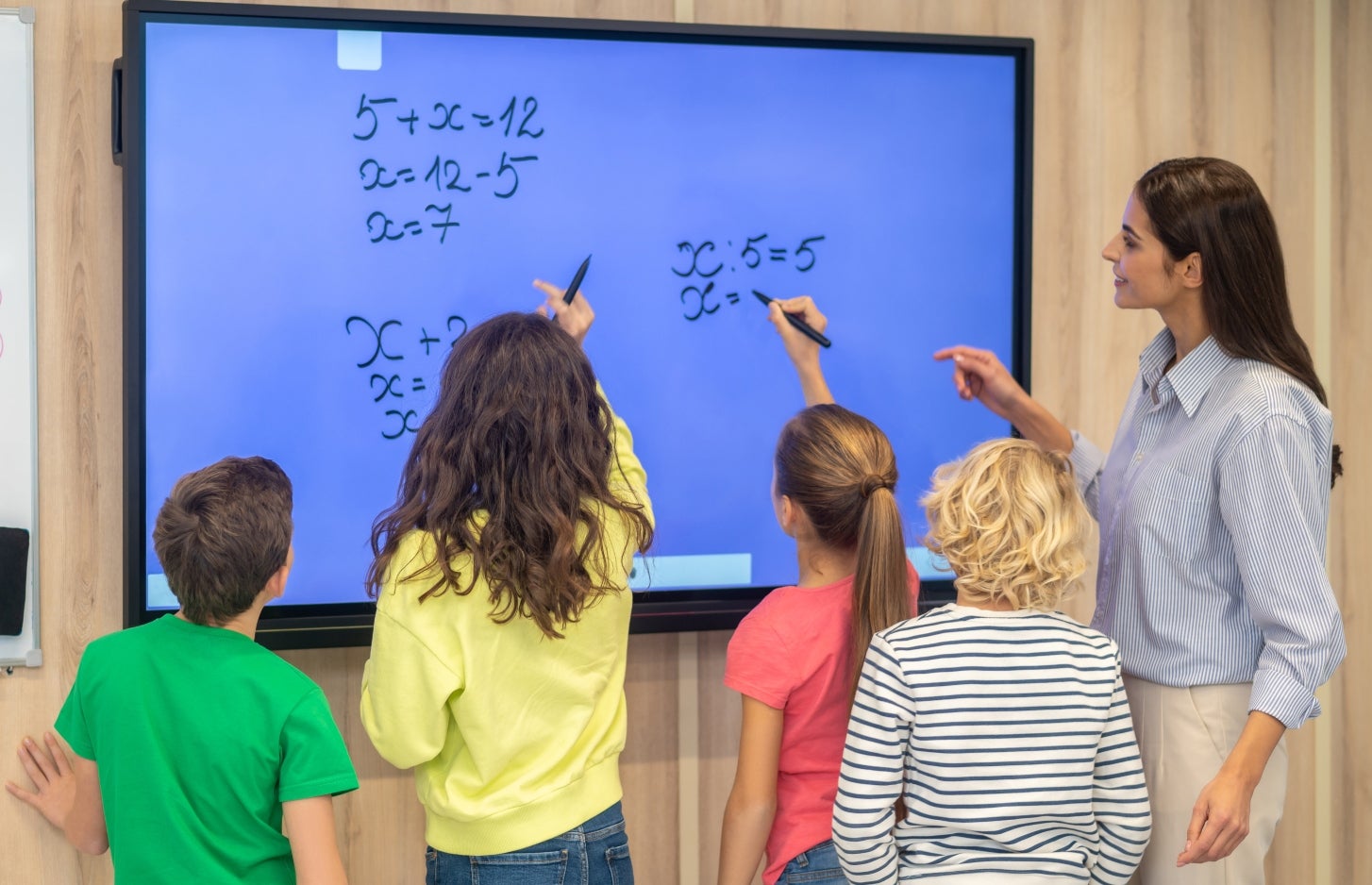
Online Master's Degree in Didactics in Mathematics
Start:
October
Length:
9 months
UAX promotes a culture of quality within the university community through the UAX Quality System (SIUAX), for which the University Management bears ultimate responsibility, ensuring that the system’s planning is implemented to effectively meet quality objectives and satisfy the needs, requirements and expectations of customers and stakeholders.
The bodies responsible are:
This organisational structure facilitates two-way communication regarding the various improvement initiatives, thereby enabling and ensuring the development of a culture of quality within the University.
The Degree Programme Monitoring and Improvement Committee for the 2025–26 academic year is composed of:
You can view the various indicators via the following links:
Improvement measures implemented for the degree programme during the academic year:
Enquiries, complaints and claims
We respond to the genuine needs of our students and staff, because we believe in the continuous improvement of our results. That is why we always want to hear whatever you have to say.
If you are already part of UAX, please visit the ‘Customer Service: complaints, suggestions and compliments’ section on thevirtual campus , logging in with your username and password.
In accordance with Royal Decree 822/2021 (Article 34), this degree programme must undergo the accreditation renewal process. During the process, an evaluation team from the Madrimasd Knowledge Foundation will meet with various stakeholders associated with the degree programme. In addition, they have provideda form so that anyone interested can inform the Foundation of any aspects they consider relevant to the development of this programme.