+34 91 910 01 70
 +34 91 910 01 70


Transform education with strategies of pedagogical accompaniment and emotional education that enhance talent and well-being in the classroom. Learn to apply active methodologies and educational coaching techniques to create inclusive and motivating learning environments. Specialise in an innovative approach and take teaching to the next level. Improve your scale for the Teacher or Secondary School Civil Service Examinations. Limited places.
The Online Master's Degree in Emotional Education and Pedagogical Accompaniment prepares you to approach teaching from a people-centred perspective, promoting the development of social skills and conflict resolution. Its innovative approach is based on four key pillars: sustainability, humanism, inclusion and training in key skills for the educators of the future, as well as training you to implement strategies for pedagogical accompaniment and educational coaching, two approaches that are increasingly in demand in schools and the workplace.
This official master's degree is based on a practical and flexible methodology that connects directly with the challenges of the real educational environment. Through case studies, projects and creative dynamics, students develop skills that are immediately applicable in their teaching practice. Through active methodologies such as problem-based learning, experiential learning and collaborative learning, the programme provides tools for more effective teaching aligned with the current needs of the education system. In addition, its online format makes it possible to make training compatible with professional life, ensuring learning that is adapted to each teacher.
This master's degree will provide you with advanced training in emotional education and pedagogical accompaniment, equipping you with the necessary tools to integrate these competencies in different educational environments. You will learn to foster emotional well-being, promote healthy relationships and design inclusive strategies for the comprehensive development of students.
All fields are required







This master's degree in emotional education is aimed at active teachers, recent graduates and professionals in the field of education who are looking to improve emotional management in the classroom, strengthen the accompaniment of students and teams, and enhance the quality of teaching through a more human and innovative approach.
Entry requirements:
The Master's Degree in Emotional Education and Pedagogical Accompaniment is aimed at professionals in the educational and social fields. To access, it is necessary to have one of the following degrees:
This degree does not qualify as a pedagogical counsellor, as this accreditation can only be obtained through the Master's Degree in Teacher Training.
Máster Universitario en Educación Emocional y Acompañamiento Pedagógico
Primer Curso
PRIMER CUATRIMESTRE
| Code | Subjects | Character* | ECTS |
|---|---|---|---|
| SM150900 | La persona como centro de acción | OB | 6 |
| SM150901 | Educación centrada en la persona | OB | 6 |
| SM150902 | Habilidades comunicativas | OB | 6 |
| SM150903 | Desarrollo emocional | OB | 6 |
| SM150904 | Acompañamiento pedagógico | OB | 6 |
| TOTAL: | 30 | ||
SEGUNDO CUATRIMESTRE
| Code | Subjects | Character* | ECTS |
|---|---|---|---|
| SM150905 | Desarrollo de habilidades sociales y resolución de conflictos | OB | 6 |
| SM150906 | Metacognición y PNL | OB | 6 |
| SM150907 | El proceso del acompañamiento pedagógico y el desarrollo del talento | OB | 6 |
| SM150908 | Prácticas académicas externas | OB | 6 |
| SM150909 | Trabajo Fin de Máster | OB | 6 |
| TOTAL: | 30 | ||
*Character: BT: Basic Training, Ob: Required, Op: Optional
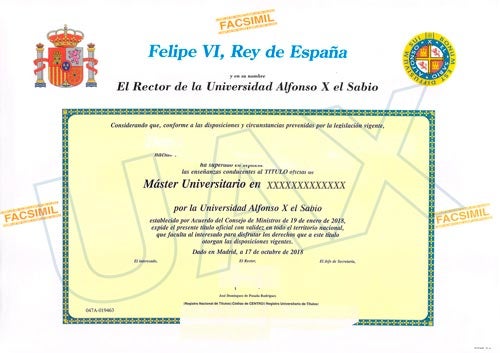
Our degree is official, verified by the Council of Universities and fully valid in Spain, as well as in the European Higher Education Area.
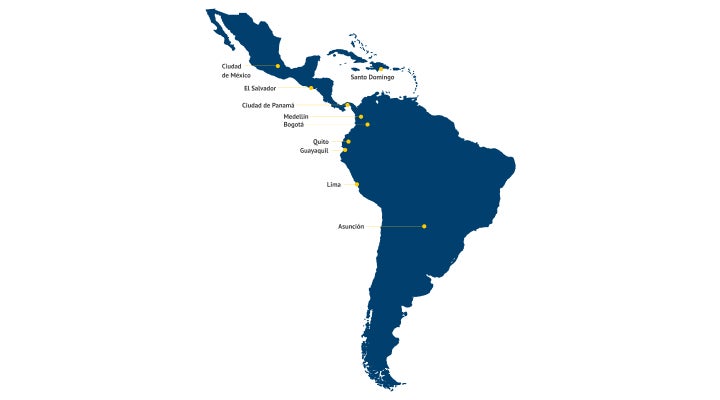
It is recognised by the Education Systems of Latin America, being recognised and approved by the different Ministries of Education in Latin America:
SENESCYT, MEN (MinEducation), SEP, Mescyt, among others, automatically.
The online master's degree in Emotional Education includes 6 ECTS of internships: 150 curricular hours (105 classroom hours at the centre), which will be carried out in the second four-month period.
We have agreements with more than 700 associations and educational centres such as:
If you have related professional experience, you will be able to validate the internship. Contact our advisors for a personalised study of ECTS recognition.
Faculty

PhD in Education, degree in Hispanic Philology and master's degree in Educational Innovation and Educational Accompaniment. With more than 20 years of experience in teaching and school management, he currently runs an educational centre in Madrid. He is an ICF-certified educational and executive coach, specialising in leadership and personal development.

Specialist in English teaching with more than 12 years of experience in Primary, ESO and Baccalaureate. She accompanies students in their pre-university transition and is trained as a certified coach, specialising in dialogic coaching, neuro-linguistic programming and non-verbal non-conscious communication.

PhD in Humanities, with a background in Fine Arts, Digital Animation and a Masters in Humanities. Her research focuses on the thought of Henri Bergson and she is currently broadening her specialisation in Philosophy, focusing on the History of Philosophy and Contemporary Thought. She is a lecturer in the Department of Humanities.

Psychologist specialising in childhood and adolescence, with extensive experience in educational guidance and emotional support. She directs the guidance department in a school and collaborates as a teacher in degrees and master's degrees in education. She is also a therapist and trainer in emotional intelligence and family communication.

PhD in Communication Sciences, Sociology and History, with postgraduate training in Musicology. In addition to his multidisciplinary academic career, he has advanced studies in musical composition. His work combines research in communication, history and music from a critical and humanistic perspective. Accredited by ANECA and with numerous publications of reference.
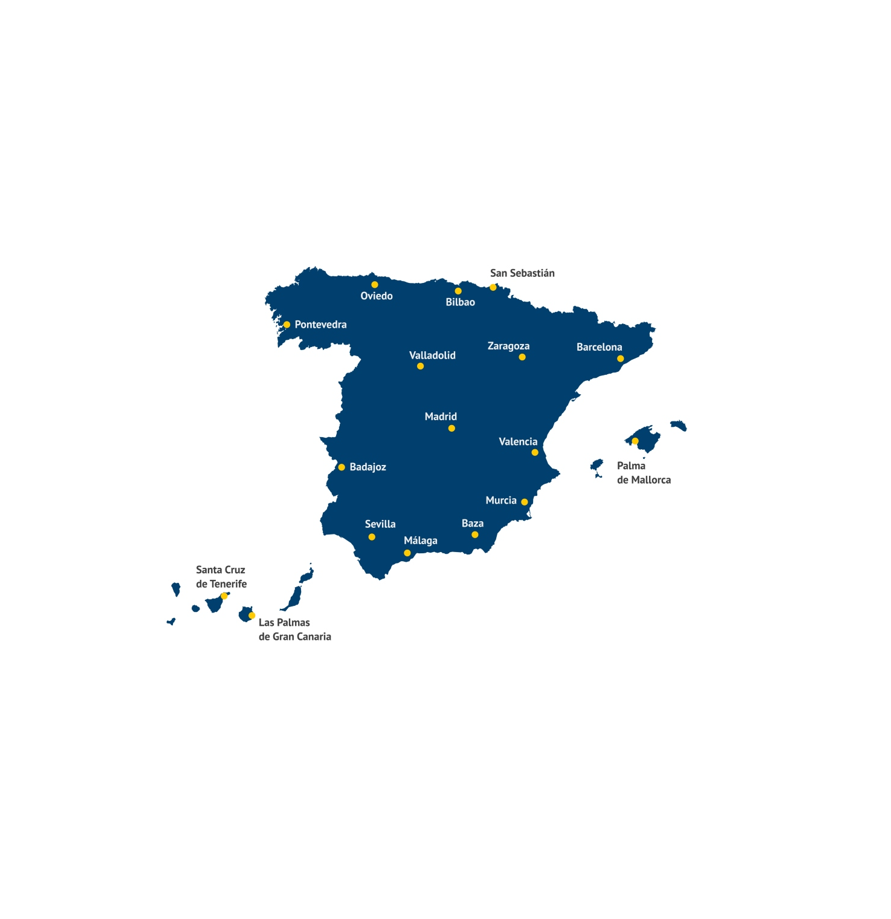
We know how important location is to take your exams. You will be able to choose between taking your exams online or in person at our UAX-approved venues.
*Exam venues are subject to maximum occupancy and availability.
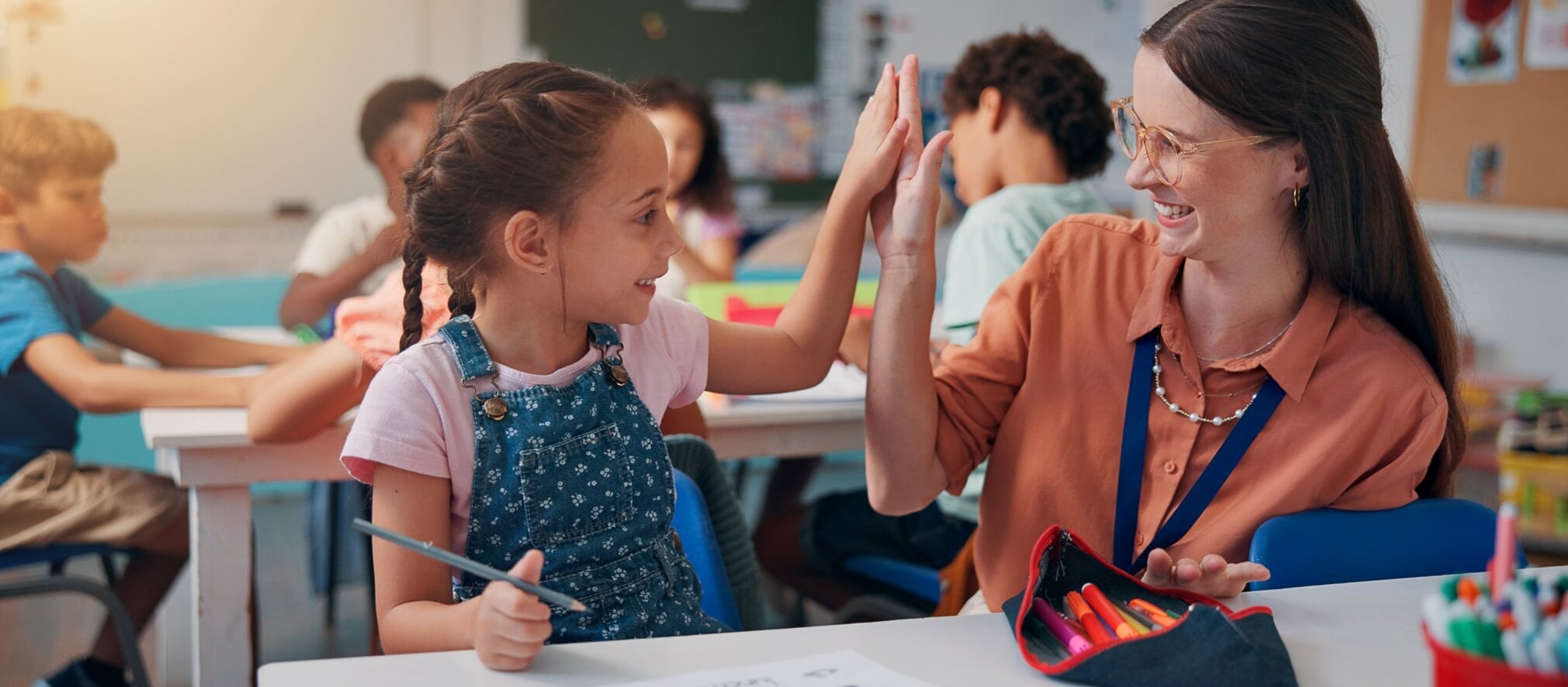
Emotional education is an ongoing educational process that seeks to develop key emotional competences: self-awareness, self-regulation, empathy, social skills and responsible decision-making. Its integration with the school curriculum promotes a positive emotional climate and improves learning, motivation and coexistence.
In 2025, studying this master's degree takes on special relevance: in an increasingly complex and digital society, socioemotional skills are essential for mental health, resilience and inclusion. Training in this field trains professionals to respond to current challenges in education, emotional health and collective well-being.
A professional emotional educator has key roles such as teaching you to manage and understand your own and other people's emotions, promote positive attitudes and prevent emotional conflicts. In educational contexts, they teach strategies for students to identify, express and regulate their emotions with practical tools. In addition:
The official master's degree in emotional education at UAX combines theory and applied practice in modules such as Pedagogical Accompaniment, Social Skills and Conflict Resolution, or NLP and Metacognition.
Activities of note:
Although they are related concepts, emotional education and emotional intelligence are not the same. The main difference is in the approach: the former is an educational process; the latter is a personal capacity.
Concept | Emotional education | Emotional intelligence |
| Definition | Continuous and systematic process of developing emotional competencies. | Individual ability to recognise, understand and regulate emotions. |
| Objective | To train in emotional skills from childhood, in a planned way. | To apply emotional skills in personal or work contexts. |
| Approach | Educational, social and pedagogical. | Psychological and personal. |
| Scope of application | Schools, educational contexts, adult training projects. | Companies, coaching, personal development. |
| Duration | Throughout the whole educational life. | Variable, depending on the person. |
| Intervention | Prevention, promotion and accompaniment in collective environments. | Improvement of individual emotional skills. |
Choose a training in emotional education if you want to:
On the other hand, a training in emotional intelligence is more appropriate if:
The teacher acts as an emotional role model and the main agent of change in the classroom. Their roles include:
In addition, UAX research shows that emotional training for teachers significantly improves their ability to manage the classroom climate more empathetically and effectively.
Other related qualifications
We have a very diverse academic offer, you are sure to find a programme that suits you.
Online Master's Degree in Attention to Diversity and Inclusive Education
In collaboration with:

Start:
October
Length:
9 months
Online Master's Degree in Educational Innovation
Start:
October
Length:
9 months

Master's Degree in Psychopedagogy (online)
In collaboration with:


Start:
October
Length:
9 months

Online Master's Degree in Educational Neuropsychology
In collaboration with:

Start:
October
Length:
9 months

Master's Degree in Educational Technology and Digital Competences for Teachers - ICT (online)
In collaboration with:

Start:
October
Length:
9 months

Online University Master's Degree in Instrumental Pedagogy
Start:
October
Length:
9 months

Online Master's Degree in Leadership and Management of Educational Centres
In collaboration with:

Start:
October
Length:
9 months

Master's Degree in Compulsory Secondary Education and Baccalaureate, Vocational Training and Language Teaching
In collaboration with:


Start:
October
Length:
1 year
Online Master's Degree in Didactics in Mathematics
Start:
October
Length:
9 months

Online University Master's Degree in Teaching Spanish as a Foreign Language
In collaboration with:

Start:
October
Length:
9 months

Online Master's Degree in Conflict Prevention and Mediation in Educational Settings
Start:
October
Length:
9 months

Online Master's Degree in Research Methodologies in Education
Start:
October
Length:
9 months
Queries, complaints and claims
We listen to the real demands of our students and employees, because we believe in the continuous improvement of results. Therefore, we always want to listen to everything you want to tell us.
If you already belong to UAX, through the virtual campus in the section Customer service: complaints, suggestions and congratulations, entering your username and password.
Telephone: 91 810 94 00
E-mail: paramejorar@uax.es
Opening hours: Monday to Friday from 9:00 am to 6:00 pm